
Painful Periods in Teenagers
What is normal, what is not, and when to see a doctor
Whether you’re a parent worried about your daughter, or a teenager looking for answers yourself - this guide is written for both of you.
Many teenage girls experience discomfort during their menstrual periods. Mild menstrual cramps in teenage girls are common and usually improve with rest or simple remedies. However, when period pain in teenage girls becomes severe enough to interfere with school, sports, or daily activities, it may require medical evaluation.
Painful periods are medically known as dysmenorrhea. At Aarogya Women’s Clinic in Kandivali East, Dr. Pallavi Kulkarni helps teenagers manage menstrual pain as part of our adolescent gynecology services, identifying any underlying causes.
Early guidance and treatment can help adolescents maintain a healthy and comfortable menstrual cycle.
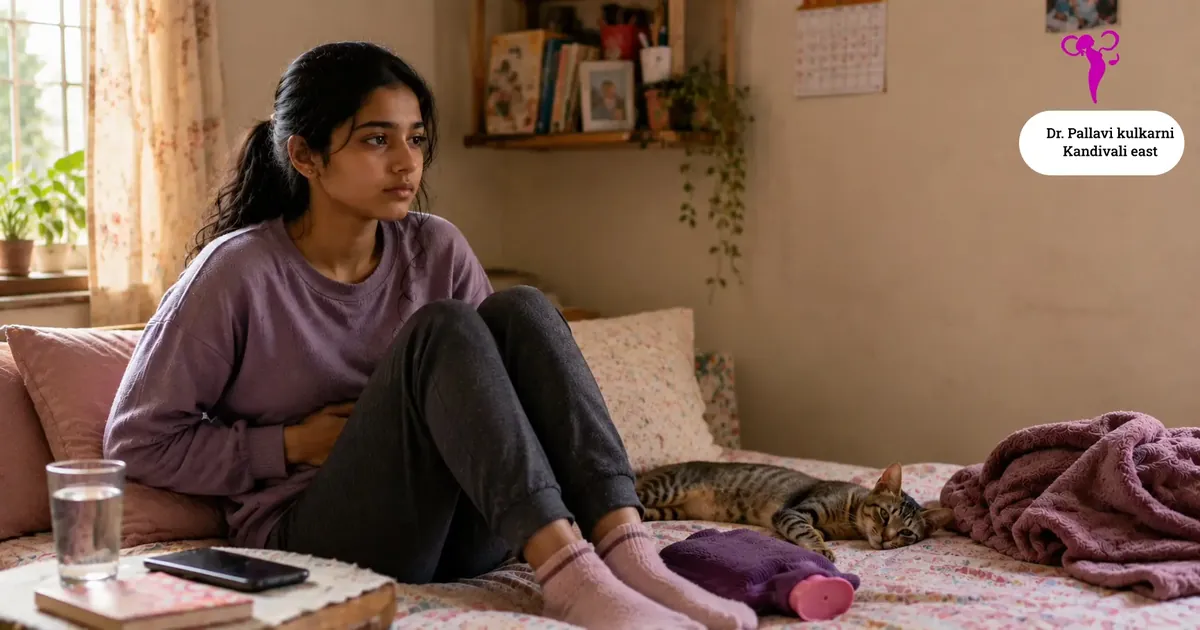
Primary dysmenorrhea affects 50-90% of adolescent girls. Around 15% experience pain severe enough to miss school or daily activities, and many parents tell us their daughter has been pushing through silently for months before the first consultation.
Sources: ACOG Committee Opinion No. 760 (Dysmenorrhea and Endometriosis in the Adolescent); Indian Journal of Public Health.
Is your daughter experiencing severe menstrual cramps? Early expert guidance from our adolescent gynaecology team makes a real difference.
What are painful periods in teenagers?
Painful periods, medically called dysmenorrhea, are cramps and discomfort in the lower abdomen that occur before or during menstruation. Most teenage period pain is primary dysmenorrhea - pain caused by the natural process of menstruation itself, not by an underlying disease. A smaller number of teenagers have secondary dysmenorrhea, where the pain is linked to another condition such as endometriosis or hormonal disorders. The two often feel similar at first, which is why a clinical evaluation matters when pain is severe or persistent.
Common symptoms include:
- Cramping pain in the lower abdomen that comes in waves
- Pain radiating to the lower back or thighs
- Nausea, sometimes with vomiting
- Headache, dizziness, or fatigue
- Loose motions or diarrhoea during the period
- Difficulty attending school or daily activities
For most teenagers, the pain is strongest during the first one or two days of bleeding and eases off afterwards.
Normal cramps vs cramps that need evaluation
The single most useful question for a parent or a teenager is: is this pain in the "normal teenage cramps" zone, or has it crossed into "worth a doctor’s visit"? This table is the short version of how we think about it in the clinic.
| What | Normal in teens | Worth seeing a doctor |
|---|---|---|
| Cramp severity | Mild to moderate, manageable with paracetamol or ibuprofen | Severe, no relief from painkillers, doubled over in bed |
| Timing | First 1-2 days of period | Pain throughout the period, or also before / after the period |
| School impact | Occasional discomfort, manageable in class | Missing 1 or more days of school every cycle |
| Onset | Started 1-2 years after the first period | Started suddenly after periods were previously painless |
| Other symptoms | Headache, mild fatigue, slight nausea | Heavy bleeding, fever, vomiting, fainting, severe diarrhoea |
| Response to treatment | Improves with rest plus an NSAID like ibuprofen | No improvement after 3-4 cycles of trying these |
What causes painful periods in teenagers?
Several factors come together to cause period pain in adolescents. Understanding them helps a parent or teenager work out whether home care will be enough, or whether a specialist consultation will add value.
Hormonal changes and prostaglandins
During menstruation, the body releases hormone-like substances called prostaglandins that make the uterus contract so the lining can shed. These contractions are responsible for most cramping. Teenagers often have stronger contractions than older women because their hormonal system is still settling, and prostaglandin levels tend to be higher.
Early menstrual years and ovulation
In the first 1 to 2 years after a girl’s first period (menarche), cycles are often anovulatory - meaning ovulation does not happen every month. Cramps are usually milder during these cycles. As cycles become regular and ovulatory, cramps can intensify, which is one reason period pain often increases between ages 13 and 16 before easing in the late teens or early twenties.
Stress, sleep, and lifestyle factors
Inadequate sleep, high stress (board exams, transitions, family events), skipped meals, very low body weight, and lack of physical activity all tend to worsen period cramps. None of these cause dysmenorrhea by themselves, but they make a manageable pain feel much worse.
Endometriosis in teenagers
Severe period pain that does not respond to usual measures may sometimes be linked to endometriosis. Because adolescent endometriosis is often missed and is one of the most common parent-and-teen concerns we hear, we have given it a dedicated section below - see Endometriosis in teenagers.
PCOS / PMOS and other hormonal conditions
Polycystic ovary syndrome (recently renamed PMOS) can cause irregular and sometimes painful periods. Thyroid issues and hormonal imbalance can also worsen menstrual pain. These are usually diagnosed by a combination of menstrual-history, examination, and a small blood test. For broader puberty-stage concerns alongside period pain - first periods, breast development, body changes, mood - see our puberty counselling for girls page.
Pelvic infections and structural causes
Pelvic infections are less common in teenagers who are not sexually active, but they can cause new-onset pelvic pain. Structural causes such as fibroids or congenital abnormalities are rare in adolescents but are part of what a specialist evaluation rules out when symptoms suggest secondary dysmenorrhea.
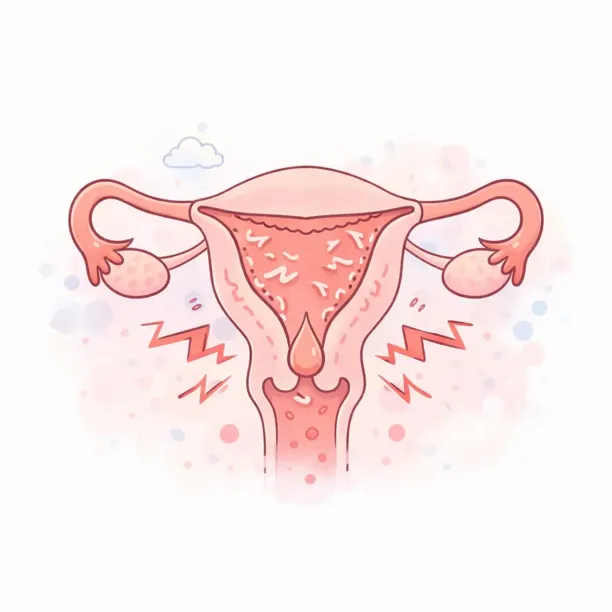
Endometriosis in teenagers
Endometriosis is a condition where tissue similar to the lining of the uterus grows outside the uterus. It can cause severe period pain, pain outside the period, painful bowel movements during menses, and - over time - fertility concerns. Adolescent endometriosis is one of the most under-diagnosed conditions in teenage gynaecology because severe period pain is so often dismissed as "just normal teenage cramps".
When endometriosis is on the list to evaluate
Clinical suspicion goes up when any of the following appear, particularly when more than one is present:
- Pain is severe and not relieved by usual NSAID or paracetamol doses
- Pain extends outside the period (a few days before, a few days after, or mid-cycle)
- Pain occurs during bowel movements, particularly around the period
- There is also very heavy bleeding (soaking pads every 1 to 2 hours, large clots)
- There is a family history of endometriosis
- Pain has been getting steadily worse over the last 3 to 6 cycles
How adolescent endometriosis is evaluated
An adolescent gynaecologist will take a detailed pain history, examine the abdomen, and - if indicated - arrange a pelvic ultrasound (which is an external scan, not internal). Blood tests may be added when heavy bleeding is also present. Some adolescents need a referral for further imaging or, in select cases, a diagnostic laparoscopy under specialist care; this is rare at a first visit.
Why early evaluation matters
Untreated endometriosis can progress, and in some women it affects future fertility. Early evaluation is not about jumping to surgery - it is about putting a name to the pain, ruling out other causes, and offering a management plan that protects the teenager’s school years and her long-term reproductive health.
Authority references: ACOG Committee Opinion No. 760 - Dysmenorrhea and Endometriosis in the Adolescent, ESHRE 2022 Endometriosis Guideline (adolescent section), NICHD Endometriosis information.
Severe period pain and missing school
One of the most reliable signals that period pain has crossed into "needs evaluation" territory is missed school. Most parents tell us their daughter has been "managing" for many months before they reach out for a consultation. This section is meant to give both parents and teenagers permission to take that signal seriously.
When pain crosses from "normal" to "needs evaluation"
Mild cramps that respond to a paracetamol or ibuprofen, with no other symptoms, and which fade by the second day are usually within the normal range. Pain becomes worth a clinical conversation when any of the following happen repeatedly, cycle after cycle:
- Pain forces missing school or skipping sports for one or more days every month
- NSAIDs (e.g., ibuprofen) at usual doses no longer settle the cramps
- Pain begins suddenly when previous periods were painless
- Bleeding is also heavy (see the next section for thresholds)
- The pain has been getting worse over the past 3-6 cycles
If you are a teenager reading this
If period pain is making you miss school every month, that is not "weakness" or "being dramatic". It is a clinical signal that something - not necessarily anything serious - is worth evaluating. Tell a trusted adult (parent, school counsellor, doctor). Carrying it silently does not help you, and it does not help your future self either.
If you are a parent reading this
Repeated school absence linked to menstrual pain is one of the clearest reasons to schedule a gynaecologist consultation. The visit is usually quick, history-led, and aimed at building a plan that keeps your daughter in school. The longer untreated severe period pain continues, the more it shapes how a teenager sees her own body - which is reason enough on its own to address it.
What to do at school
A practical, school-friendly setup that many of our patients use:
- Keep a small heat patch and a labelled OTC pain reliever in the school bag, with the school nurse aware
- Take the pain reliever at the first sign of pain rather than waiting for it to peak - it works much better that way
- Drink water through the day; avoid skipping lunch (skipped meals worsen cramps)
- Ask permission for a short rest if pain is intense - schools generally accommodate this when explained
- Track which days are worst - this helps if a clinical visit becomes necessary
Heavy and painful periods in teenagers - when to worry
When pain and heavy bleeding occur together, the suspicion threshold for evaluation goes up. Heavy menstrual bleeding alone can cause iron deficiency anaemia in teenagers - which itself causes fatigue, poor school performance, and weakness that often gets dismissed as "growing up". Pairing it with pain makes the case for a clinical review stronger.
What counts as heavy bleeding in teenagers?
It is hard to be precise about "how much" because pad sizes and absorbency vary. The practical thresholds that we use, drawn from RCOG and NHS guidance on heavy menstrual bleeding (menorrhagia):
- Soaking through a regular pad or tampon every 1 to 2 hours
- Needing to double up protection (e.g., two pads at once, or a pad plus a tampon)
- Passing clots larger than a 2-rupee coin
- Bleeding more than 7 days in a row
- Waking at night to change protection
Iron deficiency and anaemia
When heavy periods continue for many cycles, the body cannot replace lost iron fast enough. Iron deficiency anaemia is common in Indian adolescents - NFHS-5 reports anaemia in around 59% of girls aged 15-19 in India. Symptoms (tiredness, breathlessness on stairs, brittle nails, hair fall, poor concentration) are easy to miss because they build gradually. A simple haemoglobin blood test usually clarifies whether iron deficiency is part of the picture - and our broader guide on nutrient deficiencies in Indian women covers the iron, vitamin D, B12, and folate gaps that affect Indian adolescents most often.
What a clinical work-up looks like
When heavy and painful periods occur together, a basic work-up usually includes a haemoglobin test, a thyroid panel (since thyroid disorders in Indian women are common and easily missed in teens), and a pelvic ultrasound (which is an external scan, not internal, in teenagers). The aim is to find a treatable cause and to plan a longer-term approach, not to alarm anyone.
- Soaking through a regular pad or tampon every 1-2 hours
- Passing clots larger than a 2-rupee coin
- Bleeding more than 7 days in a row
- Feeling dizzy, breathless, or excessively tired during or after the period
- Pads needing to be doubled up
- Pain that does not respond to NSAIDs
Worried about heavy bleeding with the period pain? A consultation can rule out conditions that respond well to early treatment.
How to relieve painful periods in teenagers safely
The best results in adolescent dysmenorrhea usually come from combining several measures, not relying on a single one. Most teenagers find that a layered approach - heat, movement, hydration, sleep, and judicious use of pain relief - works better than any single intervention.
Heat and rest
Heat is one of the most consistently effective home measures. A heat patch, hot water bottle, or even a warm bath applied to the lower abdomen reduces cramping for many teenagers. It works by relaxing the uterine muscle. Rest in a comfortable position with knees gently drawn up can also help.
Movement and gentle exercise
Counter-intuitively, gentle movement often helps more than complete rest. A short walk, gentle stretching, or simple yoga (child’s pose, cat-cow, supine twists) increases blood flow to the pelvic area and can ease cramps. The key is "gentle" - high-intensity exercise on the worst day usually makes things worse.
Hydration and balanced meals
Drink water through the day, especially in the 24 hours before and during the period. Avoid skipping meals - low blood sugar amplifies the perception of cramps. A balanced plate with protein, complex carbohydrates, and vegetables is more useful than any single "superfood". Some teenagers find that magnesium-rich foods (dark leafy greens, pumpkin seeds, dark chocolate) and omega-3 fatty acids (fatty fish, walnuts, flaxseed) help reduce cramping; the evidence is modest but consistent.
Sleep and stress management
Inadequate sleep and high stress both raise prostaglandin levels and worsen period pain. In the days around the period, prioritising 8-9 hours of sleep and reducing optional commitments can make a real difference. Breathing exercises, light meditation, or simply scheduling downtime are practical tools.
Pain relief medication - what is typically used in teenagers
For severe or persistent pain, please consult Dr. Pallavi Kulkarni or your family doctor before starting any new medicine.
- Avoid aspirin in anyone under 18.
- Avoid codeine-containing painkillers without specialist input.
When pain is severe enough that heat, rest, and lifestyle measures are not enough, an over-the-counter NSAID (the class commonly used for period pain) is the usual first choice. NSAIDs reduce prostaglandin levels - which addresses the underlying mechanism of cramping rather than just masking the pain - and they work much better when taken at the first sign of pain rather than after the pain has peaked. Always take with food, and within the label’s daily limit.
For specific dosing, brand choices, or use over several months - and especially if there is a history of asthma, stomach issues, kidney problems, or any other regular medication - please consult Dr. Pallavi Kulkarni or your family doctor rather than continuing OTC use indefinitely. For common side effects and what to avoid, see the FAQ section below.
Tracking symptoms
Tracking the timing, intensity, and pattern of period pain is one of the most useful things a teenager can do. A simple notebook or a phone calendar works fine - or use our free Period Cycle Calculator to estimate cycle length and predict the next period. Tracking helps a doctor see the pattern quickly during a consultation and makes it easier to spot whether the pain is getting better, worse, or staying the same.
When to consult a gynaecologist about painful periods in teenagers
Most teenagers with period pain do not need a specialist - their GP or paediatrician can guide them through general care. A specialist visit becomes useful when the pain is severe, persistent, paired with heavy bleeding, or affecting school. Here is what we look for and what the first visit usually involves.
The "see a doctor" red flag checklist
- Severe pain that does not improve with NSAIDs at usual doses
- Pain that started suddenly after previously painless periods
- Missing school regularly because of period pain
- Pain occurring outside the period (mid-cycle, during bowel movements)
- Heavy bleeding alongside the pain (per the thresholds in the previous section)
- Periods that have been getting worse over the past 3-6 cycles
- Pain accompanied by dizziness, fainting, fever, or vomiting
If your daughter also experiences irregular periods, that pattern is worth raising at the same consultation.
What happens at the first visit
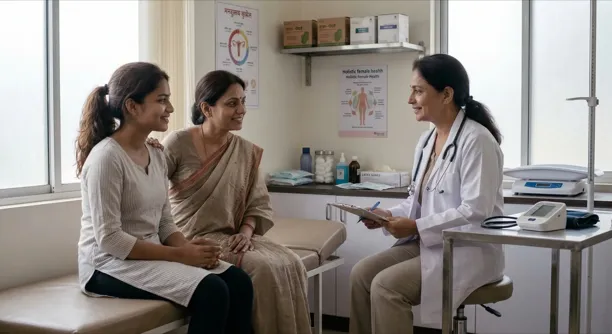
The first consultation in adolescent gynaecology is almost always history-led - a detailed conversation about the pain, the cycle, the school impact, family history, and general health. The aim is to understand the pattern rather than to perform many tests on the first day.
- Detailed history of menstrual pain - timing, severity, school impact, family history
- External / abdominal examination (age-appropriate, with parent presence)
- If indicated, a pelvic ultrasound (external, not internal in teenagers)
- If indicated, a small blood test (haemoglobin, thyroid panel)
- Discussion of an initial management plan - lifestyle, pain relief, and follow-up
Parent presence and consent
A parent or trusted adult is welcome to be present throughout. For most teenagers, having a parent in the consultation room helps - they often remember details about menstrual history that the teenager forgets, and they share in the management plan afterwards. No internal examination is done at a routine teenage consultation unless clinically required and with explicit consent.
"Period pain should never be dismissed as normal if it disrupts a teenager’s daily life. There are safe and effective treatments available, and the earlier we have the conversation, the easier the management plan."
- Dr. Pallavi Kulkarni
Most teenagers I see for period pain fit one of three pictures:
- A 13-15 year old whose periods became painful 1-2 years after starting, takes paracetamol but skips school anyway, where the family has been hesitant to come in - usually primary dysmenorrhea responding well to NSAIDs and lifestyle support.
- A 15-17 year old whose previously bearable periods are now severe, with pain extending outside menses or during bowel movements - endometriosis is on the list to evaluate.
- A 12-14 year old soon after her first period with very heavy bleeding alongside pain, where iron deficiency anaemia is part of the picture.
The work-up differs in each case. A first consultation usually clarifies which pattern fits.
Pain that will not settle with rest and the usual painkillers needs a clinical view. Book a consultation with Dr. Pallavi Kulkarni at our adolescent gynaecology clinic in Kandivali East.
At our clinic in Kandivali East
Dr. Pallavi Kulkarni provides specialist period pain treatment in Kandivali East through Aarogya Women’s Clinic, with a long-standing focus on adolescent gynaecology, fertility care, and women’s health across the western suburbs of Mumbai.
The clinic sees teenagers and families from Kandivali East, Kandivali West, Borivali East, Borivali West, Malad East, Malad West, Goregaon East, and Goregaon West, including the immediate localities of Thakur Village, Mahavir Nagar, Charkop, Akurli Road, and Lokhandwala. If you have been looking for a gynaecologist for teenage girls in Kandivali who treats the consultation as a conversation rather than a checklist, this is the kind of practice we run.
Clinic hours: Monday to Saturday, 10:00 AM to 9:00 PM. Closed Sundays.
Languages spoken at the clinic: English, Hindi, Marathi.
Dr. Pallavi Kulkarni is registered with the Maharashtra Medical Council (Reg. No. 2005/06/2917). Credentials: MBBS, DGO, DNB (OB-GYN), DFP, MRCOG (UK), Fellowship in IVF.
Related reads for parents and teenagers
A small set of related guides we get asked about most often in this conversation - on irregular periods, puberty, hormonal conditions, and broader nutritional gaps in Indian adolescents.
References
- ACOG Committee Opinion No. 760 - Dysmenorrhea and Endometriosis in the Adolescent (December 2018, reaffirmed).
- NICHD - Endometriosis: Condition Information (US National Institute of Child Health and Human Development).
- RCOG Green-top Guideline - Initial Management of Chronic Pelvic Pain (Royal College of Obstetricians and Gynaecologists).
- Omidvar S et al. Primary Dysmenorrhea and Menstrual Symptoms in Indian Female Students: Prevalence, Impact and Management. Global Journal of Health Science, 2016. PMID 27045406.
- NHS UK - Period pain (dysmenorrhoea) overview.
- Indian Academy of Pediatrics (IAP) - Adolescent Health position statement and guidelines.
- ESHRE 2022 - Endometriosis Guideline (European Society of Human Reproduction and Embryology), adolescent section.
- NFHS-5 (2019-21) - National Family Health Survey, India, anaemia data for adolescent girls.
- Mayo Clinic - Menstrual cramps - symptoms and causes.
Last reviewed by Dr. Pallavi Kulkarni on 22 May 2026. We update this page when guideline bodies revise their recommendations.
What Our Patients Say
Gynecologist in Kandivali East Known for Kind and Reassuring Care
Women looking for a dependable Gynecologist in Kandivali East often appreciate Dr. Pallavi Kulkarni's reassuring manner, clinical expertise, and clear explanations. Her warm approach helps patients feel comfortable during every stage of care.
Do you have any questions?
Request An AppointmentFAQ
When should my teenage daughter see a doctor for painful periods?
See a gynaecologist if any of these apply: pain is severe enough to miss school regularly; NSAIDs and paracetamol no longer help; pain started suddenly after periods were previously fine; bleeding is also very heavy (soaking pads every 1 to 2 hours, clots larger than a 2-rupee coin); pain occurs outside the period or during bowel movements; symptoms have been worsening over 3 or more cycles. A short consultation usually clarifies what is going on and what to do next.
What causes unusually painful periods in high schoolers?
Primary dysmenorrhea, driven by prostaglandins that make the uterus contract, is the most common cause - especially in the first 1 to 2 years after periods start. Secondary causes are less common but important to consider when pain is severe or worsening; these include endometriosis, hormonal conditions like PCOS / PMOS, pelvic infections, and rarely structural anomalies. Stress, poor sleep, skipped meals, and very low body weight also worsen the experience of pain. A clinical history and examination usually clarify which is most likely.
What are the best ways to relieve severe period pain in teens at home?
Combine several measures rather than relying on one. Apply heat to the lower abdomen (heat patch, hot water bottle, or warm bath). Rest in a comfortable position with knees drawn up. Gentle movement - a short walk, simple yoga, light stretching - often helps more than complete rest. Drink water through the day and avoid skipping meals. Over-the-counter pain relief works best when taken at the first sign of pain rather than waiting for it to peak. Track when pain is worst so a doctor can see the pattern if home measures aren't enough.
Are natural remedies for severe period pain in teens actually effective?
Some have a small evidence base. Magnesium, omega-3 fish oil, and ginger have shown modest benefits in clinical trials. Yoga and regular exercise help many adolescents. Herbal teas and topical herbal balms feel comforting but have limited evidence. Natural measures can support, but they should not delay a doctor visit if pain is severe, worsening, or affecting school. Always check with a doctor before starting a new supplement in a teenager, especially if she is on any other medication.
How do I manage period pain effectively during school for teens?
Keep a heat patch and a labelled OTC pain reliever in the school bag, with the school nurse aware. Take the medicine at the first sign of pain rather than waiting until it peaks. Drink water through the day and avoid skipping lunch - skipped meals worsen cramps. Ask permission for a short rest if pain is intense - schools generally accommodate this when explained. If pain is bad enough to need going home regularly, that is the signal to see a gynaecologist for a longer-term plan that keeps her in school.
What are the side effects of common period pain medications for teens?
NSAIDs (the class commonly used for period pain) can cause stomach upset, nausea, or - rarely - kidney effects with overuse. They should not be used if there is a history of asthma triggered by aspirin or NSAIDs, stomach ulcers, or kidney problems. Always take with food and within the label's daily limit. Avoid aspirin in anyone under 18. Avoid codeine-containing painkillers without a specialist's input. If a teenager needs pain relief most months, please consult a doctor rather than continuing OTC use indefinitely - it is worth checking whether the pain itself needs a different management approach.
When are heavy and painful periods in a teenager a red flag?
Heavy plus painful together raises the suspicion threshold. Specific red flags: soaking a regular pad every 1 to 2 hours, clots larger than a 2-rupee coin, bleeding more than 7 days, doubling up pads, dizziness or breathlessness from blood loss. Heavy menstrual bleeding can cause iron deficiency anaemia, which is itself worth treating. A short blood test (haemoglobin, thyroid panel) and a pelvic ultrasound usually clarify the cause.
Could my daughter have endometriosis at 15?
Yes. Endometriosis can begin in adolescence, though it is often missed because severe period pain is assumed to be just normal teenage cramps. Suspicion goes up when pain is severe and not relieved by usual measures, occurs outside the period, occurs during bowel movements, or is accompanied by very heavy bleeding. An adolescent gynaecologist can evaluate clinically and arrange imaging if needed. Early evaluation matters because untreated endometriosis can progress and, in some women, affect future fertility.
Will there be an internal examination at her first visit?
No, not at a routine teenage consultation, unless clinically required and with explicit consent. Most first visits involve detailed history-taking, an abdominal examination, and - if indicated by symptoms - a pelvic ultrasound, which is an external scan, not an internal one. A parent is welcome to be present throughout. The aim of the first visit is to understand the pain pattern and to make the consultation feel safe.