
Why Indian Women Are Nutrient Deficient Without Knowing
By Dr. Pallavi Kulkarni, MBBS, DGO, DNB (OB-GYN), DFP, MRCOG (Royal College of Obstetricians and Gynaecologists, UK), Fellowship in IVF ·
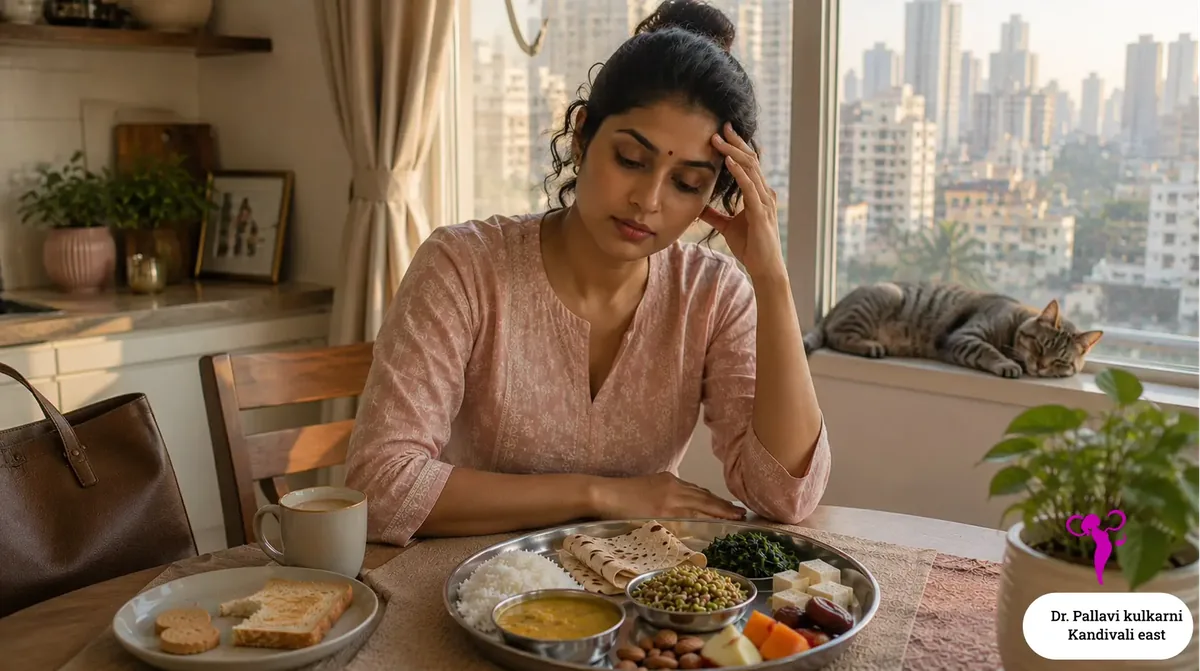
If you are a woman living in Mumbai, your day probably looks something like this. You wake up already tired, rush through chai and maybe two biscuits, skip breakfast or grab a vada pav on the way to office, sit in front of a laptop for 9-10 hours, eat a heavy lunch from the tiffin or canteen, and by the time you reach home in the evening after fighting traffic or local train crowd, you are too exhausted to think about a proper dinner. Sounds familiar?
Now add to this picture: irregular periods, hair falling more than usual, feeling tired all the time, dark circles, weak nails, mood swings, weight gain that is not going away no matter what you try. Most women I meet in my clinic in Kandivali East think these things are “normal” because of stress or age. But actually, in many cases, the real reason is something very simple. Your body is missing important nutrients.
Let me explain why this is happening and what it is actually doing to your health.
“Most women I meet in my clinic in Kandivali East think tiredness, hair fall, and irregular periods are ‘normal’ because of stress or age. In many cases, the real reason is much simpler. Your body is just missing important nutrients, and the same plate that feeds the family is not always meeting your own needs.”
- Dr. Pallavi Kulkarni, MBBS, DGO, DNB (OB-GYN), DFP, MRCOG (UK), Fellowship in IVF
Our Diet Was Built for a Different Life
The Indian diet was never made for perfect health. It was made for survival. Our grandmothers cooked for big joint families with limited money, so the plate had to be filling and affordable. Roti, rice, dal, and a sabzi - this combination was the backbone of every Indian kitchen. Protein foods like milk, paneer, eggs, or meat were saved for special days. Vegetables were seasonal and basic.
This system worked beautifully for that time. People walked everywhere, did physical housework without machines, and burnt off the carbs naturally. But the same plate, in today's life of sitting jobs, AC offices, ordering food on apps, and zero physical activity, is creating a completely different picture. Especially for women.
Why women are more affected than men
A woman's body has very different needs compared to a man's body. Every month we lose blood through periods, which means we lose iron. Our hormonal system needs specific nutrients to work properly. During pregnancy, breastfeeding, and menopause, the body needs extra support. And on top of this, most Indian women are also taking care of the whole family, eating last, eating leftovers, and barely getting time for themselves.
The result? Most women are walking around with multiple nutritional deficiencies and they don't even know it.
The Most Common Deficiencies I See in Women (And What They Cause)
Iron Deficiency: The Silent One
This is probably the most common deficiency I see in my patients. Almost every second woman who comes to me has low iron levels. The symptoms are very easy to ignore because we blame them on stress or workload. According to NFHS-5 data, more than 57% of Indian women aged 15-49 are anaemic, and the figure is even higher among pregnant women.
What you might feel: Constant tiredness, weakness, hair fall, brittle nails, headaches, breathlessness while climbing stairs, pale skin, dark circles, brain fog, and feeling cold all the time even in Mumbai weather.
What it does to women specifically: Heavy periods become heavier (and heavy periods cause more iron loss, so it becomes a cycle). Periods can become irregular. Fertility can get affected. During pregnancy, iron deficiency is dangerous for both mother and baby. Many women who complain of “always feeling weak after periods” are actually anaemic. The link goes the other way too - hormonal imbalance often shows up as heavier or irregular bleeding, which then makes the iron loss worse.
Why it happens to us: Monthly blood loss, vegetarian diet without proper planning, drinking tea or coffee right after meals (this blocks iron absorption), and not eating enough iron-rich foods like green leafy vegetables, dates, jaggery, beetroot, or non-veg sources.
Vitamin D Deficiency: The Mumbai Special
You will be shocked to know that even in sunny Mumbai, almost 80-90% of women are vitamin D deficient. The pattern is consistent across multiple Indian studies, including a large epidemiological review of vitamin D status in India published on PubMed Central. How? Because we leave home before the sun is strong, sit inside AC offices the whole day, come back after sunset, cover up with full sleeves, and use sunscreen even when we step out for 10 minutes.
What you might feel: Bone pain, joint pain, back pain (especially lower back), muscle weakness, low mood or depression, hair fall, getting sick often, and feeling tired without reason.
What it does to women specifically: Vitamin D is directly connected to PCOS. Women with PCOS often have very low vitamin D. It also affects fertility, increases the risk of irregular periods, and after menopause it leads to weak bones and osteoporosis. Many women in their 30s are already showing bone density of someone in their 50s. If you also have a thyroid disorder, low vitamin D can make symptoms harder to control.
Why it happens to us: Almost zero sun exposure, vegetarian diet (very few foods naturally have vitamin D), cultural clothing that covers most of the skin, and using fairness creams or sunscreen which block vitamin D production.
Vitamin B12 Deficiency: The Vegetarian Problem
If you are a pure vegetarian, please read this section carefully. Vitamin B12 is found mainly in non-vegetarian foods, eggs, and dairy. Most Indian vegetarian women, even those who eat dairy, have low B12 levels because of poor absorption. A landmark Indian study by Refsum and Yajnik documented a high prevalence of vitamin B12 deficiency in Indian adults, with rates significantly higher in vegetarians.
What you might feel: Tingling in hands and feet, memory problems, feeling foggy in the brain, mood swings, depression, extreme tiredness, hair fall, mouth ulcers, and weakness.
What it does to women specifically: B12 deficiency can cause irregular periods, fertility issues, problems during pregnancy (especially neural tube defects in the baby), and worsen PCOS symptoms. It also makes you feel mentally exhausted, which many women confuse with stress or anxiety.
Why it happens to us: Vegetarian diet, gut issues that block absorption, long-term use of acidity medicines like Pantop or Rantac, and aging.
Calcium Deficiency: The Long-term Damage
Indian women generally have lower bone density compared to Western women, partly because of genetics and partly because of poor calcium intake throughout life. We focus on calcium only after menopause, but by then a lot of damage is already done. The ICMR Dietary Guidelines for Indians confirm that calcium intake in most Indian women is well below the recommended daily allowance.
What you might feel: Muscle cramps, leg pain at night, weak teeth, brittle nails, back pain, and joint pain.
What it does to women specifically: During pregnancy and breastfeeding, the baby takes calcium from your bones if you are not eating enough. After menopause, when oestrogen drops, calcium loss speeds up. This is why so many women in their 50s and 60s have osteoporosis, fractures, and severe back problems.
Why it happens to us: Lactose intolerance is common in Indians, low intake of dairy, no green leafy vegetables, no ragi or sesame seeds in the diet, and vitamin D deficiency (which means even the calcium you eat is not getting absorbed).
Protein Deficiency: The Hidden Crisis
This is the one nobody talks about but it is probably the biggest issue with the modern Indian woman's diet. Our plate is 70% carbs (rice, roti, sabzi) and barely 15-20% protein. Most women are eating only 30-40 grams of protein daily, when actually they need 50-60 grams or more. The ICMR-NIN Recommended Dietary Allowances back this up, and the gap is widest for working women in their 20s and 30s.
What you might feel: Hair fall (a lot of it), weak and breaking nails, slow recovery from any illness, weight gain especially around the stomach, muscle weakness, sugar cravings, and feeling hungry all the time.
What it does to women specifically: Hormonal imbalance, irregular periods, worsening of PCOS, fertility issues, poor recovery after pregnancy, muscle loss after 30 (which slows down metabolism), and weak immunity. Many of my patients who complain about constant hair fall actually have protein deficiency, not a hair problem.
Why it happens to us: “Dal le li, protein ho gaya” mentality (one katori of dal has only 3-4 grams of protein), thinking that eating non-veg makes you “heaty,” vegetarian diets without enough paneer, curd, sprouts, or pulses, and not understanding how much protein the body actually needs.
Folate (Folic Acid) Deficiency
This becomes especially important if you are planning pregnancy or are already pregnant. ACOG (the American College of Obstetricians and Gynecologists) recommends 400-800 mcg of folic acid daily starting at least one month before trying to conceive.
What it does to women specifically: Folate deficiency in early pregnancy can cause serious birth defects in the baby. It also contributes to fatigue, mouth ulcers, and anaemia. Even outside pregnancy, low folate affects mood and energy levels.
Common Problems Women Face That Are Often Linked to Diet
When women come to a gynaecologist, they usually come with one of these complaints. What most don't realise is how deeply these are connected to nutrition.
PCOS and PCOD: This is becoming an epidemic in Indian cities. According to ICMR data published on PubMed Central, around 1 in 5 young women in Indian metros now has some form of PCOS. Diet plays a massive role here. High refined carbs, low protein, vitamin D deficiency, and insulin resistance are all linked. The good news is that PCOS responds beautifully to diet changes, and our hormonal imbalance guide covers the testing and treatment side in more detail.
Irregular periods: Stress, low body weight, high body weight, thyroid issues, PCOS, and nutritional deficiencies can all cause irregular periods. Before assuming it is hormonal, we need to check the basic nutrition first.
Heavy or painful periods: Iron deficiency, low magnesium, and inflammation from poor diet can make periods worse. Women who eat more anti-inflammatory foods (vegetables, omega-3, less sugar) often see their period pain reduce.
Hair fall and skin issues: This is one of the top reasons women come to me, even though it is technically not a gynae issue. But hair fall in women is almost always connected to either thyroid, PCOS, iron deficiency, protein deficiency, or B12 deficiency. So it is connected.
Fertility problems: Couples trying for a baby often don't realise that the woman's nutrition status months before conception matters a lot. Poor egg quality, irregular ovulation, and recurrent miscarriages can all have a nutritional angle. Our blog on how to get pregnant fast covers the fertile-window and lifestyle side; nutrition fits right alongside it.
White discharge and recurrent infections: Low immunity from poor nutrition, high sugar intake, and vitamin D deficiency can cause repeated vaginal infections. If this is a pattern for you, our pages on white discharge causes and UTI in women explain how the same nutritional gaps connect to both.
Menopause symptoms: Hot flashes, mood swings, weight gain, and joint pain in menopause become much worse when the body is already nutrient deficient.
Pregnancy complications: Anaemia, gestational diabetes, low birth weight, and pregnancy fatigue are heavily influenced by what the mother is eating, which is why our pregnancy care protocol starts nutritional screening at the very first visit and continues it throughout the trimesters, including in high-risk pregnancy care.
Tired of feeling tired? A simple set of blood tests (iron, vitamin D, B12, thyroid) can clarify in days whether your hair fall, mood, or period changes have a nutritional cause.
What a Mumbai Woman's Plate Should Actually Look Like
You don't need to follow some fancy keto or western diet. You just need to update the traditional Indian thali to suit your modern life.
Add more protein to every meal: One egg or a bowl of sprouts in breakfast, paneer or chana in lunch, dal plus curd in dinner, and a handful of nuts as snacks. Non-veg eaters can include chicken, fish, or eggs more regularly. Aim for some protein in every single meal, not just one meal.
Reduce the carb mountain: You don't have to give up rice or roti. Just reduce the quantity. Instead of three rotis, have two. Instead of two katori rice, have one. Fill the extra space with sabzi, salad, and protein.
Get your sun: Try to get 15-20 minutes of direct sunlight on your arms or legs at least 3-4 times a week. Early morning is best. If this is impossible, please get your vitamin D tested and take a supplement if needed.
Don't skip meals: Skipping breakfast or lunch and then overeating at night is one of the worst things for women's hormones. Eat regularly, even if the meals are small.
Watch your tea and coffee timing: Don't drink chai immediately after meals. Wait at least 1 hour. This will help iron absorption.
Include these regularly: Curd, paneer, eggs (if not pure veg), sprouts, green leafy vegetables (palak, methi), ragi, sesame seeds (til), dates, jaggery, dry fruits, and seasonal fruits.
Want a plan tailored to your reports rather than to a generic diet chart? Get the right blood tests done first, then we build the plan together based on what your body actually needs.
When You Should See a Gynaecologist
Please don't ignore these signs. Most women keep adjusting and managing for years before they finally come for a check-up. By that time, deficiencies have become severe and conditions have become harder to reverse. Our companion guide on 10 signs you must not ignore covers the full red-flag list, and the page on when to see a gynaecologist by age and life stage explains how the priorities shift through your 20s, 30s, 40s and beyond.
You should see a gynae if you have any of these:
- Periods that are very heavy, very painful, or irregular for more than 3 months
- Excessive hair fall or sudden hair growth on face
- Acne that is not going away
- Trying to conceive for more than a year without success (or six months if you are over 35)
- Constant tiredness even after sleeping properly
- Sudden weight gain or weight loss
- White discharge with itching or smell
- Pain during periods or during intercourse
- Any concern about pregnancy planning
A simple set of blood tests can show your iron, vitamin D, B12, thyroid, and hormonal levels. Most of these issues are completely reversible if caught early.
This is exactly why seeing a gynaecologist regularly, getting the right tests done, and then acting on what the reports say is so important. Guessing your way through symptoms, trying random supplements from the chemist, or relying on Instagram diet advice will only waste your time and sometimes make things worse. At Aarogya Women's Clinic, we strongly believe in data-backed decision making. We don't treat based on assumptions. We test, we look at the actual numbers, we understand your full medical history and lifestyle, and only then we build a plan that is made for your body. Every woman is different, and your treatment should be based on your reports, not on someone else's experience.
One important thing to understand here. As a gynaecologist, my job is not to give you a diet chart or tell you how many grams of paneer to eat in a day. My job is to listen to your symptoms properly, run the right diagnostic tests, find out the actual underlying problem, identify the root cause, and then help you fix it. This includes giving you the right medical treatment, guiding you on lifestyle and health changes, and if needed, referring you to a qualified nutritionist or other specialist who can take it forward. Many women come with a surface-level complaint like hair fall or tiredness, but the real issue is hiding underneath. The role of a gynaecologist is to find that hidden cause and treat it properly, so you are not just managing symptoms forever.
Clinic hours: Monday to Saturday, 10:00 AM to 9:00 PM · Closed Sundays · Languages: English, Hindi, Marathi
Women from Kandivali East including Thakur Village, Kandivali West, Malad East, Malad West, Borivali East, Borivali West, Goregaon East, and Goregaon West consult Dr. Pallavi Kulkarni for nutritional, hormonal, and gynaecological evaluation.
Dr. Pallavi Kulkarni is registered with the Maharashtra Medical Council, MMC reg. no. 2005/06/2917. She holds an MBBS (KIMS Karad, MUHS), DNB (OB/GYN) (Central Railway Hospital Byculla, Natboard), Fellowship in IVF (AMOGS-MCOG), DGO (CPS Mumbai), DFP (FOGSI), and MRCOG from the Royal College of Obstetricians and Gynaecologists, UK.
A Final Word
Our Indian kitchen has given us so much - love, comfort, culture, and that warm feeling of home. We don't need to throw away our food traditions. We just need to understand them better and adjust them for the life we are actually living today.
Your health is not selfish. A woman who is healthy, energetic, and well-nourished can take much better care of her family, her work, and herself. Take this seriously. Get your basic tests done. Eat properly. And whenever something feels off, please come and speak to a doctor. There is no problem too small to discuss.
If you are facing any of the issues mentioned in this article and are looking for a gynaecologist in Kandivali East or nearby areas in Mumbai, you can book a consultation at Aarogya Women's Clinic. We will run the right tests, understand your full picture, and help you build a plan that is backed by data and made specifically for your body and your lifestyle.
Ready to take the next step? Call +91 91366 33062 or message us on WhatsApp to book a nutritional and gynaecological evaluation with Dr. Pallavi Kulkarni.
Related reads on our blog
- → Hormonal Imbalance in Women: Signs, Tests & Fixes
- → Thyroid Disorders in Women: Symptoms, Fertility, Diet
- → Irregular Periods in Women: How Many Days Late Is Normal?
- → How to Get Pregnant Fast: A Mumbai Gynaecologist's Honest Guide
- → Why Am I Not Getting Pregnant?
- → Fertility Testing: AMH, FSH & Scans Explained
- → When to Visit a Gynecologist: 10 Signs You Must Know
Medically reviewed by Dr. Pallavi Kulkarni, MBBS, DGO, DNB (OB-GYN), DFP, MRCOG (UK), Fellowship in IVF, May 2026. This article is for educational purposes and does not replace personal medical advice. For diagnosis and treatment, please consult a qualified gynaecologist.
Do you have any questions?
Request An AppointmentFAQ
Why are Indian women more nutrient deficient than men?
Three reasons stack on top of each other. Women lose blood (and iron) every month through periods. Women have higher demand for iron, folate, calcium, and vitamin D during pregnancy, breastfeeding, and around menopause. And in many Indian families, women still eat last, eat leftovers, and rarely prioritise protein for themselves. The result is that the same plate that feeds the family does not always meet a woman’s actual nutritional needs.
What are the most common nutrient deficiencies in Indian women?
Iron, vitamin D, vitamin B12, calcium, protein, and folate are the six most common. Iron deficiency affects more than half of Indian women aged 15-49 according to NFHS-5. Vitamin D deficiency is seen in 70-90% of urban Indian women despite living in a sunny country. B12 deficiency is especially common in vegetarians. Protein intake is the most under-recognised gap, with most women eating only 30-40 grams a day when they need 50-60 grams or more.
How do I know if I have iron or vitamin D deficiency?
Iron deficiency typically shows as constant tiredness, hair fall, brittle nails, breathlessness on stairs, pale skin, and feeling cold. Vitamin D deficiency shows as bone or joint pain (especially lower back), muscle weakness, low mood, and frequent infections. Both can be confirmed with simple blood tests, a complete blood count and ferritin for iron, and 25-hydroxy vitamin D for vitamin D.
Why are vegetarian Indian women at higher risk of B12 deficiency?
Vitamin B12 is found mainly in animal-source foods, eggs, dairy, fish, and meat. Pure vegetarian diets without dairy or eggs cannot meet daily B12 needs from food alone. Even women who eat dairy often have low B12 levels because of poor absorption, gut issues, or long-term acidity medication. Symptoms include tingling in hands and feet, memory problems, mood changes, mouth ulcers, and exhaustion that does not lift with sleep. A serum B12 test is the right first step.
Will fixing my diet really fix my PCOS or irregular periods?
Often, yes, more than people expect. PCOS responds beautifully to diet changes, particularly cutting refined carbs and sugar, increasing protein, treating vitamin D deficiency, and reducing insulin resistance through movement. Irregular periods caused by stress, low body weight, high body weight, thyroid issues, or nutritional gaps usually respond once the underlying problem is identified and corrected. Diet alone may not fix everything, but it almost always helps.
How much protein does an Indian woman actually need per day?
As a working baseline, around 0.8 to 1.0 gram of protein per kilogram of body weight per day, which works out to roughly 50-60 grams for most adult Indian women. Higher needs apply during pregnancy, breastfeeding, recovery from illness, or strength training. The common Indian plate of dal-rice-roti-sabzi delivers only about 30-40 grams, which is why so many women feel chronically tired and lose hair. One katori of dal has only 3-4 grams of protein, not enough on its own.
Can I just take supplements instead of changing my diet?
Supplements help when there is a confirmed deficiency, but they are not a substitute for the rest of the diet. Iron and B12 supplements correct deficiency once it has happened, but the underlying habits (tea with meals, low protein, no sun exposure, skipping meals) keep producing the same problem. The right approach is to test, treat acute deficiencies with supplements when needed, and steadily fix the dietary pattern so the supplements are eventually unnecessary.
When should I see a gynaecologist about nutritional concerns?
Book a consultation if you have periods that are very heavy, painful or irregular for more than three months; constant tiredness even after sleeping properly; sudden hair fall or weight change; trouble conceiving for over a year; pain during periods or intercourse; or any concern about pregnancy planning. A simple set of blood tests covering iron, vitamin D, B12, thyroid, and hormones usually clarifies whether the cause is hormonal, nutritional, or both. Most of these issues are completely reversible if caught early.
What Our Patients Say
Experienced Gynecologist in Kandivali East with a Patient-Centered Approach
Dr. Pallavi Kulkarni is a highly regarded Gynecologist in Kandivali East, praised for her calm, compassionate, and patient-centered care. Her supportive approach helps women feel heard, respected, and confident about their treatment decisions.