
Irregular Periods in Teenage Girls
Causes, When to Worry, and Treatment
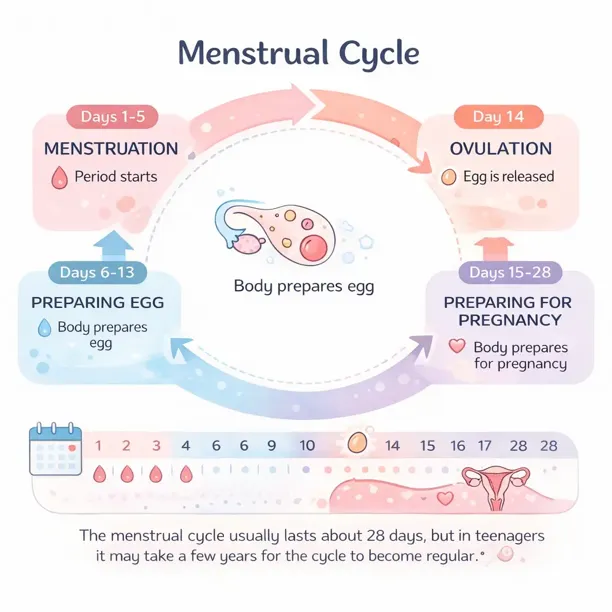
Irregular periods are common during the teenage years. When a girl first begins menstruating, the body is still adjusting to hormonal changes, and the menstrual cycle may take time to become regular.
While occasional irregularity is normal in the early years, persistent irregular cycles may sometimes indicate an underlying hormonal imbalance or other health concern.
At Aarogya Women’s Clinic in Kandivali East, Dr. Pallavi Kulkarni provides guidance and treatment for teenage girls experiencing menstrual irregularities as part of our adolescent gynecology services, ensuring both parents and adolescents feel reassured and supported.
Understanding when irregular periods are normal and when they need medical attention can help parents make informed decisions about their daughter’s health.
Is your daughter experiencing irregular periods or menstrual concerns? Early expert guidance makes a real difference.
Quick answer: Most teenage girls have irregular cycles for the first 2 to 3 years after their first period. This is usually normal as the hormonal system matures. See a doctor if periods stop for 3 or more months, cycles are shorter than 21 days or longer than 90 days, bleeding is very heavy, or irregularity is paired with acne, weight gain or excess facial hair, which can point to PCOS / PMOS.
Is this normal for my daughter’s age?
The most common question parents ask is whether what their teenager is experiencing is normal for her age. The short answer is that menstrual irregularity is common for the first two to three years after the first period (menarche), and the typical age of menarche in Indian girls is 12 to 13 years. Below is what is usually expected at different ages.
Age 10 to 11
Periods may have just started, and very irregular cycles, including gaps of two or three months between periods, are common in the first 6 to 12 months. The hormonal system is still maturing. Earlier than this, periods before age 9 should be evaluated, as should signs of puberty (breast development, pubic hair) starting before age 8.
Age 12 to 13
Most Indian girls reach menarche in this window. Cycles can vary widely, anything from 21 to 45 days between periods is within normal range. Some girls will skip a month or two. Irregularity at this age is rarely a cause for worry on its own.
Age 14
If your 14-year-old still has irregular periods, this is very often normal, especially if she had her first period at 12 or 13. The first 2 to 3 years after menarche is when the body is still settling. What does warrant a check: gaps of more than 3 months between periods, very heavy bleeding, severe cramping that misses school, or signs of PCOS / PMOS like acne plus excess facial hair plus weight gain.
Age 15
By 15, many teenagers will have settled into a more predictable pattern, but it is still normal to have the occasional skip. If your 15-year-old had her first period at 11 or 12 and is still chaotic at 15, a consultation is reasonable, since this is at the upper end of the normal-irregular window. A gynaecologist evaluation can rule out a hormonal or thyroid contribution.
Age 16 and above
By age 16, cycles should generally be within the 21 to 45 day range and reasonably predictable. Persistent irregularity beyond 3 years post-menarche warrants a gynaecologist evaluation. PCOS, thyroid disorders, and high body weight or very low body weight are the most common findings at this age.
Are you the teenager reading this yourself?
If your periods feel unpredictable, you are not alone, and most of the time it is your body still settling into its rhythm. A few things you can do right now while you decide whether to talk to a parent or doctor:
- Track your last 3 cycles — start date, end date, how heavy on each day. Our free period cycle calculator makes this quick.
- Note any red-flag symptoms — soaking through a pad in under 2 hours, gaps of more than 3 months, period pain that makes you miss school, new acne or excess facial hair.
- Look after the basics — consistent sleep, regular meals, easing up on late-night phone use during board exam stretches. These really do shift your cycle.
- Tell a parent or trusted adult if any of the red flags above show up, or if you have had no period at all by 15 or 16. A gynaecologist visit is just a conversation — no internal examination at a routine first visit, and a parent is welcome to be with you.
You can also book a consultation with Dr. Pallavi at Aarogya Women’s Clinic, Kandivali East — we see teenagers regularly, often with a parent.
Normal vs needs evaluation: the short version
The most useful question a parent or teenager can ask is: is this still in the normal teenage range, or has it crossed into worth-seeing-a-doctor? This table is the short version of how we think about it in the clinic.
| What | Normal in teens | Needs evaluation |
|---|---|---|
| Cycle length | 21 to 45 days, occasional variation | Shorter than 21 days, or longer than 90 days |
| Skipped periods | 1 to 2 skipped months per year | 3 or more months without a period, or 6 or more skipped months |
| Bleeding duration | 3 to 7 days | Less than 2 days, or more than 8 days |
| Bleeding heaviness | One regular pad lasting 3 to 4 hours | Flooding through a pad in 1 to 2 hours, or needing double protection |
| Pain (cramps) | Mild to moderate, manageable with rest and paracetamol | Severe, no relief from painkillers, missing school 1 or more days a month |
| Acne and hair | Mild acne, no excess facial or body hair | Persistent acne plus excess facial hair plus weight gain (the PCOS triad) |
| Age at first period | 10 to 15 years | Before 9, or no period by age 15 to 16 |
| 3 years post-menarche | Regular, occasional skip | Still chaotic, gaps of months, or worsening pattern |
If any single row in the right-hand column applies, a short consultation is worth booking. We use the same table when we talk things through with parents.
See a row that fits your daughter’s pattern? Book a short consultation at Aarogya Women’s Clinic, Kandivali East — we will look at the picture together.
Book An AppointmentA quick screening shorthand: the 7-2-1 rule
Some clinicians and patient-education resources use a short mnemonic called the “7-2-1 rule” as a quick screening shorthand for whether a period pattern needs a doctor’s look. It is not part of any formal international guideline — it is a practical screening tool that maps neatly onto the red flags above.
- 7 days — bleeding for more than 7 days in a single period is on the long side and is worth checking.
- 2 hours — soaking through a regular pad in less than 2 hours, consistently, is heavy bleeding that deserves evaluation.
- 1 month — cycles should occur about once a month. A gap of more than 1 month in a teenager whose periods had previously settled, or more than 3 months in any teenager, is worth a consultation.
This is a memory aid, not a diagnosis. The table above is the more complete version. If any single 7-2-1 number applies, a short consultation is reasonable.
Worried about your teenager’s menstrual health? A consultation can help address concerns early and provide reassurance.
Why are periods irregular in teenagers?
The causes range from the very common and self-correcting to less common medical conditions that benefit from early evaluation. Most teenagers fall in the first category.
Hormonal immaturity (the most common reason)
In the first 2 to 3 years after menarche, the hypothalamic-pituitary-ovarian axis is still settling. The signal between the brain and the ovaries is not yet fully calibrated, and ovulation does not happen every month. The result is irregular, often anovulatory, cycles. This pattern usually resolves on its own, and no specific treatment is needed beyond reassurance and good lifestyle habits. If you would like to learn more about the role hormones play, we have a longer guide on hormonal imbalance in women that puts this into context.
Polycystic ovary syndrome (PCOS / PMOS)
PCOS, recently renamed Polyendocrine Metabolic Ovarian Syndrome (PMOS) under the May 2026 Lancet consensus, is one of the more common medical reasons for persistent irregular periods in adolescents. The picture is usually irregular periods plus signs of hyperandrogenism — acne that is not improving, excess facial or body hair (hirsutism), androgenic alopecia (hair thinning along the front and crown), unexplained weight gain, or dark velvety skin patches on the neck or underarms (acanthosis nigricans). ICMR research and Indian population studies estimate prevalence in reproductive-age women in the 11 to 22 per cent range depending on diagnostic criteria, and many women trace their first symptoms back to adolescence. Read our full PCOS-is-now-PMOS guide for the latest on diagnosis, treatment, and what the name change means. If those cycles have carried on into her twenties, the adult version of this guide covers what comes next: irregular periods in women.
How PCOS is diagnosed in adolescents (2023 International Guideline)
In teenagers, the classic Rotterdam criteria used in adults are not applied in the same way, because normal puberty can mimic PCOS. Current international guidelines recommend stricter criteria for adolescents. For an adolescent diagnosis, both of the following are required:
- Irregular menstrual cycles — defined relative to years after menarche
- Clinical or biochemical hyperandrogenism
- Clinical: acne, hirsutism, androgenic alopecia
- Biochemical: elevated testosterone or other androgen levels on blood test
And other causes of irregular periods (thyroid disorder, hyperprolactinaemia, etc.) must be excluded.
The important difference from the adult Rotterdam criteria: in adults, diagnosis requires any 2 of 3 features — ovulatory dysfunction, hyperandrogenism, or polycystic ovaries on ultrasound. In adolescents, the ultrasound appearance of polycystic ovaries should not be used for diagnosis, because multifollicular ovaries are common during normal puberty. AMH (anti-Mullerian hormone) levels are also not recommended for diagnosis in this age group for the same reason.
Thyroid disorders
Both an underactive (hypothyroid) and an overactive (hyperthyroid) gland can change cycle length, flow, and regularity in teenagers. A simple TSH blood test is part of any reasonable workup. India has a high background rate of thyroid disorder in women, and the autoimmune Hashimoto’s pattern often shows up in adolescence. Our cluster page on thyroid disorders in women covers symptoms, fertility implications, and treatment in detail.
Stress and cortisol
Yes, stress can disrupt menstrual cycles, and persistently raised cortisol is part of how. Board exams, competitive sports, sleep deficit through late-night phone use, sudden family changes, all of these can shift the brain’s signal to the ovaries enough to skip a cycle or two. The cycles usually return on their own when the stressor eases. If your daughter has missed two or more cycles in a row during an exam term, this is the most likely explanation.
Weight and nutrition
Both ends of the weight spectrum can disrupt cycles. Significant weight loss, very low body weight, or undiagnosed eating disorders (anorexia, bulimia) can stop periods entirely. So can iron deficiency anaemia, which is common in Indian teenage girls. On the other end, a body mass index well into the overweight or obese range can cause irregular ovulation through insulin resistance, often as part of a PCOS picture. Intense athletic training (an hour or more daily plus restricted eating) is a recognised cause too, called the female athlete triad.
GLP-1 medications, semaglutide and Ozempic
This is a relatively new concern that people are searching for, so it is worth covering. GLP-1 receptor agonists, the drug class that includes semaglutide and liraglutide, can affect menstrual cycles in some women. The mechanism is mostly indirect, through the substantial weight loss these drugs cause, which itself shifts hormonal balance. Case reports describe both more regular cycles (in women whose irregularity was driven by high body weight) and new irregularity (in others).
What is approved in adolescents
GLP-1 receptor agonists are approved for obesity in adolescents aged 12 years and older with a body weight above 60 kg. The American Academy of Pediatrics (AAP) recommends offering anti-obesity pharmacotherapy, including GLP-1 receptor agonists, to adolescents aged 12 years and older with obesity, as an adjunct to lifestyle treatment (not a replacement).
Important: the US FDA does not recommend using Ozempic (semaglutide) below 18 years. Other GLP-1 formulations (such as liraglutide and the obesity-labelled semaglutide product Wegovy) have specific paediatric obesity approvals; Ozempic, marketed for type 2 diabetes, does not. If a teenager is on a GLP-1 for any reason, her treating endocrinologist or paediatrician should be monitoring menstrual-cycle changes alongside the metabolic outcomes. Do not start or stop these drugs without specialist input.
Other less common causes
Raised prolactin (hyperprolactinaemia), congenital adrenal hyperplasia, pituitary disorders, and rarely structural problems of the uterus can all present as irregular periods in a teenager. These are uncommon but worth ruling out when irregularity is persistent and unexplained by the more common causes above.
How are irregular periods in teenagers managed?
We deliberately use the word manage rather than cure here. Most teenage irregularity resolves on its own as the hormonal system matures, and the goal of management is to support that process, identify any underlying condition, and avoid unnecessary intervention.
Watchful waiting in the first 2 to 3 years
If the first period was recent and no red-flag symptoms are present, the right answer is often to wait and track. Many cycles will regularise without any treatment over 12 to 24 months. Our free Period Cycle Calculator lets a teenager log her periods so the pattern becomes visible, which is more useful than a single-month snapshot.
Lifestyle support that genuinely helps
- Sleep — at least 8 hours, with consistent bedtime. Sleep deficit is the single most common modifiable contributor to teenage cycle disruption in our clinic experience.
- Nutrition — a balanced Indian plate with iron-rich foods (palak, beetroot, dates, rajma, chana), enough protein (dal, paneer, eggs if not vegetarian), and avoiding heavy refined-carb dependence (maida, sugary drinks).
- Movement — regular moderate exercise, not excessive. An hour a day is good; three hours of competitive training plus restricted eating is not.
- Stress and screen hygiene — phone use late into the night is a recognised contributor to cycle disruption through sleep and cortisol effects.
Investigation when warranted
If the red-flag pattern fits or irregularity is persistent, a basic workup usually clarifies the cause. The typical first round of tests is:
- A pelvic ultrasound (if indicated) — non-invasive, external scan in teenagers (no internal probe at a routine first scan). In adolescents, polycystic appearance on ultrasound is not used for PCOS diagnosis because multifollicular ovaries are common during normal puberty.
- Hormonal blood tests — LH, FSH, prolactin
- Thyroid function — TSH, free T4
- Testosterone and fasting insulin — if PCOS is suspected or signs of hyperandrogenism (acne, hirsutism, androgenic alopecia) are present
- Haemoglobin — if heavy bleeding has been a feature, anaemia is common
Tests are done at trusted nearby labs that we recommend, and the reports come back to us for interpretation.
Medication when the picture is clear
Medication is not the default for teenage irregularity. We typically discuss it when there is a defined underlying condition (PCOS, thyroid, hyperprolactinaemia) or when the symptoms (very heavy bleeding, severe pain, ongoing anaemia) are affecting daily life. Options the doctor may discuss include thyroid hormone replacement for hypothyroidism, combined oral contraceptive pills for cycle regulation in selected cases, anti-androgens like spironolactone and cyproterone acetate for PCOS-driven hirsutism, or insulin sensitisers (metformin, myo-inositol) for the insulin-resistance component of PCOS. Each of these is started after a clear discussion with the family.
Things to avoid
- Unsupervised herbal cycle regulators — many over-the-counter herbal products marketed for menstrual regulation contain undisclosed hormones or iodine. We have seen patients arrive with worsened symptoms after months on these.
- Online hormone test kits — the test result without clinical interpretation is rarely useful and can be misleading. The same blood test ordered through a clinic costs less and gives you a doctor to discuss the result with.
- Self-prescribed supplements — iron, vitamin D, and folic acid are reasonable in the right doses, but high-dose kelp, iodine, and "fertility cycle" supplements should only be taken on medical advice in a teenager.
When to see a gynaecologist
The American College of Obstetricians and Gynecologists (ACOG) recommends a first reproductive-health visit between the ages of 13 and 15, even when no specific concern is present. This first visit is primarily a conversation and an opportunity to establish a relationship with a gynaecologist before any urgent issue arises.
Outside the routine 13-to-15 first visit, a consultation is worth booking sooner if any of the following apply:
- Periods have not started by age 15 to 16
- Gaps of more than 3 months between periods after the first year
- Cycles consistently shorter than 21 days
- Very heavy bleeding — flooding through a pad in 1 to 2 hours, large clots, doubling up pads
- Severe period pain that misses school regularly (see also our cluster on painful periods in teenagers)
- Signs of PCOS / PMOS — acne plus excess facial hair plus weight gain
- Signs of thyroid imbalance — tiredness, hair fall, weight change, feeling cold or hot
- Worsening pattern over 3 or more cycles in a row
"Not every irregular cycle in a teenager needs medical intervention. But knowing the difference between hormonal settling and something that needs a closer look is worth a 15 minute conversation."
— Dr. Pallavi Kulkarni
What happens at your daughter’s first visit
The most common worry Indian parents bring to a first teenage gynaecology visit is whether there will be an internal examination. The short answer is no, not at a routine first visit, unless clinically required and with explicit consent. Here is what the visit usually involves.
- We talk, we don’t rush. The first 15 to 20 minutes is a detailed history. Age at first period, cycle pattern, any pain, family history, school stress, sleep, diet, mood. Most diagnoses start to take shape during this conversation.
- No internal examination at a routine first visit, unless clinically required and after explanation and consent. The vast majority of teenage consultations involve only a history, an external abdominal examination, and (when needed) an external pelvic ultrasound.
- Parent can stay in the room. Most teenagers prefer this and we encourage it. If the teenager would like a few minutes alone with the doctor at some point, that is also welcomed.
- We may recommend a blood test. Same-day at a trusted nearby lab. The reports come back to us for interpretation.
- Pelvic ultrasound only if clinically needed. In teenagers this is an external (abdominal) scan, not an internal one. Most centres we refer to are within a 10 to 15 minute drive.
- We explain what we find before you leave. Even if all the results are not back yet, you leave with a clear sense of what we are looking for and what comes next.
- Follow-up plan agreed before you leave. Most teenage cases need one or two follow-up visits, not more. The aim is reassurance plus a clear monitoring plan, not perpetual appointments.
A typical clinical pattern in our adolescent consultations
What we most commonly see
In our Kandivali East clinic, the most common presentation when a parent brings a teenage daughter for irregular periods is oligomenorrhoea — infrequent periods, with cycles often more than 45 days apart — alongside sudden weight gain over a short period of time. When this combination shows up, we look closely for signs of hyperandrogenism: moderate to severe acne not improving with usual care, and hirsutism (excess facial or body hair). This cluster is the pattern that most commonly leads us toward a PCOS evaluation within the 2023 adolescent diagnostic framework described above. Not every teenager with one of these symptoms has PCOS — but when two or more appear together, a short workup is worth doing.
Tools to help you track the pattern
Pattern is more useful than any single month’s reading. We use free, on-site tools to help families log cycles before a consultation, which makes the conversation faster and more accurate.
- Period Cycle Calculator — estimate cycle length, the next period, and bleeding window. Useful for the first 6 to 12 months of tracking.
- Ovulation and Fertile Window Calculator — mostly relevant for older teenagers or for the retrospective audience now trying to conceive. Less relevant for the 12 to 16 age band.
Both tools are free, clinician-reviewed, and don’t need an account or app install.
Related reads
References and further reading
- ACOG Committee Opinion — The Initial Reproductive Health Visit (2020) — the first reproductive-health visit between ages 13 and 15.
- ACOG — Menstruation in Girls and Adolescents: Using the Menstrual Cycle as a Vital Sign — normal cycle parameters for adolescents.
- Dambhare et al, 2012. Age at menarche and menstrual cycle pattern among school adolescent girls in Central India. Glob J Health Sci.
- Bharali et al, 2022. Prevalence of Polycystic Ovarian Syndrome in India: A Systematic Review and Meta-Analysis. Cureus.
- Ganie et al, 2025. Unravelling Prevalence and Pattern of Various Hormonal Dysfunctions Among Reproductive Age Community Dwelling Indian Women: Lessons From ICMR PCOS Task Force Sub Study. Clin Endocrinol.
- Teede et al, 2023. Recommendations from the 2023 International Evidence-based Guideline for the Assessment and Management of Polycystic Ovary Syndrome. Hum Reprod. — the source for the adolescent PCOS diagnostic criteria used on this page (irregular cycles + clinical or biochemical hyperandrogenism, ultrasound and AMH not used for adolescent diagnosis).
- Indian Academy of Pediatrics (IAP) — adolescent health resources.
- NICHD — Menstruation: Condition Information — US National Institute of Child Health and Human Development.
- WHO — Polycystic ovary syndrome fact sheet.
- NHS UK — Irregular periods — patient-facing overview.
Last reviewed by Dr. Pallavi Kulkarni on 26 May 2026. We update this page when guideline bodies revise their recommendations.
If your daughter is experiencing irregular periods or menstrual concerns, early medical guidance can help ensure healthy development. Consult Dr. Pallavi Kulkarni at Aarogya Women’s Clinic, Kandivali East for expert adolescent gynecology care.
Parents from Kandivali West, Borivali East and West, Malad East and West, Goregaon East and West, and Thakur Village bring their daughters for expert care at our Kandivali East clinic. Also see our cluster on puberty counselling for girls.
What Our Patients Say
Experienced Gynecologist in Kandivali East with a Patient-Centered Approach
Dr. Pallavi Kulkarni is a highly regarded Gynecologist in Kandivali East, praised for her calm, compassionate, and patient-centered care. Her supportive approach helps women feel heard, respected, and confident about their treatment decisions.
Do you have any questions?
Request An AppointmentFAQ
When should I worry about irregular periods in my teenager?
A consultation is worth booking if any of these apply: gaps of more than 3 months between periods after the first year post-menarche, cycles consistently shorter than 21 days, very heavy bleeding (flooding through a pad in 1 to 2 hours), severe pain that misses school regularly, no period by age 15 to 16, irregularity paired with acne plus excess facial hair plus weight gain (the PCOS / PMOS triad), or a worsening pattern over 3 or more cycles. In the first 2 to 3 years after the first period, irregularity by itself is usually normal and resolves on its own.
Is it normal for my 14-year-old to have irregular periods?
Yes, in most cases. The median age of menarche in Indian girls is 12 to 13 years, and the hormonal system typically takes 2 to 3 years to settle. A 14-year-old whose periods are still irregular is usually within that normal window. What does warrant evaluation: gaps of more than 3 months, very heavy bleeding, severe cramping that misses school, or the PCOS triad (acne plus excess facial hair plus weight gain). If she had her first period at 11 and is still chaotic at 14, a single consultation to rule out an underlying contribution is reasonable.
Is it normal for my 15-year-old to have irregular periods?
Often yes, particularly if she had her first period at 12 or 13. By 15, many teenagers will have settled into a more predictable pattern, but the occasional skip is still normal. If she had her first period at 10 or 11 and is still very chaotic at 15, this is at the upper end of the normal-irregular window and a consultation is reasonable. A short workup (thyroid, hormonal panel, pelvic ultrasound) is usually enough to clarify whether the cause is just hormonal settling or something else.
How often should a 14-year-old get her period?
A normal cycle in a teenager runs anywhere from 21 to 45 days between periods, with bleeding lasting 3 to 7 days. So at 14, getting a period roughly every 3 to 6 weeks is within normal. Skipping a month or two in a year is also common. What is outside the normal range: cycles consistently shorter than 21 days, gaps of more than 3 months, bleeding longer than 8 days, or very heavy bleeding. Tracking cycles for 2 to 3 months with our free period cycle calculator often clarifies whether the pattern needs a doctor’s look.
Can thyroid issues affect periods in teenagers?
Yes. Both an underactive thyroid (hypothyroidism) and an overactive thyroid (hyperthyroidism) can change cycle length, flow, and regularity in teenagers. Hypothyroidism tends to cause heavier and more frequent periods, while hyperthyroidism tends to make them lighter or skipped. A simple TSH blood test is part of any reasonable workup for persistent teenage irregularity. India has a high background rate of thyroid disorder in women, and the autoimmune Hashimoto’s pattern often shows up in adolescence. Our detailed guide on thyroid disorders in women covers symptoms, fertility implications, and treatment.
What are the first signs of PCOS in teenagers?
The picture in adolescents is irregular or skipped periods plus signs of hyperandrogenism — acne that is not improving with usual care, excess facial or body hair (hirsutism), androgenic alopecia (hair thinning), or biochemical evidence of high androgens on a blood test. Per the 2023 International Guideline, an adolescent PCOS diagnosis requires both irregular cycles and clinical or biochemical hyperandrogenism, with other causes excluded. Ultrasound appearance of polycystic ovaries is not used for diagnosis in this age group because multifollicular ovaries are common during normal puberty. Read our full PCOS-is-now-PMOS guide for the latest on diagnosis and management.
Can high cortisol or stress affect menstruation?
Yes. Persistently raised cortisol disrupts the brain’s signal to the ovaries enough to skip cycles. Board exams, competitive sports, sustained sleep deficit, late-night phone use, sudden family or school changes, all of these can cause one or two missed cycles. The cycles usually return on their own once the stressor eases. If your daughter has missed two or more cycles in a row during an exam term, this is the most likely explanation. Persistent cortisol-related disruption beyond a few months, especially with weight loss or weight gain, is worth a check.
Can GLP-1, Ozempic or semaglutide affect the menstrual cycle?
Yes, in some women. GLP-1 receptor agonists (semaglutide, liraglutide) can change menstrual cycles, mostly indirectly through the substantial weight loss they cause. GLP-1 RAs are approved for adolescents aged 12 and older with obesity (body weight above 60 kg); the AAP recommends offering them as an adjunct to lifestyle treatment in eligible adolescents. The US FDA does not recommend using Ozempic (semaglutide) below age 18. If a teenager is on any GLP-1 medication, her treating endocrinologist or paediatrician should be monitoring menstrual-cycle changes alongside the metabolic outcomes. Do not start or stop these drugs without specialist input.
How are irregular periods in teenagers treated?
The first answer is usually watchful waiting in the first 2 to 3 years post-menarche, alongside lifestyle support: consistent sleep, balanced nutrition, moderate exercise, and stress management. Cycle tracking helps the pattern become visible. If the picture suggests an underlying condition (PCOS, thyroid, hyperprolactinaemia) or symptoms are affecting daily life (very heavy bleeding, severe pain, anaemia), the doctor will run a short workup and discuss treatment options. Medication is not the default and is reserved for cases with a clear underlying diagnosis. Avoid unsupervised herbal cycle regulators and online hormone test kits without clinical interpretation.
How often should teenagers see a gynaecologist?
ACOG recommends a first reproductive-health visit between ages 13 and 15, even when no specific concern is present. This is mostly an educational conversation. After the first visit, there is no fixed frequency for routine visits in a healthy teenager, but an annual conversation-only visit from age 15 onwards is reasonable. A consultation should be brought forward if she has any of the red-flag patterns described above (cycle gaps over 3 months, very heavy bleeding, severe pain, or the PCOS triad).
What tests will the doctor order for irregular periods?
The typical first round depends on the picture but commonly includes: a pelvic ultrasound if indicated (external / transabdominal in teenagers, no internal probe at a routine first scan; ultrasound appearance of polycystic ovaries is not used for PCOS diagnosis in this age group), hormonal blood tests (LH, FSH, prolactin), and thyroid function (TSH, free T4). Testosterone and fasting insulin are added when PCOS is suspected or signs of hyperandrogenism (acne, hirsutism, androgenic alopecia) are present. If heavy bleeding has been a feature, a haemoglobin and iron-studies check is added. Tests are done at trusted nearby labs that we recommend, and the reports come back to us for interpretation at a follow-up visit.
Will there be an internal examination at the first visit?
No, not at a routine first visit, unless clinically required and after explanation and consent. The vast majority of teenage gynaecology consultations involve only a history, an external abdominal examination, and (when needed) an external pelvic ultrasound. A parent is welcome to be present throughout. The aim of the first visit is to understand the cycle pattern and make the consultation feel safe.