Adolescent Gynecology Clinic in Kandivali East

Medically reviewed by Dr. Pallavi Kulkarni, MBBS, DGO, DNB (OB-GYN), DFP, MRCOG (UK), Fellowship in IVF ·

Adolescence is a time of rapid physical and emotional development. As girls transition from childhood to adulthood, they experience significant hormonal and bodily changes. These changes are natural, but sometimes they can lead to concerns related to puberty, menstrual cycles, skin changes, or hormonal balance.

Adolescent gynecology focuses on the unique healthcare needs of teenage girls. At Aarogya Women’s Clinic in Kandivali East, Dr. Pallavi Kulkarni provides compassionate, confidential, and evidence-based care for adolescents.

Dr. Pallavi Kulkarni in a white coat consulting with a teenage girl and her mother at her desk in Aarogya Women's Clinic, Kandivali East. The doctor points to a printed report with a pen, the daughter in a soft pink top sits attentively in the middle, and the mother in a cream saree sits supportively beside her

Indian data on adolescent menstrual health, summarised by the Indian Academy of Pediatrics (IAP) and in peer-reviewed Indian community-medicine research, places the median age of menarche in Indian girls at roughly 12 to 13 years, with menstrual irregularity common in the first two years after the onset of periods. The American College of Obstetricians and Gynecologists (ACOG) separately recommends that a girl’s first reproductive-health visit happens between the ages of 13 and 15, even when no specific concern is present, primarily for education, counselling, and to establish a long-term care relationship.

At a Glance

Who we seeGirls aged roughly 10 to 18, with parents welcome. Dr. Pallavi Kulkarni is a female (lady) gynecologist, which most Indian families prefer for teenage consultations.
What we treatIrregular periods, painful periods, very heavy bleeding, delayed first period (primary amenorrhea), periods stopping (secondary amenorrhea), hormonal acne, hirsutism, suspected PCOS in teenagers, puberty counselling, HPV vaccination
Typical first visit30 to 45 minutes. Detailed history and counselling. A parent is welcome and can stay throughout. No internal examination unless clinically required, and never without your understanding and consent.
Tests, if neededPelvic ultrasound and basic hormone panel (TSH, prolactin, testosterone, LH, FSH, vitamin D) at nearby imaging centres and pathology labs, with a follow-up visit to review the reports
LanguagesEnglish, Hindi, Marathi
Clinic hoursMonday to Saturday, 10:00 AM to 9:00 PM. Closed Sundays.
LocationAarogya Women’s Clinic, Thakur Village, Kandivali East. Families from Kandivali West, Borivali, Malad, and Goregaon attend regularly.

What is Adolescent Gynecology?

Adolescent gynecology is the branch of women’s healthcare focused on girls aged roughly 10 to 19, covering puberty, menstrual health, hormonal changes, and reproductive development. It is sometimes also called teenage gynecology, gynecology for young girls, or, in some clinical contexts, pediatric and adolescent gynecology.

Many teenagers experience changes in their bodies that can raise questions or concerns. Some of these changes are normal, while others may need medical evaluation. The right teenage gynecologist or period doctor for teenagers will recognise the difference, explain it in plain language, and avoid over-treating concerns that are part of normal pubertal variation.

Early guidance and medical care can help prevent long-term health issues and ensure that young girls develop healthy habits and understanding about their bodies. The goal is to ensure that young girls receive the right guidance, treatment, and reassurance during this important stage of life.

Is your daughter experiencing period problems or puberty-related concerns? Early expert guidance makes a real difference.

What Are the Most Common Gynecology Problems in Teenage Girls?

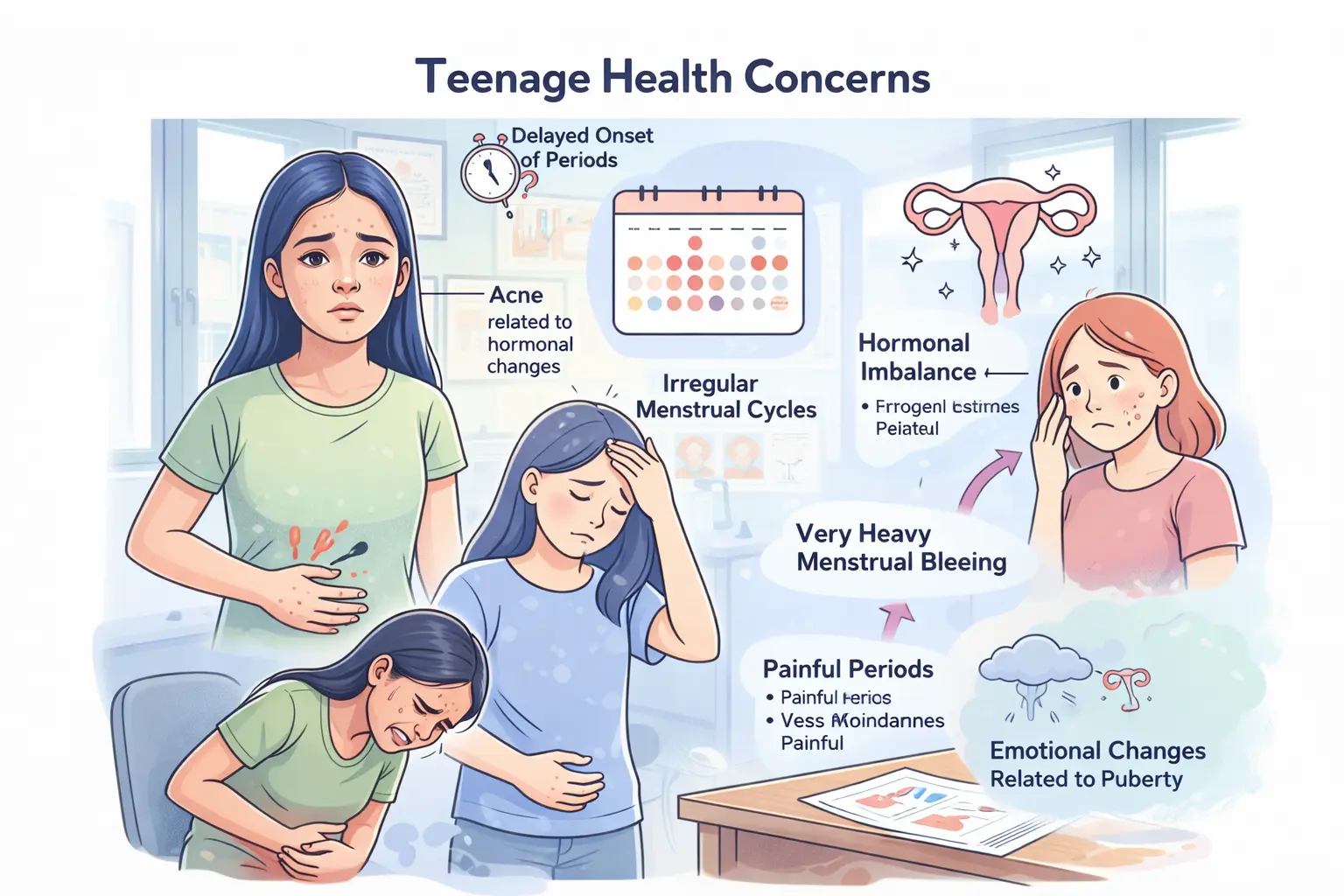
Indian teenage girl with her mother discussing common gynecology concerns - irregular periods, painful cramps, acne and puberty - during an adolescent gynecology consultation in Kandivali East

The five most common gynecology problems Indian teenagers see a doctor for are irregular periods, painful periods, heavy bleeding, acne and hormonal symptoms, and delayed or absent periods. Most are part of the normal hormonal adjustment of the first two years after menarche, but persistent or severe versions need evaluation. Some of the common problems include:

Many of these conditions are manageable with the right medical advice and treatment.

Worried about your teenager’s menstrual health or puberty development? A consultation can help address concerns early.

When Does Puberty Start in Indian Girls, and What Counselling Helps?

One of the most important aspects of adolescent gynecology is education and counselling. The NICHD (National Institute of Child Health and Human Development) notes that puberty in girls usually begins between ages 8 and 13, with the first menstrual period typically following two to three years later.

Young girls and their parents often have questions about:

  • When puberty should begin
  • What changes occur during puberty
  • How to manage the first menstrual cycle
  • Hygiene and menstrual care
  • Emotional changes during adolescence

Pre-pubertal counselling helps prepare girls for these changes and reduces anxiety about puberty and menstruation.

Why Are My Teenage Daughter’s Periods Irregular or Painful?

Many girls experience menstrual irregularities during the first few years after their periods begin. While some variation in cycle length is normal, persistent problems may need medical attention.

Common menstrual concerns include:

If menstrual issues interfere with school, sports, or daily activities, it is advisable to consult a gynecologist.

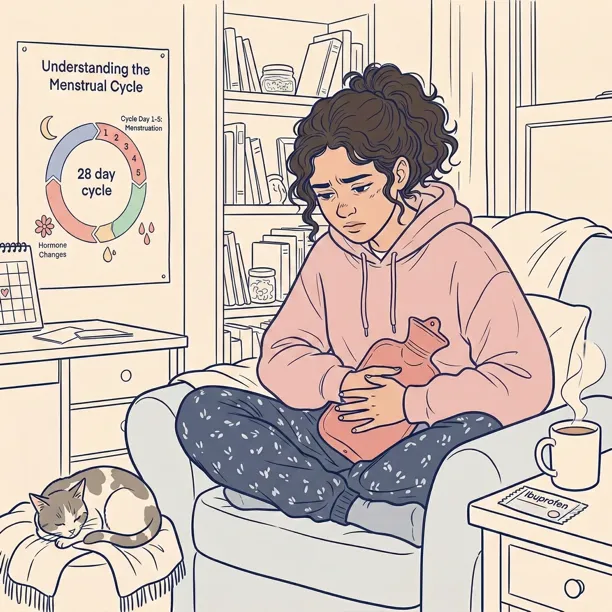
Illustration of the menstrual cycle showing typical patterns and period pain in teenage girls, used to explain irregular periods and dysmenorrhea to adolescent patients

Why Does My Teenage Daughter Have Hormonal Acne?

Hormonal fluctuations during puberty often cause acne. While mild acne is common, severe or persistent acne, especially with irregular cycles or excess facial hair, may indicate an underlying hormonal imbalance such as PCOS (the WHO fact sheet on polycystic ovary syndrome). According to ICMR PCOS Task Force research, PCOS prevalence in Indian women of reproductive age is consistently reported in the 11 to 22 percent range depending on diagnostic criteria, and the condition often becomes evident in the teenage years.

Treatment may involve:

  • Lifestyle and dietary guidance
  • Medical therapy when required
  • Hormonal evaluation in some cases

Early management helps prevent long-term skin issues and improves confidence during adolescence.

Many teenage health concerns are common and treatable - consulting a specialist can provide clarity and peace of mind.

Delayed Periods (Primary Amenorrhea)

Primary amenorrhea refers to a situation where a girl has not started menstruating by the expected age.

Possible causes include:

  • Hormonal imbalance
  • Genetic factors
  • Structural variations in the reproductive organs
  • Delayed puberty

Evaluation by a gynecologist helps determine the cause and guide appropriate treatment.

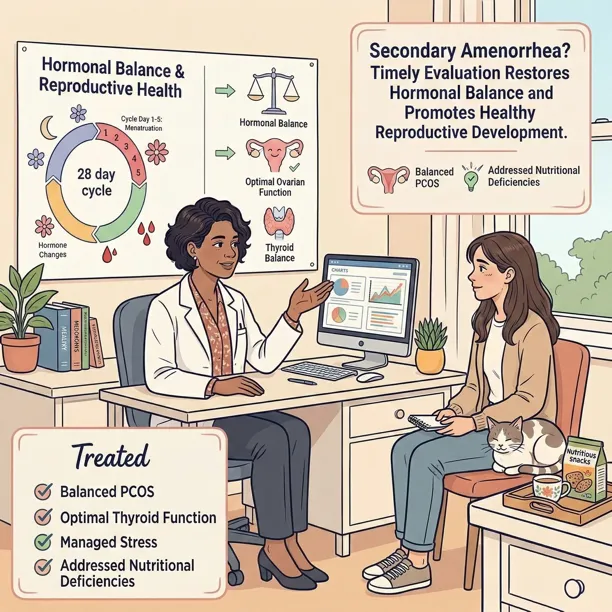
Hormonal balance and reproductive health in teenagers

Why Did My Teenager’s Periods Stop After Starting? (Secondary Amenorrhea)

Secondary amenorrhea occurs when a girl who previously had menstrual cycles stops getting periods for several months.

Possible causes include:

  • Hormonal imbalance
  • Stress or lifestyle factors
  • Polycystic ovarian syndrome (PCOS)
  • Thyroid disorders
  • Nutritional deficiencies

Timely evaluation helps restore hormonal balance and ensure healthy development.

Normal vs Needs Evaluation: A Quick Reference for Parents

Most teenage menstrual and pubertal changes are part of normal hormonal adjustment. A few patterns are worth a gynaecologist visit. This table is a starting point, not a substitute for a consultation.

Common in teenagers Worth seeing a gynaecologist Symptom
21 to 45 days in the first 2 years after menarche Cycles consistently shorter than 21 days, longer than 90 days, or still erratic 2+ years after periods started Cycle length
3 to 7 days of bleeding, changing pad every 4 to 6 hours Bleeding more than 7 days, soaking a pad every 1 to 2 hours, passing large clots Period duration and flow
Mild cramps managed with rest, a hot bag, or basic painkillers Pain that makes her miss school, vomit, faint, or stay in bed; pain that started in her 20s; pain getting worse over time Period pain
Periods starting between ages 10 and 15 No period by age 15 to 16 (primary amenorrhea), or no breast development by age 13 Age at first period
An occasional missed cycle, especially around exams or travel Periods stopping for 3 or more months in a row (secondary amenorrhea) in a teenager who was previously regular Missed periods
Mild acne, manageable with skincare, that comes and goes with cycles Severe or cystic acne, especially with excess facial hair, scalp hair thinning, weight gain, or irregular cycles (suggests PCOS) Acne and hormonal signs
Mild PMS symptoms (mood swings, breast tenderness, bloating) in the days before a period Mood symptoms severe enough to affect school, friendships, or sleep, especially if cyclical (premenstrual dysphoric disorder is rare but real) Mood and PMS
Clear, slippery, or whitish discharge that varies through the cycle Discharge with itching, smell, colour change (green/yellow), or burning while urinating Vaginal discharge

When Should a Teenager See a Gynecologist?

Parents should consider consulting a gynecologist if their daughter experiences:

  • Very painful periods
  • Very heavy menstrual bleeding
  • Periods not starting by age 15–16
  • Periods stopping for several months
  • Severe acne with other hormonal symptoms
  • Concerns about puberty development

Early consultation helps identify problems early and provides reassurance.

Adolescent-Friendly Care at Aarogya Women’s Clinic

Adolescent gynecology requires a sensitive and supportive approach. At Aarogya Women’s Clinic, consultations are conducted in a comfortable environment where teenage girls can discuss their concerns openly.

"Teenage girls need a safe space to ask questions about their bodies without judgement. Early guidance can prevent long-term health issues."
- Dr. Pallavi Kulkarni

Dr. Pallavi Kulkarni focuses on:

  • Patient comfort and privacy
  • Clear explanations for both parents and teenagers
  • Evidence-based medical treatment
  • Preventive guidance for long-term health

The aim is to help young girls develop confidence and understanding about their health.

An Indian teenage girl smiling and at ease after her adolescent gynecology consultation with Dr. Pallavi Kulkarni at Aarogya Women's Clinic, Kandivali East

Common Pre-Teen and Teenage Gynecology Concerns

As girls enter puberty, their bodies go through hormonal changes that can sometimes lead to menstrual or gynecological concerns. Most are common and manageable with the right guidance, and a few are worth seeing a gynaecologist about. Each card below explains what is normal, what is not, and where to read more.

Irregular Periods in Teenage Girls

Most teenagers have irregular cycles in the first two years after periods start, this is part of normal hormonal settling. Cycle lengths between 21 and 45 days fall within the typical range during these early years. What is not normal: gaps of three months or more, periods still chaotic at age 16 to 17, very heavy bleeding (soaking a pad in under two hours), or cycles getting more erratic instead of more regular over time.

Good to know: A simple paper diary or a cycle-tracking app recording the start date and length of each period for three to four months gives Dr. Pallavi a far clearer picture than memory alone.

Read the full guide →

Painful Periods in Teenagers

Mild cramps in the first one to two days of a period are normal, especially in early teenage years. Painful periods (dysmenorrhea) that make a girl miss school, vomit, or stay in bed are not, and they are one of the most underdiagnosed reasons Indian girls fall behind academically. Causes range from primary dysmenorrhea (no underlying problem, very common, very treatable) to less common conditions like endometriosis.

Good to know: Pain that started in the late twenties rather than as a teenager, or pain that has been getting steadily worse over years rather than easing, is more likely to point to a structural cause and is worth a thorough workup.

Read the full guide →

Delayed First Period (Primary Amenorrhea)

If a girl has not started her periods by age 15 to 16, or has started showing puberty changes (breast development, pubic hair) more than three years earlier without periods following, this needs evaluation. Causes range from hormonal (PCOS, hypothalamic amenorrhea) to structural (an uncommon developmental difference in the reproductive tract) to genetic. Most are treatable, and an early workup is much easier than waiting.

Good to know: A pelvic ultrasound plus a basic hormone panel (TSH, FSH, LH, prolactin) clarifies the cause in most teenagers, often in a single round of tests.

Read more in this article →

Hormonal Acne in Teenage Girls

Most teenage acne is part of normal puberty and improves with simple skincare. Acne combined with irregular periods, weight gain, excess facial hair, or scalp hair thinning is different, it can point to PCOS (recently renamed PMOS) or another hormonal pattern. A basic hormone panel and a pelvic ultrasound usually clarify whether the acne is “skin alone” or “hormones underneath.”

Good to know: Combined oral contraceptives and anti-androgens like spironolactone are the most evidence-based options for genuinely hormone-driven teenage acne, but they are never a first-line move without proper evaluation.

A note for women in their twenties: If your irregular periods, acne, or weight changes started in your teens and were never properly evaluated, a single round of blood tests and an ultrasound can give you answers even now, at 20, 25, or older. It is never too late to look at the root cause. See our PCOS is now PMOS guide for the latest on diagnosis and treatment.

Related: Hormonal Imbalance in Women →

Puberty Counselling for Girls

Education for the teenager and her family on what is happening in her body, what is normal, what is not, and how to manage the first few periods. Often the single most reassuring visit a parent and daughter can have together. Topics covered include the menstrual cycle, breast development, pubic hair growth, mood changes, menstrual hygiene, and red-flag symptoms to watch for.

Good to know: Many Indian families schedule a puberty counselling visit around age nine to eleven, before the first period, so the teenager has the information she needs before she needs it.

Read the full guide →

HPV Vaccination

The HPV vaccine protects against cervical cancer and is most effective when given before sexual activity begins. WHO and India’s MoHFW recommend the vaccine for girls aged 9 to 14, with two doses six months apart in this age band. For girls aged 15 to 26, the older three-dose schedule still applies. Boys benefit too, and gender-neutral HPV vaccination is increasingly recommended.

Good to know: In India the HPV vaccine is available as Cervavac (Serum Institute of India, indigenous, lower cost, quadrivalent), Gardasil 4 (MSD, quadrivalent) and Gardasil 9 (MSD, nonavalent). All three are effective; Gardasil 9 has the broadest strain coverage.

Watch the explainer video →

Watch: Why Early HPV Vaccination Matters for Both Boys and Girls

A short explainer from Dr. Pallavi Kulkarni on the HPV vaccine, when to give it, why it is recommended for both boys and girls, and what parents in India often ask.

In India, the HPV vaccine is available as Cervavac (Serum Institute of India, indigenous), Gardasil 4 (MSD) and Gardasil 9 (MSD). Cervical cancer is a vaccine-preventable disease per the WHO cervical cancer fact sheet, which makes timely HPV vaccination one of the most important steps families can take. Parents commonly ask whether the vaccine is safe (yes, well-established safety profile), whether boys should be vaccinated too (yes, recommended), and whether it works after sexual activity has started (still useful, but most protective before exposure). Dr. Pallavi can discuss the right schedule for your daughter at the consultation.

If your child is experiencing puberty-related concerns or menstrual problems, early medical guidance can make a significant difference. Consult Dr. Pallavi Kulkarni at Aarogya Women’s Clinic, Kandivali East for expert adolescent gynecology care.

Families across Kandivali West, Borivali East, Borivali West, Malad East, Malad West, Goregaon East, and Thakur Village trust Dr. Pallavi Kulkarni for adolescent gynecology care.

What Happens at Your Daughter’s First Gynecology Visit?

The first visit anxiety is real, for parents and for teenagers. Here is exactly how a visit at Aarogya Women’s Clinic goes, so the day feels predictable instead of unfamiliar.

  1. You check in and settle in the waiting area. The reception is calm and private. There is no separate teen waiting area, but consultations run roughly on time so the wait is short. You can come in school uniform straight from class, this is common.
  2. Dr. Pallavi calls you in together with a parent. Most teenagers prefer a parent to be in the room for the first visit, and that is welcome. If you would rather speak to Dr. Pallavi alone for some part of the conversation, that is also fine and parents are usually supportive of that.
  3. The consultation begins with a conversation, not an examination. Dr. Pallavi will take a detailed history, your age at first period, your usual cycle pattern, any pain or heavy bleeding, school sports, family history of PCOS or thyroid issues, sleep, stress, diet. This part usually takes 15 to 20 minutes and is the most important step.
  4. An internal examination is not part of a routine first visit. Indian parents and teens specifically worry about this, and it is worth saying clearly: an internal exam is only done if there is a specific clinical reason (for example, persistent severe pain or suspected structural issue), and never without prior explanation and consent. For the great majority of teenage visits, no internal examination is needed at any stage.
  5. Dr. Pallavi explains what she thinks is going on, in plain language. Whether it is normal pubertal variation, irregular cycles in the first two years (very common), PCOS, thyroid imbalance, or something else, you leave the room knowing what the working diagnosis is and what comes next.
  6. If tests are needed, you get a clear test list. Pelvic ultrasound, fasting bloods (insulin, TSH, prolactin, testosterone, LH, FSH, vitamin D) and a follow-up visit to review the reports together. Scans and bloods are done at trusted nearby imaging centres and pathology labs.
  7. Counselling and follow-up. A lot of adolescent gynecology is reassurance plus simple lifestyle guidance, diet, sleep, exercise, weight, and only sometimes medication. Most teenage concerns settle with two or three visits over a few months.

Meet Dr. Pallavi Kulkarni – Expert Gynecologist in Mumbai

Dr. Pallavi Kulkarni is a gynecologist and obstetrician with 16 years of experience in women's healthcare, with particular sensitivity to adolescent gynecology, puberty counselling, and menstrual concerns in teenagers and young women. She is known for creating a comfortable, non-judgemental space where young patients and their parents can ask questions and discuss concerns openly.

Her qualifications include MBBS from KIMS Karad (MUHS), DGO and DFP from Wadia Hospital (CPS), DNB (OB/GYN) from Central Railway Hospital, Byculla (Natboard), MRCOG (UK) from the Royal College of Obstetricians and Gynaecologists, London, and a Fellowship in IVF from AMOGS-MCOG. She is a member of FOGSI, MOGS, AFG, AMC, and IMA.

Maharashtra Medical Council Reg. No. 2005/06/2917

Also Serving Adolescent Patients Across Mumbai’s Western Suburbs

Families travel to Aarogya Women’s Clinic in Thakur Village, Kandivali East from across the western suburbs for teenage gynecology care. If you are coming from a neighbouring suburb, our location pages cover commute and parking specifically for your area.

Gynecologist in Kandivali West

Teenage daughters from Charkop, Mahavir Nagar, Dahanukar Wadi, Irani Wadi, MG Road, and Kandivali Village consult Dr. Pallavi Kulkarni for irregular periods, painful periods, suspected PCOS, and puberty counselling. The clinic is 3 to 5 km from most of Kandivali West, a 10 to 15 minute residential drive.

View clinic details & directions from Kandivali West →

Gynecologist in Borivali

North Mumbai working families from Borivali East and Borivali West come for adolescent gynecology consultations via the Western Express Highway (Akurli Road exit) or SV Road. 4 to 8 km, 15 to 25 minute drive in regular traffic.

View clinic details & directions from Borivali →

Gynecologist in Malad

Patients from Malad East and Malad West, including Dindoshi, Kurar Village, Pathanwadi, Upper Govind Nagar, Orlem, Evershine Nagar, Chincholi Bunder, and Mindspace, regularly consult for teenage gynecology issues. 5 to 7 km via Link Road or the WEH Akurli exit.

View clinic details & directions from Malad →

Gynecologist in Goregaon

Families from Goregaon East and Goregaon West reach the clinic via the Western Express Highway (Akurli Road exit) or Aarey Road. 6 to 9 km, 20 to 30 minute drive. Many bring their teenagers here for first gynecology consultations.

View clinic details & directions from Goregaon →

What Our Patients Say

★★★★★

Highly Recommended Gynecologist in Kandivali East for Pregnancy and Women's Health
Dr. Pallavi Kulkarni is a preferred Gynecologist in Kandivali East for women seeking compassionate support during consultations, pregnancy, and routine gynecological care. Patients consistently praise her kindness, professionalism, and clarity.

5.0 ★★★★★ 27 reviews on Google
Write a Review
AB
Aarti Bhalerao
Google Review
★★★★★

She is amazing doctor with superb Nature & very helpful whenever needed. Thank you Dr pallavi ma’am you are the best dr ♥️🤗

NS
Nitu Solanki
Google Review
★★★★★

I am beyond grateful to Dr. Pallavi Kulkarni for the exceptional care during my pregnancy. She is incredibly knowledgeable, kind, and attentive. Highly recommend her to any expectant mothers.

MA
Manish Agarwalla
Google Review
★★★★★

Dr. Pallavi Kulkarni demonstrated exceptional clinical expertise with an accurate diagnosis and timely execution of the required procedure. What truly stood out was the patience and empathy shown in a...

AY
Aaradhya Yadav
Google Review
★★★★★

I had an excellent experience with Dr. Pallavi. She is very good and patiently listens to all problems without rushing. She explained everything clearly and gave me the right treatment. I got very goo...

SM
Samadhan Mule
Google Review
★★★★★

Left a 5-star rating. Excellent!

SD
shraddha deshmukh
Google Review
★★★★★

I had a wonderful experience with Dr. Pallavi , She is truly one of the best in her field , highly knowledgeable, kind and very humble in her approach. She makes you feel comfortable and heard during...

AS
aparna sukthankar
Google Review
★★★★★

Dr. Pallavi is a very kind and supportive doctor her treatments have been really effective and helpful. Thanks a lot for all help and support.

SM
Sanchari Mukherjee
Google Review
★★★★★

Very supportive doctor who listens to the patient very patiently. She identified the issue by providing the exact tests and provided suggestions which were really helpful.

MT
Megha Talekar
Google Review
★★★★★

Dr. pallavi kulkarni is good gynaecologist doctor kandivali (east) thakur village.

SK
Swarupa Kadam
Google Review
★★★★★

Left a 5-star rating. Excellent!

SK
Shringar kay
Google Review
★★★★★

Dr. Pallavi is truly amazing. I had been struggling with PCOD/PCOS issues for quite some time, and her treatment and guidance really helped me manage and improve my condition. She is extremely kind, p...

VS
Vidya Shekar
Google Review
★★★★★

Dr. Pallavi is very kind and helpful and I am extremely satisfied with the care and attention I received. She is very patient and takes time to listen carefully to our concerns. Her professionalism, c...

SD
Shweta Duggal
Google Review
★★★★★

Dr. Pallavi is super kind and gives great counselling and advice. She focuses on understanding the underlying issue rather than giving medicines blindly which other doctors do! Had great experience, w...

MC
Minakshi Chandak
Google Review
★★★★★

Dr. Pallavi is the best gynaecologist I know! She has supported me right through my pregnancy journey. She always explained everything in a simple way, it kept my stress away. Above all, she answered...

RK
Rashmi Khaparkar
Google Review
★★★★★

Dr Pallavi mam is very skilled and sweet doctor. She makes her patient comfortable and give proper guidance. She is really wonderful.

SS
Sega Sissoko
Google Review
★★★★★

Left a 5-star rating. Excellent!

JA
jisha A.R
Google Review
★★★★★

The doctor was very kind patient and professional. She explained everything clearly and made me feel comfortable. I am very satisfied with the consultation.

SD
Swapnali Darde
Google Review
★★★★★

Dr. Pallavi Kulkarni very supportive and helpful and she explained very well to easily understand. Thank you for everything.

SP
Saurabh Pendurkar
Google Review
★★★★★

Left a 5-star rating. Excellent!

AK
ayer kiran
Google Review
★★★★★

I highly recommend Dr. Pallavi Kulkarni. From the moment I walked in, staff was friendly and efficient. My wait time was minimal. Dr. Pallavi Kulkarni is everything you want in a doctor: knowledgeable...

AJ
aditi jain
Google Review
★★★★★

Dr. Pallavi is an exceptional doctor who combines outstanding medical expertise with excellent communication skills. She explains every step of the diagnosis and management plan patiently, answers all...

KJ
Kinjal Jani
Google Review
★★★★★

This was my first consultation with her and it was made sure that all my queries were answered. I had a very satisfactory and assured discussion with her about my concerns.

DI
Dhanashri Iyengar
Google Review
★★★★★

I found Dr Pallavi very knowledgeable, she was very patient and understood all my concerns and discussed all the treatment options. Overall a very positive experience. I would highly recommend Dr Pall...

AJ
Aarti Joshi
Google Review
★★★★★

The clinic is absolutely good. Dr. Pallavi too is very experienced dr.

B
Bhagyashri
Google Review
★★★★★

An Exceptional Experience with Dr. Pallavi Kulkarni – Compassionate, Knowledgeable, and Attentive! I recently had the privilege of visiting Dr. Pallavi, and I must say that it was one of the most reas...

DP
Durva Paranjape
Google Review
★★★★★

Pallavi mam explains in a very good way so all doubts are cleared she is very friendly so we can share everything.

DB
Draeco Barbasa
Google Review
★★★★★

Dr Pallavi gives a comprehensive but maintains a simple way of explaining things to her patient. Her personable approach to helping makes any patient at ease with her. I highly recommend her on point...

See all reviews on Google Maps ↗

Do you have any questions?

Request An Appointment

FAQ

About first periods & teenage gynaecology

Is it normal for teenagers to have irregular periods?

Yes. Irregular cycles are very common during the first two years after menstruation begins as the hormonal system settles. Cycle lengths between 21 and 45 days fall within the typical range during this period. What needs evaluation is the pattern that persists beyond two years: gaps of three months or more, very heavy bleeding (soaking a pad in under two hours), cycles still chaotic at age 16 to 17, or irregularity combined with acne, weight gain, or excess facial hair which can point to PCOS.

At what age should periods normally start?

Most Indian girls begin menstruating between the ages of 10 and 15, with the median age of menarche at roughly 12 to 13 years per Indian Academy of Pediatrics data and peer-reviewed research in the Indian Journal of Public Health. Periods starting before age 8 or after age 15 to 16 are worth a gynaecologist evaluation. Once periods start, it is normal for cycles to be irregular for the first two years before they settle into a more predictable pattern.

Is it normal for a girl to get her first period at 10 or 11?

Yes, this falls within the normal range. Indian Academy of Pediatrics data and peer-reviewed Indian Journal of Public Health research place the median age of menarche in Indian girls at roughly 12 to 13 years, with the typical range running from age 10 to 15. Getting her first period at 10 or 11 is on the earlier side of normal but is not rare or worrying on its own. What does warrant evaluation: signs of puberty (breast development, pubic hair) starting before age 8, or her first period arriving before age 9.

How long does a girl’s first period last, and is it usually heavy or painful?

A first period typically lasts 3 to 7 days, the same range as adult periods. The flow can be anything from very light spotting to a heavier flow with some clotting, and it varies a lot between girls. Mild cramps are common in the first one to two days. The first few cycles after menarche are often lighter than later cycles, and the cycle length stays irregular for the first one to two years as the hormonal system settles. What is not normal: a first period lasting more than 7 days, soaking a pad every 1 to 2 hours, or pain so severe she cannot eat, sleep, or attend school.

Can stress affect a teenager’s menstrual cycle?

Yes. Stress, changes in routine, excessive exercise, or significant weight changes can affect hormonal balance and may lead to irregular periods. If menstrual cycles remain irregular for several months, it is advisable to consult a gynecologist for evaluation.

Are painful periods common in teenage girls?

Mild discomfort during periods can be normal in teenagers. However, severe pain that interferes with school, daily activities, or sleep should not be ignored. A gynecologist can help determine the cause and recommend appropriate treatment to manage the pain.

Why is my period late but not pregnant?

A late period is not always due to pregnancy. In teenagers, it can be caused by stress, hormonal fluctuations, sudden weight changes, excessive exercise, thyroid issues, or polycystic ovarian changes. If periods are frequently delayed or irregular, it is advisable to consult a gynaecologist for proper evaluation.

Can a teenager have PCOS?

Yes. PCOS (recently renamed PMOS, or Polyendocrine Metabolic Ovarian Syndrome) can present in the teenage years, typically as irregular periods, acne, weight gain, and excess facial or body hair. Indian studies place PCOS prevalence in reproductive-age women in the 11 to 22 percent range depending on diagnostic criteria, and many trace their first symptoms back to adolescence. Early diagnosis and lifestyle support make management much easier later. Read more on our PCOS-is-now-PMOS guide.

How do you treat acne caused by hormonal imbalance in teenagers?

Treatment depends on the underlying cause. If the acne is along with irregular periods or excess facial hair, a basic hormone panel (testosterone, LH/FSH, thyroid) and a pelvic ultrasound usually clarify whether PCOS or another hormonal issue is driving it. Treatment can include lifestyle and diet changes, topical or oral medication, and in selected cases a combined oral contraceptive or an anti-androgen, always after a proper evaluation rather than as a default starting point.

About visiting our clinic

Should teenagers see a gynecologist?

Yes. ACOG recommends a girl's first reproductive-health visit between the ages of 13 and 15, even when no specific concern is present, primarily for education and counselling. Earlier consultation is worthwhile if a teenager has severe period pain that interferes with school, very heavy bleeding, periods that have not started by age 15 to 16, periods stopping for three or more months, severe acne combined with excess facial hair, or any concern about puberty development. No internal examination is part of a routine first visit unless there is a specific clinical reason.

At what age should a girl first see a gynecologist?

ACOG recommends that a girl’s first reproductive-health visit happens between the ages of 13 and 15, even when no specific concern is present. The first visit is mostly a conversation, education about the menstrual cycle, puberty changes, lifestyle, and an open chance for the teenager and parent to ask questions. No internal examination is part of a routine first visit unless there is a clinical reason.

At what age should a virgin or unmarried teenager see a gynecologist?

Sexual activity is not a requirement for seeing a gynaecologist. ACOG recommends a girl’s first reproductive-health visit between the ages of 13 and 15, regardless of whether she is sexually active or married. The visit is mostly a conversation about puberty, periods, and general reproductive health, there is no internal examination, no compromise of virginity, and nothing about the visit physically changes anything. Many Indian families feel uncertain about this because of cultural framing, and Dr. Pallavi is happy to explain it in detail at the start of the consultation.

Should I take my 10-year-old to a gynecologist?

For most 10-year-olds, no, a paediatrician handles general health at this age and a gynaecologist visit is not routinely needed before periods start. A gynaecologist visit is worth considering if your 10-year-old has already started her periods (the lower end of normal is 10), shows signs of very early puberty before age 8, has unusual symptoms like abnormal vaginal discharge or bleeding, or if there is family history of an early reproductive-health condition you want to flag. Otherwise, the first reproductive-health visit fits naturally around ages 13 to 15.

What does a gynecologist do during a 13 to 15-year-old’s visit?

The first visit is mostly a conversation. Dr. Pallavi takes a detailed history, age at first period, cycle pattern, any pain or heavy bleeding, family history of PCOS or thyroid issues, sleep, stress, diet, which takes around 15 to 20 minutes. There is no internal examination at a routine first visit unless there is a specific clinical reason, and never without explanation and consent. Education and counselling about the menstrual cycle and puberty are central to the visit. If tests are needed, you leave with a clear list of which scans and blood tests to do at nearby labs.

Does a teenage gynecology visit include an internal examination?

Almost never at a routine first visit. An internal examination is only done if there is a specific clinical reason, for example persistent severe pain or a suspected structural issue, and never without explanation and consent first. The vast majority of teenage gynecology visits at our clinic involve only a history, counselling, and where needed an external ultrasound or blood tests at a nearby lab.

Can a teenager come for the visit alone, or does a parent need to be present?

A parent is welcome and is in fact recommended for the first visit. Most teenagers prefer to have a parent in the room, and that is fully supported. If at some point the teenager would like to speak to Dr. Pallavi privately, that is also fine and parents are usually supportive of it. We follow whatever the family is comfortable with.

What kind of doctor treats period problems in teenagers?

A gynaecologist (sometimes called an OB-GYN or, colloquially, a period doctor) is the right specialist for period problems in teenage girls. For very young teenagers, a paediatrician with adolescent-health experience can also be appropriate as a first point of contact. At Aarogya Women’s Clinic, Dr. Pallavi Kulkarni sees adolescent patients alongside adult gynaecology and obstetrics, which means thyroid, PCOS, and hormonal issues that often underlie teenage period problems can all be evaluated in one place.

Share this page on WhatsApp