
Infertility Treatment in Kandivali East
Fertility evaluation, ovulation induction, IUI, and IVF or ICSI planned with you
Medically reviewed by Dr. Pallavi Kulkarni, MBBS, DGO, DNB (OB-GYN), DFP, MRCOG (UK), Fellowship in IVF ·
If you have been trying for a baby and it is not happening, the first thing worth knowing is that “not conceiving yet” is not a diagnosis. It is a question. Fertility care is the process of answering it, and for a great many couples the answer turns out to be something specific and treatable.
At Aarogya Women’s Clinic in Kandivali East, Dr. Pallavi Kulkarni evaluates both partners, explains what the results actually mean, and works up from the simplest treatment that fits your diagnosis. Some couples need IVF. Many do not, and find that out only after being properly tested.

In short: infertility means not conceiving after 12 months of regular unprotected intercourse, or after 6 months if you are 35 or older. It is investigated with hormone tests, an ultrasound, a check that the fallopian tubes are open, and a semen analysis for your partner. Treatment starts with the simplest option that fits the cause.
“The couples I worry about are not the ones who come in at ten months. They are the ones who come in at three years, having spent two of them on advice from relatives. Ek saal se zyada ho gaya hai toh test karana chahiye. A first evaluation is a few blood tests and a scan. It is not a commitment to IVF.”
- Dr. Pallavi Kulkarni
At a Glance
| Who we see | Women and couples who have been trying to conceive, including after 12 months, or 6 months if aged 35 or over. Also women with irregular or absent periods, PMOS, thyroid problems, endometriosis, repeated miscarriage, or who want a second opinion after treatment elsewhere. Dr. Pallavi Kulkarni is a female (lady) gynaecologist with a Fellowship in IVF. |
| What we offer |
|
| Typical first visit | 30 to 45 minutes. Both partners are welcome and it helps if both come. History, cycle review, examination where appropriate, a look at any earlier scans and reports, and a written plan for what to test first. |
| Tests advised as part of the work up |
|
| Where treatment happens | Consultation, investigations, ovulation induction and counselling at the clinic. IUI is performed by Dr. Pallavi Kulkarni at a nearby fertility centre. IVF and ICSI are done in coordination with a partner IVF unit, with Dr. Pallavi planning the cycle and continuing your care. Hysterolaparoscopy is done at a nearby hospital. |
| Languages | English, Hindi, Marathi |
| Clinic hours | Monday to Saturday, 10:00 AM to 9:00 PM. Closed Sundays. |
| Location | Aarogya Women’s Clinic, Thakur Village, Kandivali East. Convenient for Kandivali West, Borivali, Malad, Goregaon and the western suburbs. |
What Is Infertility?
Infertility is not conceiving after 12 months of regular unprotected intercourse, or after 6 months if the woman is 35 or older. That is the definition used by the World Health Organization, the NHS and ACOG. The shorter window after 35 exists because waiting itself costs something at that age.
It is worth separating two words that get used as if they mean the same thing. Infertility means conception has not happened yet, and it is frequently reversible. Sterility means conception is not possible at all, which is far rarer. Most people who come to a fertility clinic have the first, not the second.
Primary infertility means you have never conceived. Secondary infertility means you have conceived before, perhaps have a child already, and it is not happening this time. Secondary infertility surprises people and is often dismissed by relatives on exactly those grounds, but it is real, it is common, and it deserves the same evaluation.
The World Health Organization estimates that around 1 in 6 adults worldwide experience infertility at some point in their lives. In India, ovulation disorders are among the most common treatable causes. PCOS, renamed PMOS in 2026, affects up to 19.6% of Indian women of reproductive age, according to ICMR-linked data using the Rotterdam criteria.
Sources: WHO Infertility fact sheet; ICMR-linked prevalence data via PubMed Central.
Why Is It Not Happening? The Causes We Look For First
Infertility is a couple’s diagnosis, not a woman’s diagnosis. Roughly speaking, causes divide between female factors, male factors, a combination of both, and a group where everything tests normal and no single cause is found. That last group is genuinely frustrating, and it is also the group where simple treatments often still work.
Ovulation disorders
The single most common treatable cause. If an egg is not released reliably, conception cannot be timed. PMOS, the new name for PCOS, thyroid disease and raised prolactin all sit here, and all three respond to treatment.
Tubal damage or blockage
If the fallopian tubes are blocked, sperm and egg cannot meet, and no tablet changes that. Damage usually follows pelvic infection or pelvic surgery. Hence an HSG is done as part of the initial evaluation.
Endometriosis
Tissue like the uterine lining growing outside the uterus, causing inflammation, adhesions and often severe period pain. It is frequently diagnosed years late. Where it is suspected, hysterolaparoscopy both confirms it and treats it in the same sitting.
Uterine and cervical factors
Fibroids, polyps, a wall of tissue dividing the uterus, or scar tissue inside the cavity can stop an embryo from implanting, even when everything else is normal. Most of these can be corrected, often with a hysteroscope passed through the cervix. See our guide to fibroid surgery (myomectomy) and ovarian cyst surgery.
Age and ovarian reserve
Egg quantity and quality decline with age, and the decline steepens after the mid-thirties. This is why the referral threshold drops from 12 months to 6 months at 35. If you are already planning a pregnancy after 35, evaluation should not wait.
Male factor
A low sperm count, poor motility or abnormal shape accounts for a substantial share of cases, on its own or alongside a female factor. A semen analysis belongs in the first round of tests, not after a year of investigating the woman alone.
Several of these overlap. It is common to find, for example, PMOS and an underactive thyroid together, or endometriosis alongside a borderline sperm count. That is one reason the whole panel is done at once rather than one test at a time over many months.
Trying for a baby and not sure where to start? Book a fertility evaluation and get a clear, written plan.
When Should You See a Fertility Doctor?
Come after trying for
- 12 months of regular unprotected intercourse, if you are under 35.
- 6 months, if you are 35 or older.
Come sooner, without waiting, if
- Your periods are irregular, or you have had no period for 90 days, even once.
- You have had two or more miscarriages.
- You have known PMOS, thyroid disease or endometriosis.
- You have had pelvic surgery or a pelvic infection.
- Your periods are very painful, or intercourse is painful.
- Your partner has a known sperm problem, or has had mumps, testicular surgery or injury.
- You are over 40. Evaluation should start right now, without waiting at all.
If you are still working out whether your situation warrants a visit at all, our guide on why you may not be getting pregnant walks through the same questions in more detail.
Clinic hours in Kandivali East: Monday to Saturday, 10:00 AM to 9:00 PM. Closed Sundays.
The Fertility Ladder: Why Most Couples We See Never Reach IVF
Fertility treatment is a ladder, not a menu. You start on the lowest rung that fits your diagnosis and you move up only when that rung has had a fair trial. This matters because the alternative, starting near the top, is expensive, invasive, and sometimes unnecessary.
“About eight in ten couples I see never reach IVF. We find a thyroid problem, or a prolactin problem, or the ovulation is simply not happening, and once that is corrected a lot of people conceive on their own or with tablets. IVF is a real and good treatment. It is just not the first one.”
- Dr. Pallavi Kulkarni
| Rung | What it is | Who it suits | When we reassess | Where it happens |
|---|---|---|---|---|
| 1. Correct what is correctable | Thyroid, prolactin, vitamin D and iron status, weight, smoking and alcohol, and treating PMOS. Timing intercourse to the fertile window. | Anyone starting out. This step alone resolves a surprising number of cases. | Reassess after 3 to 6 months | At the clinic |
| 2. Ovulation induction with timed intercourse | Tablets, sometimes injections, with ultrasound monitoring so the cycle is timed rather than guessed. | Ovulation disorders, including PMOS. | Reassess after a defined number of monitored cycles | Clinic, with scans at a nearby imaging centre |
| 3. Ovulation induction with IUI | The same monitored cycle, with prepared sperm placed directly into the uterus at the right moment. | Mild male factor, cervical factor, unexplained infertility, and cases where step 2 alone has not worked. | Reassess after a limited run of cycles | Performed by Dr. Pallavi Kulkarni at a nearby fertility centre |
| 4. Hysterolaparoscopy | Keyhole look at the uterine cavity and the pelvis, correcting what is found in the same sitting. | Unexplained infertility, suspected endometriosis, adhesions, a septum or polyp, or an abnormal HSG. | Findings decide the next step | Operating theatre at a nearby hospital |
| 5. IVF or ICSI | Eggs collected and fertilised in the laboratory, with ICSI where a single sperm must be injected into the egg. | Blocked tubes, significant male factor, failed earlier steps, or where age makes waiting unwise. | Planned cycle by cycle | At a partner IVF unit, coordinated by Dr. Pallavi Kulkarni |
NICE guideline CG156 and the ESHRE guidelines both set out this kind of staged approach, including trying a defined number of cycles at one rung and then reassessing rather than repeating indefinitely. If several properly monitored cycles have not worked, the right response is to look again at the tubes, the uterus and the sperm, not to run the same cycle a seventh time.
Correcting the basics is not a delaying tactic either. Thyroid function, prolactin, and vitamin D, B12 and iron status genuinely affect whether and how well you ovulate, and they are quick to fix. You can also estimate your fertile window and track your cycle dates while the workup is under way, though neither replaces a monitored cycle.
How a Couple Is Evaluated
The point of the first visit is to convert “it is not happening” into a specific, testable question. Both partners are seen together at the Kandivali East clinic. History comes first, because it frequently points straight at the answer.
Then a defined first round of tests, done together rather than one at a time. Ordering them in sequence over many months is the single commonest reason couples arrive three years later with no diagnosis.
| What is checked | How | What it tells us |
|---|---|---|
| Are you ovulating? | Cycle history, hormone panel, follicular study where needed | Whether an egg is being released, and when. The commonest treatable cause sits here. |
| Are your hormones normal? | TSH, prolactin, and the rest of the panel | Thyroid disease and raised prolactin both stop ovulation and both are quick to treat. |
| What is your ovarian reserve? | Blood marker plus antral follicle count on scan | Roughly how much time there is, which affects how fast we escalate. It does not predict natural conception on its own. |
| Is the uterus normal? | Transvaginal ultrasound | Fibroids, polyps, adenomyosis or a septum that could prevent implantation. |
| Are the tubes open? | HSG | Whether sperm and egg can meet at all. A blocked tube changes the plan completely. |
| Is the sperm normal? | Semen analysis | Count, motility and morphology. Part of the first round, not a later step. |
When everything above comes back normal and conception still has not happened, that is called unexplained infertility. It is a real category, not a failure of testing, and it still has effective treatment options.
What We Offer, and Where Each Part Happens
Fertility care is not delivered entirely in one room, and it is worth being plain about that. Some of it happens at the clinic in Kandivali East, some at a nearby imaging centre or laboratory, some at a fertility centre, and some at a partner IVF unit. Dr. Pallavi Kulkarni plans and coordinates all of it and remains your doctor throughout. The table below says exactly which is which.
| Service | What it involves | Where it happens, and who does it |
|---|---|---|
| Preconception counselling | A planning consultation before you start trying. Medical and family history, cycle review, weight and lifestyle, folic acid, rubella and thyroid status, and a review of any long-term medicines. | At the clinic, with Dr. Pallavi Kulkarni. |
| Investigations (blood and hormonal) | The blood and hormone panel that establishes whether you are ovulating, how your thyroid and prolactin are behaving, and what your ovarian reserve looks like. | Ordered and interpreted by Dr. Pallavi Kulkarni at the clinic. Samples are given at a nearby accredited laboratory. |
| Follicular studies | A short series of ultrasound scans across one cycle to watch a follicle grow and confirm that ovulation actually happens, and when. | Scans are done at a nearby imaging centre. The timing, the interpretation and the decision that follows are Dr. Pallavi Kulkarni’s. |
| Ovulation induction | Tablets, and sometimes injections, to bring on ovulation when it is not happening reliably on its own, combined with scan monitoring so the cycle is timed rather than guessed. | Prescribed and monitored by Dr. Pallavi Kulkarni at the clinic, with the monitoring scans at a nearby imaging centre. |
| Hysterosalpingography (HSG) | An X-ray with a dye that shows whether the fallopian tubes are open and whether the cavity of the uterus is a normal shape. | Performed at an imaging centre by the radiology team. Dr. Pallavi Kulkarni orders it, decides when in the cycle it is done, and goes through the films with you. |
| IUI (intrauterine insemination) | Prepared sperm placed directly into the uterus around the time of ovulation, usually alongside a monitored ovulation-induction cycle. | Performed by Dr. Pallavi Kulkarni herself, at a nearby fertility centre. |
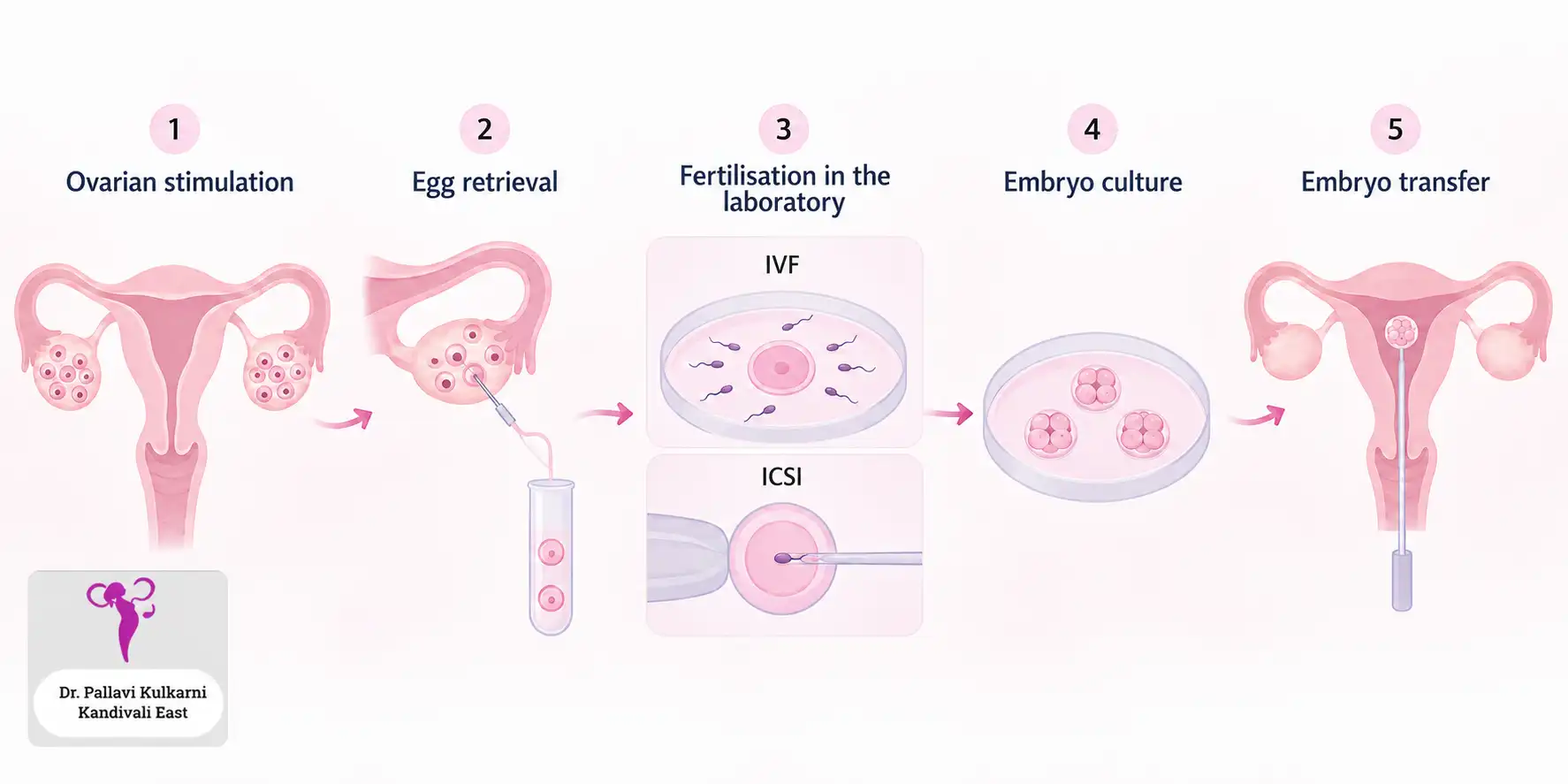
| IVF and ICSI | Eggs collected after a stimulated cycle and fertilised in a laboratory, with ICSI used where a single sperm needs to be injected into the egg. The embryo is then transferred to the uterus. | At a partner IVF unit. Dr. Pallavi Kulkarni plans the cycle with you, coordinates with the unit, and remains your doctor before, during and after it. |
| Female fertility counselling | A dedicated conversation about what your results mean, what your realistic options are, what each step costs in time and money, and what happens if a step does not work. | At the clinic, with Dr. Pallavi Kulkarni. |
| Diagnostic and operative hysterolaparoscopy | Keyhole inspection of the uterine cavity and the pelvis in the same sitting, used when the picture is unclear, or when tubal disease, endometriosis, adhesions, a septum or a polyp is suspected. Where a treatable problem is found, it is often corrected during the same procedure. | The procedure is performed by Dr. Pallavi Kulkarni in an operation theatre at a nearby hospital, under anaesthesia. |
| Oocyte freezing (egg freezing) | Eggs collected after a stimulated cycle and frozen for later use, for women who are not ready to conceive now or who face treatment that may affect the ovaries. | At a partner ART unit registered under the ART (Regulation) Act, 2021. Dr. Pallavi Kulkarni does the assessment, the counselling and the referral. |
| Genetic counselling | Structured advice where a family history, a consanguineous marriage, repeated pregnancy loss or a carrier condition such as thalassaemia is relevant. It is about inherited disease risk. It is never about the sex of a fetus or an embryo. | Genetic counselling is done by Dr. Pallavi Kulkarni at the clinic. In a few cases, if needed, patients are referred to a qualified genetic counsellor or medical geneticist, with Dr. Pallavi Kulkarni arranging the referral and interpreting the outcome alongside your fertility plan. |
That is the full list. If you would rather not work out which step applies to you on your own, book a consultation and we will map it out together.
Preconception counselling

This is the visit to make before you start trying, not after a year of trying. We go through your medical and family history, your cycle, your weight and lifestyle, your rubella and thyroid status, and any long-term medicines that may need changing before conception. Folic acid is started at this point, ideally at least a month before you conceive.
It is also the right moment to raise anything you have been putting off mentioning: very painful periods, previous pelvic infection, a family history of a genetic condition, or a previous pregnancy that ended badly. Read more about pregnancy care from your first visit onwards.
Where it happens: At the clinic, with Dr. Pallavi Kulkarni.
Investigations (blood and hormonal)
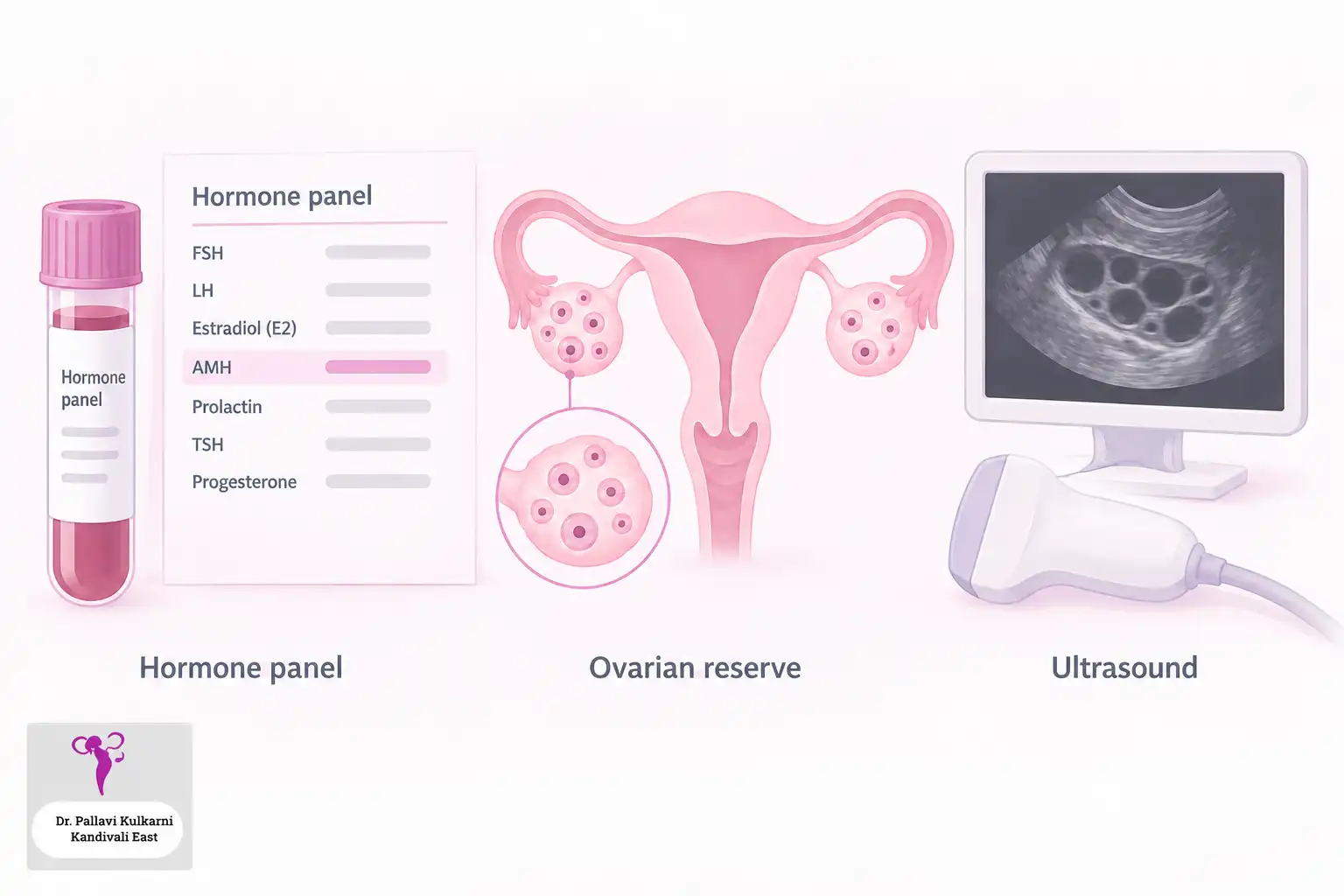
The first round of tests establishes three things: whether you are ovulating, whether your hormones are working normally, and roughly what your ovarian reserve looks like. That usually means a hormone panel taken at a specific point in your cycle, thyroid and prolactin, a marker of ovarian reserve, and a transvaginal ultrasound.
Your partner’s semen analysis is part of this same round. It is a simple test, and leaving it until later is one of the commonest ways couples lose six months.
We keep the explanation of individual test values on a separate page so this one stays about the service. See our detailed guide to what each fertility test measures and what the numbers mean.
Where it happens: Ordered and interpreted by Dr. Pallavi Kulkarni at the clinic. Samples are given at a nearby accredited laboratory.
Follicular studies
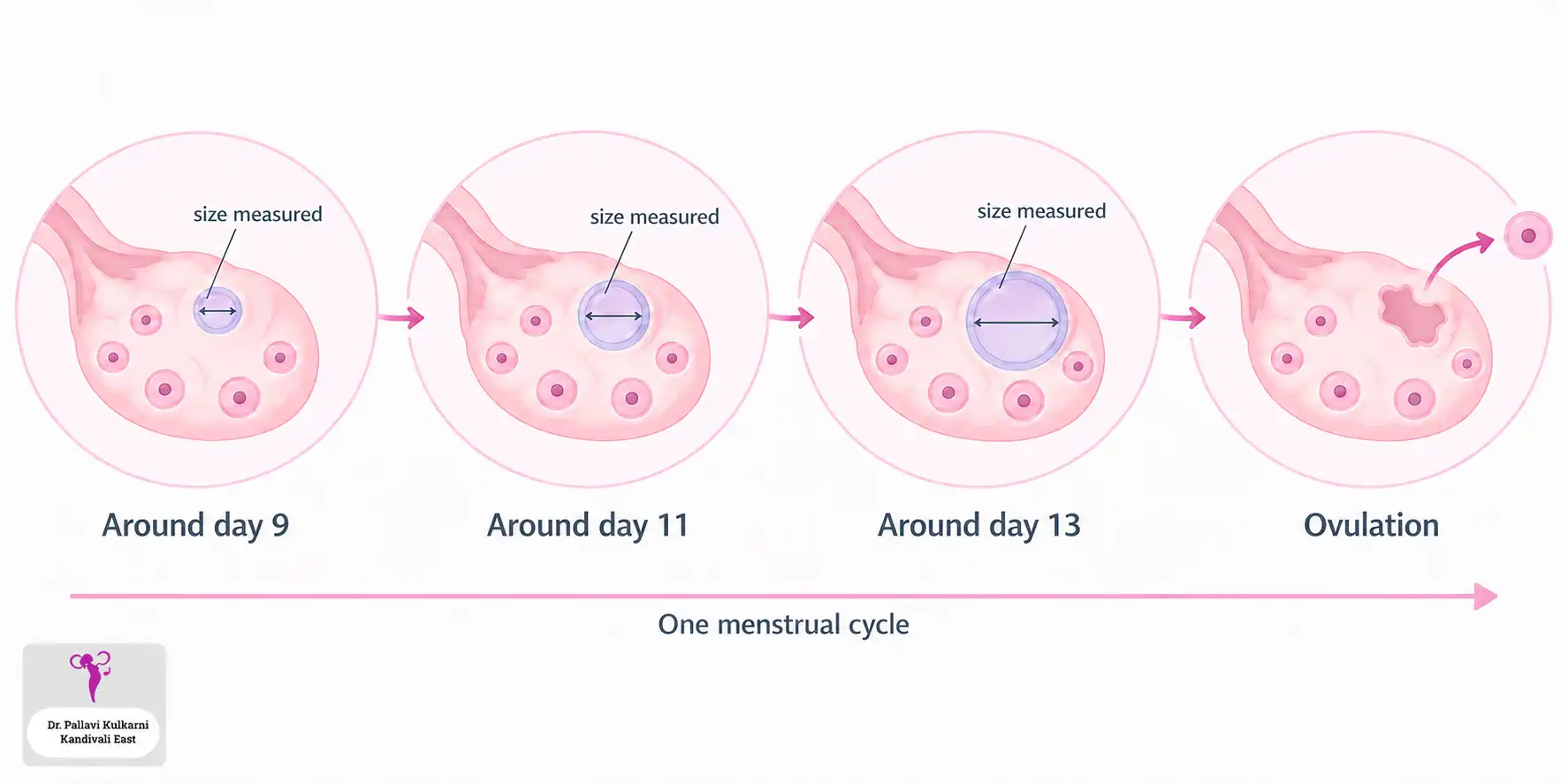
A follicular study is a short series of ultrasound scans across one cycle, usually starting around day 9 or 10, to watch a follicle grow and confirm that ovulation actually happens and when. It answers a question a single blood test cannot: not just whether your hormones look right, but whether an egg is genuinely being released, and on which day.
It is also how an ovulation-induction cycle is monitored, so the two usually go together. For how the scans themselves work, see our guide to fertility testing.
Where it happens: Scans are done at a nearby imaging centre. The timing, the interpretation and the decision that follows are Dr. Pallavi Kulkarni’s.
Ovulation induction
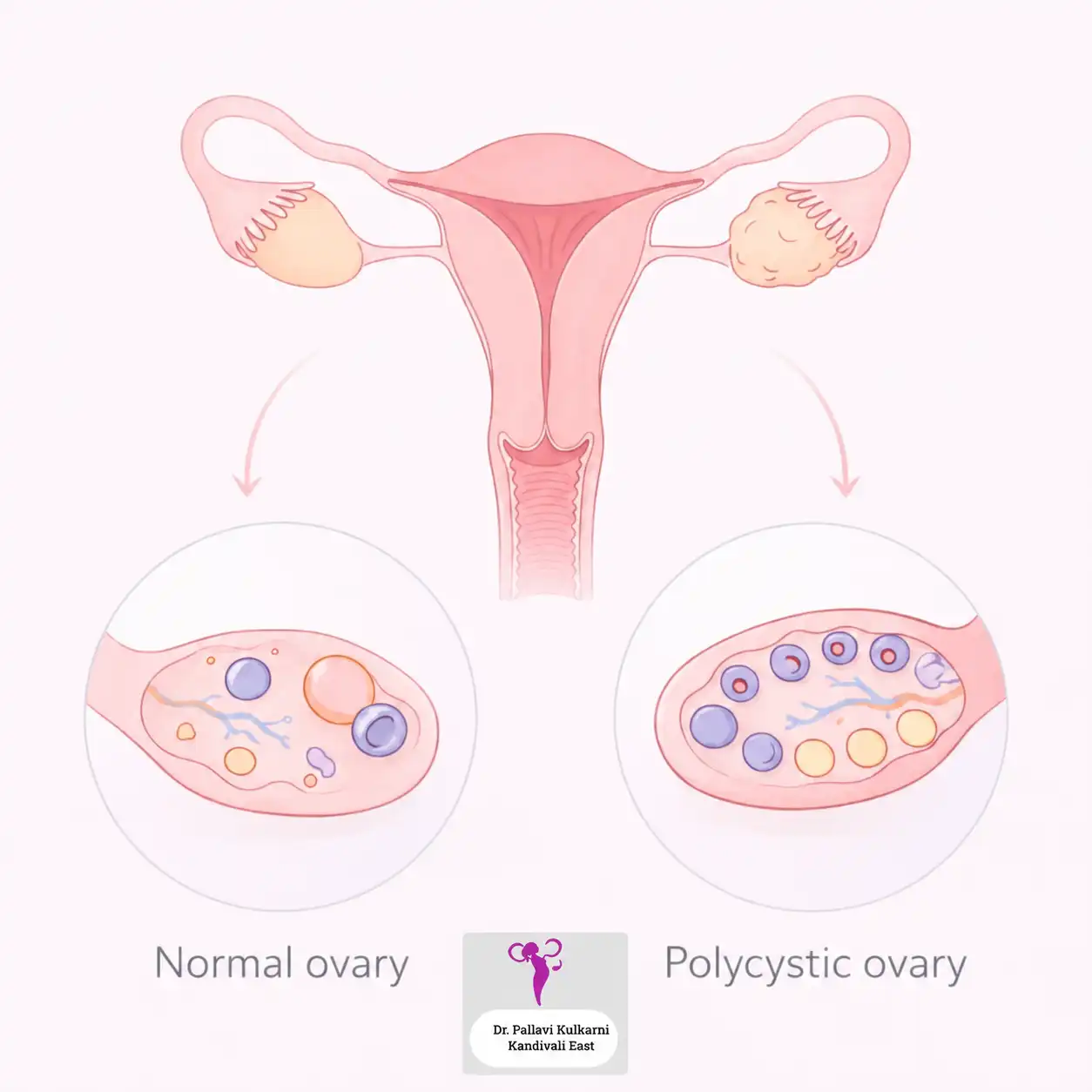
If ovulation is not happening reliably, the treatment is to make it happen, and then to time the cycle properly. That means tablets, sometimes injections, alongside scan monitoring so that you know when ovulation is due rather than guessing from an app.
This is the standard first-line treatment for ovulation disorders including PMOS, and it is where a large share of couples conceive. Guidelines support running a defined number of monitored cycles and then reassessing, rather than repeating the same cycle indefinitely.
Correcting thyroid function and prolactin first matters here. An induction cycle run on top of an untreated thyroid problem is working against itself.
Where it happens: Prescribed and monitored by Dr. Pallavi Kulkarni at the clinic, with the monitoring scans at a nearby imaging centre.
Hysterosalpingography (HSG)
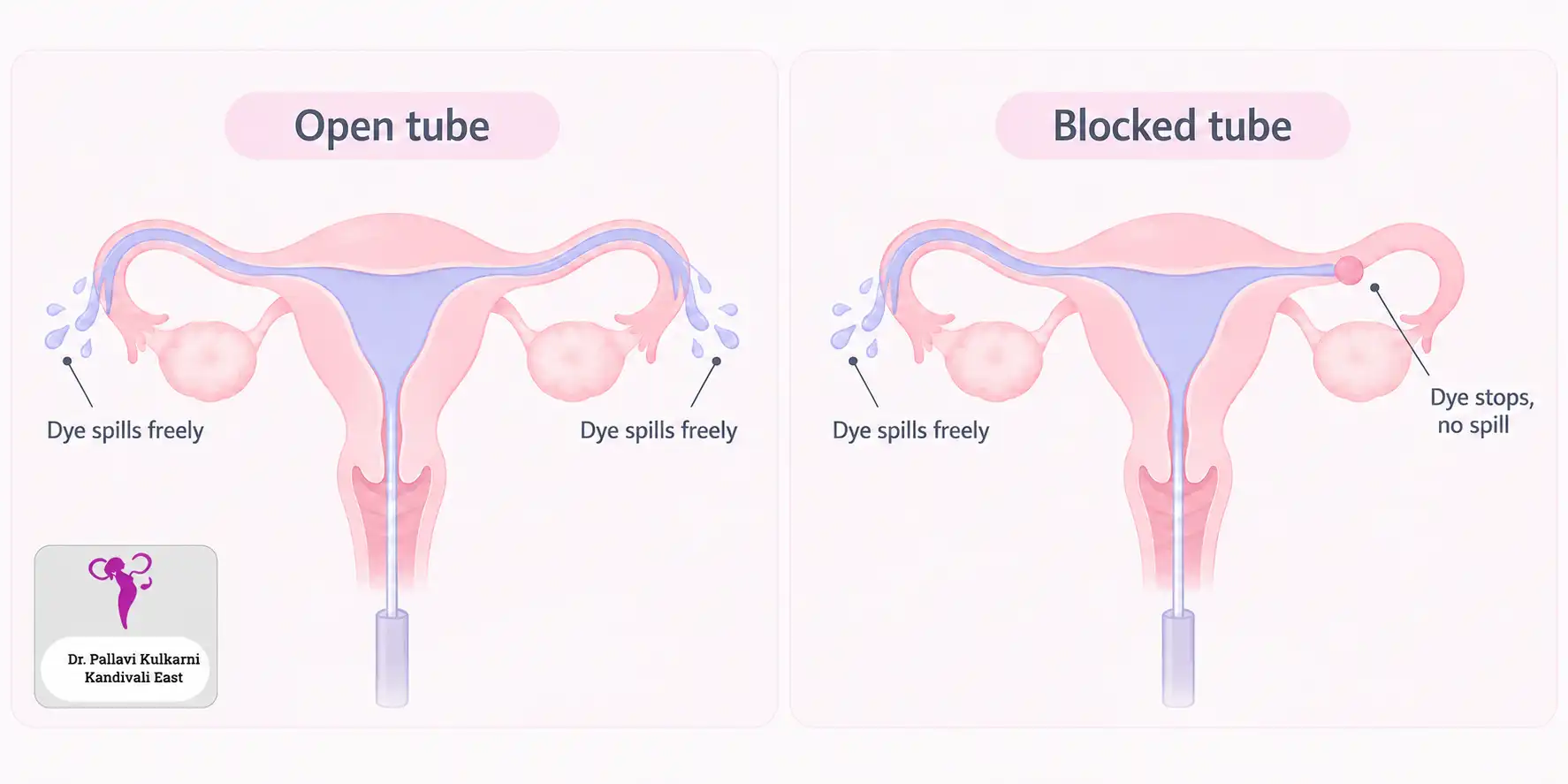
An HSG is an X-ray taken while a dye is passed through the uterus, showing whether the fallopian tubes are open and whether the cavity of the uterus is a normal shape. It is done in the first half of the cycle, after bleeding has stopped and before ovulation, so that an early pregnancy is not exposed to it.
It matters because a blocked tube changes the plan completely. No amount of ovulation induction helps if sperm and egg cannot meet, which is why this is checked early rather than after a year of tablets.
Where it happens: Performed at an imaging centre by the radiology team. Dr. Pallavi Kulkarni orders it, decides when in the cycle it is done, and goes through the films with you.
IUI (intrauterine insemination)
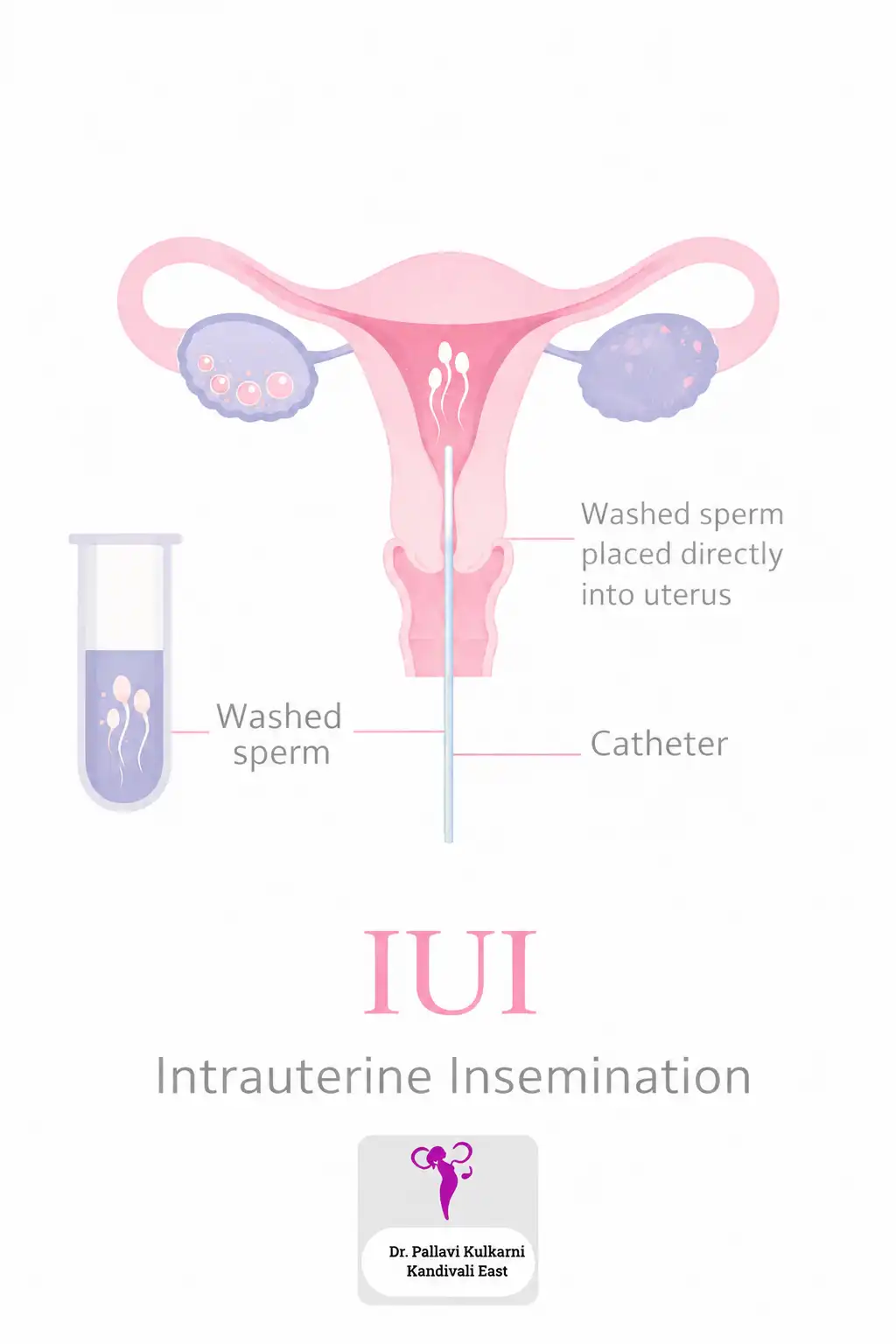
IUI means placing prepared sperm directly into the uterus at the time of ovulation. It shortens the journey for the sperm and lets the timing be exact. It is almost always done within a monitored ovulation-induction cycle rather than on its own.
It suits mild male factor, cervical factor, and unexplained infertility. For most couples, 3 to 4 cycles are a reasonable trial before reassessing the plan, because the chance of success does not keep climbing indefinitely.
Where it happens: Performed by Dr. Pallavi Kulkarni herself, at a nearby fertility centre.
IVF and ICSI
In IVF, eggs are collected after a stimulated cycle and fertilised in a laboratory. An embryo is then transferred to the uterus. ICSI is a variation on the same cycle. Instead of leaving the sperm to fertilise the egg on their own, one sperm is injected straight into it. That is used mainly when the sperm count or quality makes ordinary fertilisation unlikely.
IVF is the right answer for some couples from the outset, particularly where both tubes are blocked, where the sperm count is very low, or where age makes a longer stepwise approach unwise. It is not the automatic first step, and it should not be recommended to you before your tubes have even been checked.
Pregnancies conceived through IVF are usually monitored a little more closely, as high-risk pregnancies, and that continuity is part of what we do.
“I do not run an IVF laboratory, and I will not pretend otherwise. What I do is decide with you whether you need one, plan the cycle, send you to a unit I trust, and stay your doctor through it and after it. If a clinic tells you at the first visit that you need IVF, before any tubal test, ask them why.”
- Dr. Pallavi Kulkarni
Where it happens: At a partner IVF unit. Dr. Pallavi Kulkarni plans the cycle with you, coordinates with the unit, and remains your doctor before, during and after it.
Been told you need IVF, or not sure whether you do? A second opinion starts with the tests, not the treatment.
Female fertility counselling
This is the conversation that is often missing. What do your results actually mean? What are your realistic options, in order? What does each step cost, in money and in time? What happens if a step does not work, and at what point do we change plan rather than repeat?
It also covers the part nobody schedules time for: the strain this puts on a marriage, the pressure from relatives, and the decision about when to stop. You are entitled to a straight answer about your own chances, including when the honest answer is that they are lower than you hoped.
Where it happens: At the clinic, with Dr. Pallavi Kulkarni.
Diagnostic and operative hysterolaparoscopy
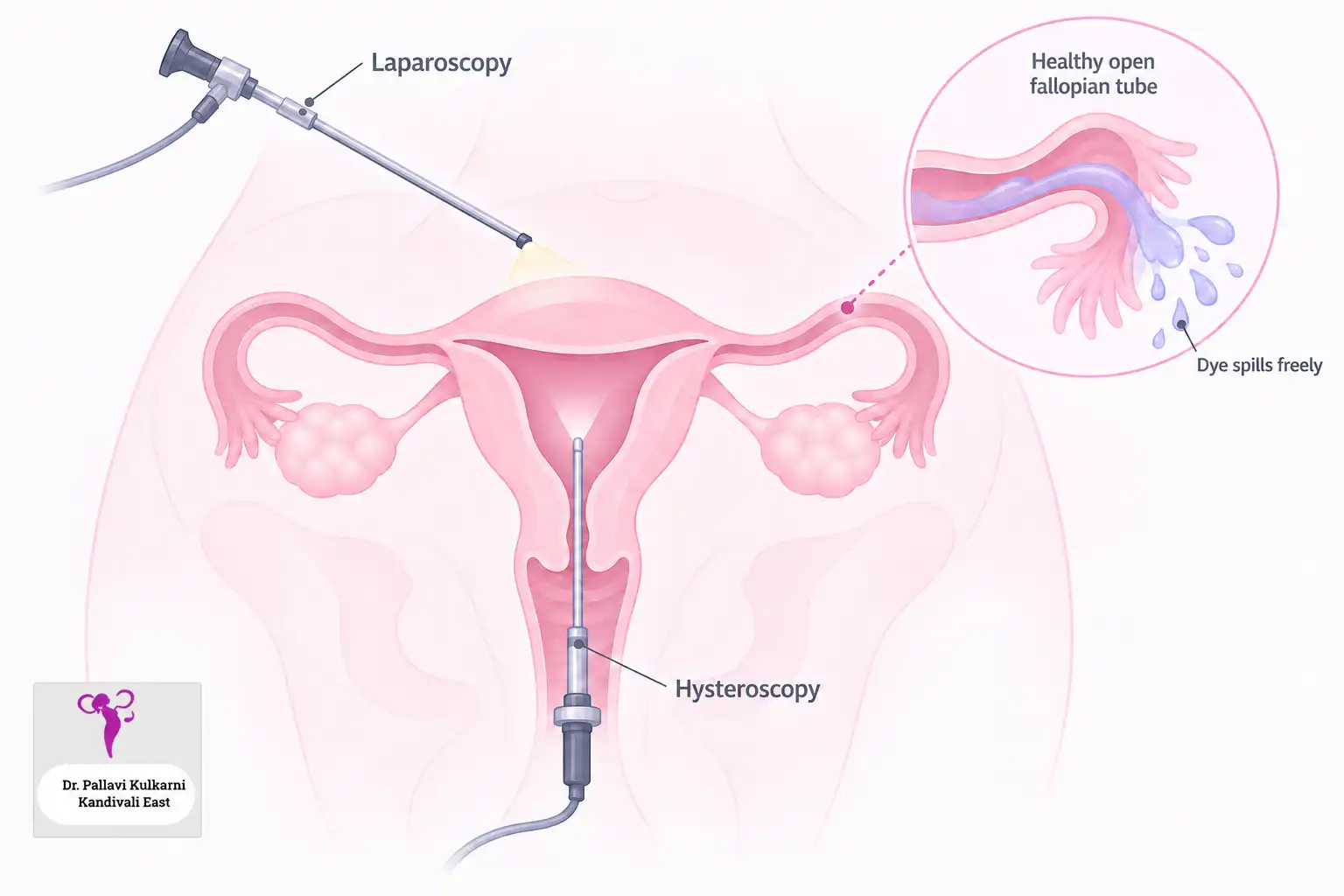
Hysterolaparoscopy looks inside the uterus and at the pelvis in one sitting, through keyhole cuts, under anaesthesia. It is advised when the picture does not add up. That includes unexplained infertility after normal tests, suspected endometriosis, scar tissue from an earlier infection or surgery, a suspected wall of tissue or polyp inside the uterus, or an HSG that hints at a tubal problem.
Its real advantage is that a treatable problem found during the procedure can often be corrected there and then, so one admission both diagnoses and treats. Related surgical procedures are covered on our gynecology procedures and open surgery page.
Where it happens: The procedure is performed by Dr. Pallavi Kulkarni in an operation theatre at a nearby hospital, under anaesthesia.
Oocyte freezing (egg freezing)
Egg freezing collects eggs after a stimulated cycle and freezes them for later use. It is worth considering if you are not in a position to conceive now but expect to want to later, or if you face medical treatment that may affect your ovaries.
The clinically important point is timing: eggs frozen at a younger age perform better later, so the conversation is more useful at 30 than at 38. Assisted reproduction in India is regulated under the ART (Regulation) Act, 2021, which sets out who may provide these services and the eligibility conditions that apply. Those conditions should be confirmed at consultation rather than taken from any website, including this one.
Where it happens: At a partner ART unit registered under the ART (Regulation) Act, 2021. Dr. Pallavi Kulkarni does the assessment, the counselling and the referral.
Genetic counselling
Genetic counselling is structured advice about the risk of passing on an inherited condition. It matters in a few specific situations: a family history of a genetic condition, a marriage between close relatives, repeated pregnancy loss, or being a carrier of a condition such as thalassaemia or sickle cell disease. All of these are relevant in Indian families. After repeated miscarriage it can also include a blood test of both partners’ chromosomes, called karyotyping.
Where it happens: Genetic counselling is done by Dr. Pallavi Kulkarni at the clinic. In a few cases, if needed, patients are referred to a qualified genetic counsellor or medical geneticist, with Dr. Pallavi Kulkarni arranging the referral and interpreting the outcome alongside your fertility plan.
Not sure which of these steps applies to you? That is exactly what the first consultation is for. You leave with a written plan for what to test, in what order.
What Does Fertility Treatment Cost in Mumbai?
Please read this before the table. The figures below are indicative ranges for a Mumbai private setting. They are not a quote. Your own cost depends on your diagnosis, the protocol chosen, the medicines used, the facility, and how many cycles you need. Ask for a written estimate, and ask specifically what it does not include.
| Service | Indicative range in Mumbai | What moves the number |
|---|---|---|
| Consultation | Discussed when you book | First visit is 30 to 45 minutes and both partners are welcome. |
| Blood and hormonal investigations | ₹5,000 to ₹15,000 | Depends on which panel is needed and whether thyroid, prolactin and reserve markers are all included. |
| Follicular study (one cycle) | Discussed at consultation | Four to six scans across a single cycle. |
| Hysterosalpingography (HSG) | Discussed at consultation | Charged by the imaging centre. |
| Ovulation induction (one cycle) | Discussed at consultation | Varies considerably between a tablet protocol and an injectable one. |
| IUI (per cycle) | ₹10,000 to ₹15,000 | |
| Diagnostic or operative hysterolaparoscopy | ₹75,000 to ₹1.5 lakh | Depends on findings, theatre time and whether it stays diagnostic or becomes operative. |
| IVF or ICSI (per cycle) | ₹1.5 lakh to ₹3 lakh | Medication and add-ons vary. |
Indicative ranges, not a quote. Rates last reviewed . Patients travelling to Mumbai for fertility care from overseas should use the indicative bands on our International Patients page, which reflect private-hospital packages for international patients.
“Please ask what the package does not include. In my experience the number couples are quoted and the number they finally pay differ mostly because of medicines and freezing charges, and nobody mentioned those on day one. I would rather give you an uncomfortable range in writing than a comfortable number you cannot rely on.”
- Dr. Pallavi Kulkarni
Success Rates: What the Numbers Actually Mean
You will see confident percentages advertised for IVF. Treat them carefully, because the same clinic can quote very different numbers depending on what it chooses to measure.
| What to ask for | Why it matters |
|---|---|
| Live birth rate, not pregnancy rate | A pregnancy rate counts positive tests, including pregnancies that do not continue. A live birth rate counts babies. |
| Per cycle started, not per embryo transfer | Cycles that never reach transfer quietly disappear from a per-transfer figure, which makes it look better than it is. |
| For your own age band | Success falls steeply with age. A clinic-wide average tells you about the clinic’s patient mix, not about you. |
| From a source that is audited | The UK regulator, the HFEA, publishes audited age-banded figures. India has no equivalent published national registry, so single Indian percentages should be treated with caution. |
This page deliberately does not print a headline success percentage, because any honest one would have to be specific to your age, your diagnosis and the unit treating you. What we will do is give you a realistic expectation for your own situation at your consultation in Kandivali East, in writing, including when that expectation is lower than you were hoping for.
Age is the single largest factor, which is also why the referral threshold shortens from 12 months to 6 months at 35. ACOG sets out how age affects fertility and pregnancy, and our page on pregnancy after 35 covers what changes once you do conceive.
What We Do Not Offer
- No sex determination or “family balancing” of any kind. This is a criminal offence in India under the PCPNDT Act, 1994.
- No guarantee of pregnancy. Any clinic promising one is not being straight with you.
- IVF and ICSI are not performed at the clinic itself. They are done in coordination with a partner IVF unit.
- No surrogacy or gamete arrangements outside the ART (Regulation) Act, 2021 and the Surrogacy (Regulation) Act, 2021.
- No treatment without an evaluation first. We will not start you on a cycle before we know what we are treating.
Fertility Care near Kandivali, Malad, Borivali and Goregaon
Aarogya Women’s Clinic is in Thakur Village, Kandivali East, and is straightforward to reach from across Mumbai’s western suburbs. Women from Thakur Village itself and the neighbouring Kandivali East areas of Thakur Complex, Lokhandwala Township, Ashok Nagar, Akurli Road, Samata Nagar, Ekta Nagar and Sai Nagar come to us for everyday gynaecological care and for fertility evaluation and treatment. Couples travel to us from Kandivali West, Borivali East and West, Malad East and West, Goregaon East and West, Dahisar and Jogeshwari. Evening appointments up to 9:00 PM make it workable around office hours, which matters when treatment involves scans on specific days.
Gynecologist in Kandivali West
Three to five kilometres away, ten to fifteen minutes via SV Road or the Mahavir Nagar Link Road.
Gynecologist near Borivali
Four to eight kilometres, fifteen to twenty-five minutes via the Western Express Highway Akurli Road exit or SV Road.
Gynecologist near Malad
A short drive north along the Western Express Highway or SV Road.
Gynecologist near Goregaon
Six to nine kilometres, twenty to thirty minutes via the WEH Akurli Road exit and Aarey Road.
Meet Dr. Pallavi Kulkarni - Expert Gynecologist in Mumbai
Dr. Pallavi Kulkarni is a gynaecologist and obstetrician with more than 16 years in practice, running Aarogya Women’s Clinic in Thakur Village, Kandivali East. Fertility care is a substantial part of her work, and she holds a Fellowship in IVF alongside her surgical and obstetric training, which is what allows the evaluation, the first-line treatment and the IUI to be done by the same doctor who then coordinates any IVF cycle.
She qualified MBBS from KIMS Karad (MUHS), took her DNB in Obstetrics and Gynaecology at Central Railway Hospital, Byculla, and holds a DGO from the College of Physicians and Surgeons, Mumbai, a DFP from FOGSI, and MRCOG (UK) from the Royal College of Obstetricians and Gynaecologists, London. Consultations are available in English, Hindi and Marathi.
Published research
Dr. Pallavi has published peer-reviewed research on the levonorgestrel intrauterine system in the management of heavy menstrual bleeding (Journal of Mid-life Health, 2015, PMID 25861205, under her maiden name P. C. Dhamangaonkar), showing a substantial reduction in menstrual blood loss and hysterectomy avoided in most women studied.
Maharashtra Medical Council Registration No. 2005/06/2917
Read More on Fertility
These guides on our site go deeper into specific parts of the fertility journey:
- Fertility Testing Explained: AMH, FSH, Scans and What the Results Mean
- Why Am I Not Getting Pregnant? A Fertility Doctor Answers
- How to Get Pregnant Fast: A Mumbai Gynaecologist’s Honest Guide
- Jaldi Pregnant Kaise Ho? Ek Mumbai Gynaecologist ke Honest Jawaab
- PCOS Is Now Called PMOS: What the Name Change Means
- Thyroid Disorders in Women: Symptoms, Fertility and Pregnancy
Dedicated pages on each of these treatments are in preparation:
- Preconception counselling in Mumbai - coming soon
- Fertility tests in Mumbai: what is checked and why - coming soon
- Follicular study in Mumbai - coming soon
- Ovulation induction in Mumbai - coming soon
- HSG test in Mumbai - coming soon
- IUI treatment in Mumbai - coming soon
- IVF and ICSI treatment in Mumbai - coming soon
- Hysterolaparoscopy for infertility in Mumbai - coming soon
- Egg freezing in Mumbai - coming soon
References
- World Health Organization. Infertility fact sheet. https://www.who.int/news-room/fact-sheets/detail/infertility
- National Institute for Health and Care Excellence. Fertility problems: assessment and treatment. Clinical guideline CG156. https://www.nice.org.uk/guidance/cg156
- American Society for Reproductive Medicine. Fertility evaluation of infertile women: a committee opinion (2021). https://www.asrm.org/practice-guidance/practice-committee-documents/fertility-evaluation-of-infertile-women-a-committee-opinion-2021/
- American College of Obstetricians and Gynecologists. Evaluating Infertility. https://www.acog.org/womens-health/faqs/evaluating-infertility
- American College of Obstetricians and Gynecologists. Treating Infertility. https://www.acog.org/womens-health/faqs/treating-infertility
- American College of Obstetricians and Gynecologists. Having a Baby After Age 35: How Aging Affects Fertility and Pregnancy. https://www.acog.org/womens-health/faqs/having-a-baby-after-age-35-how-aging-affects-fertility-and-pregnancy
- Eunice Kennedy Shriver National Institute of Child Health and Human Development. Infertility and Fertility. https://www.nichd.nih.gov/health/topics/infertility
- NHS. Infertility. https://www.nhs.uk/conditions/infertility/
- European Society of Human Reproduction and Embryology. Guidelines, consensus documents and recommendations. https://www.eshre.eu/Guidelines-and-Legal
- Human Fertilisation and Embryology Authority (UK). Fertility treatment: trends and figures. https://www.hfea.gov.uk/
- Indian Society of Assisted Reproduction (ISAR). https://www.isarindia.net/
- Federation of Obstetric and Gynaecological Societies of India (FOGSI). Clinical guidance on infertility management. (Listed without a link: fogsi.org was not reachable at the time of review.)
- The Assisted Reproductive Technology (Regulation) Act, 2021, Government of India.
- The Pre-Conception and Pre-Natal Diagnostic Techniques (PCPNDT) Act, 1994, Government of India.
This page is reviewed periodically by Dr. Pallavi Kulkarni. Last reviewed . It is educational information and does not replace a personal consultation.
What Our Patients Say
Experienced Gynecologist in Kandivali East with a Patient-Centered Approach
Dr. Pallavi Kulkarni is a highly regarded Gynecologist in Kandivali East, praised for her calm, compassionate, and patient-centered care. Her supportive approach helps women feel heard, respected, and confident about their treatment decisions.
Do you have any questions?
Request An AppointmentFAQ
About fertility treatment
What is the best treatment for infertility in Kandivali East?
There is no single best treatment, and any clinic that offers you one before testing you is guessing. The right treatment depends on why you are not conceiving. If ovulation is the problem, tablets and monitored cycles often solve it. If the tubes are blocked, no tablet will help and the answer is surgical or IVF. If the sperm count is very low, ICSI is the step that works. That is why the evaluation comes first: a hormone panel, a scan, a check that the tubes are open, and a semen analysis for your partner. Only then can anyone tell you what your best treatment actually is.
How much does infertility treatment cost in Mumbai?
It depends entirely on which step you need. Basic blood and hormonal investigations are usually in the range of ₹5,000 to ₹15,000. An IUI cycle is usually ₹10,000 to ₹15,000. A diagnostic or operative hysterolaparoscopy is usually ₹75,000 to ₹1.5 lakh. An IVF or ICSI cycle in a Mumbai private setting is usually ₹1.5 lakh to ₹3 lakh, and medication and add-ons are the main reason two people quoted the same package pay different amounts. These are indicative ranges rather than a quote. Ask any clinic, including ours, for a written estimate and ask specifically what the package does not include.
When should I see a fertility doctor?
After 12 months of regular unprotected intercourse without a pregnancy, or after 6 months if you are 35 or older. Come sooner, without waiting out the clock, if your periods are irregular or absent, if you have had two or more miscarriages, if you have known PCOS, now renamed PMOS, endometriosis or a thyroid problem, if you have had pelvic surgery or a pelvic infection, or if your partner has a known sperm problem. If you are trying to conceive after the age of 40, please come for a consultation as soon as possible rather than waiting at all. Waiting has a cost that tablets cannot buy back.
What tests are done for female infertility?
Usually a hormone panel taken at a specific point in your cycle, a thyroid and prolactin check, a marker of ovarian reserve, and a transvaginal ultrasound. If ovulation needs to be confirmed rather than assumed, a follicular study tracks it across one cycle. If the tubes need checking, an HSG shows whether they are open. A semen analysis for your partner is part of the first round, not a later step. Our detailed guide explains what each fertility test measures and what the numbers mean.
Do I have to start with IVF, or are there simpler options first?
For most couples there are simpler options first, and they work. Correcting a thyroid or prolactin problem, treating PMOS, and using tablets with scan monitoring to make ovulation happen reliably resolves a great many cases. IUI sits between that and IVF. IVF is a genuinely good treatment and some couples need it from the start, particularly where both tubes are blocked or the sperm count is very low. But it is not automatically the first step, and it should not be sold to you as one before your tubes have even been checked.
What is ovulation induction, and how many cycles should I try before changing plan?
Ovulation induction means using medicine to bring on ovulation when it is not happening reliably by itself, with ultrasound monitoring so that the cycle is timed rather than guessed. It is the standard first-line treatment for ovulation disorders such as PMOS. There is no strict lifetime limit of six cycles, but continuing beyond about six well documented ovulatory cycles without a pregnancy usually warrants reassessment rather than simply repeating the same cycle. At that point the sensible response is to look again at the tubes, the uterus and the sperm.
What is the success rate of IVF, and why does nobody give me a straight number?
IVF success depends on several factors. Female age, the cause of the infertility, ovarian reserve, sperm quality, any pathology in the uterus, and embryo quality and chromosomal competence are among the strongest predictors. Beyond that, the honest number is specific to you, and the impressive numbers you see advertised are often measured in a way that flatters them. Success falls steeply with age, and a rate quoted per embryo transfer will always look better than the same clinic’s rate per cycle started, because cycles that never reach transfer quietly disappear from the figure. India does not publish an audited national registry the way the UK regulator does, so any single Indian percentage should be treated with caution. Ask any clinic for their live birth rate per started cycle, for your age band. If they will not give it to you in that form, that is itself an answer.
Can PCOS or PMOS be treated so that I conceive naturally?
Very often, yes. PMOS, the new name for PCOS, is primarily a problem of ovulation not happening reliably, and ovulation is one of the more treatable causes of infertility. Weight change where relevant, correcting insulin resistance and thyroid function, and tablets with scan monitoring bring ovulation back for a large proportion of women, and many conceive without ever needing IUI or IVF. Read more about PCOS, now renamed PMOS.
About specific procedures and our clinic
Does Dr. Pallavi Kulkarni do IVF at the clinic, or do you refer to an IVF centre?
IVF and ICSI are done in coordination with a partner IVF unit, not in the clinic itself. An IVF laboratory is a specialised facility and we would rather be honest about that than imply otherwise. What happens at the clinic is everything around it: the evaluation, the decision about whether you actually need IVF, the planning of the cycle, the coordination with the unit, and your continuing care before and after. IUI is different. Dr. Pallavi Kulkarni performs IUI herself, at a nearby fertility centre.
What is an HSG test, is it painful, and when in the cycle is it done?
An HSG is an X-ray taken while a dye is passed through the uterus, to show whether the fallopian tubes are open. It is done in the first half of the cycle, after bleeding has stopped and before ovulation, so that an early pregnancy is not exposed to it. Most women describe cramping like a strong period pain for a short time rather than sharp pain, and it is usually over in about fifteen minutes. It is performed at an imaging centre by the radiology team. Dr. Pallavi Kulkarni orders it, decides the timing, and goes through the films with you.
What is IUI, where is it done, and how many cycles are reasonable?
For most couples, 3 to 4 cycles of IUI are considered a reasonable trial before reassessing the treatment plan. IUI means placing prepared sperm directly into the uterus at the time of ovulation, usually in a cycle where ovulation has been induced and monitored. It shortens the journey for the sperm and lets the timing be exact. If IUI has not worked after that properly monitored run, the conversation should move on rather than repeat. Dr. Pallavi Kulkarni performs IUI herself, at a nearby fertility centre.
What is diagnostic and operative hysterolaparoscopy, and when is it advised?
It is keyhole inspection of the inside of the uterus and of the pelvis in the same sitting, under anaesthesia. It is advised when the picture does not add up: unexplained infertility after normal tests, a suspicion of endometriosis, adhesions from an earlier infection or surgery, a suspected uterine septum or polyp, or an HSG that suggests a tubal problem. Its advantage is that a treatable problem found during the procedure can often be corrected there and then. It is done in an operating theatre at a nearby hospital.
Can I freeze my eggs in Mumbai, and is there an age limit under Indian law?
Yes, egg freezing is available in Mumbai, and it is regulated. Assisted reproductive technology in India operates under the ART (Regulation) Act, 2021. That Act sets out who may provide these services and the eligibility conditions that apply, including conditions relating to age. Those provisions are specific, so the eligibility that applies to you should be confirmed at consultation rather than taken from a website. Clinically, the more useful point is simpler: eggs frozen at a younger age perform better later. The timing conversation matters more than the technology.
Is genetic counselling the same as sex determination?
No, and the difference matters. Sex determination of a fetus is a criminal offence in India under the Pre-Conception and Pre-Natal Diagnostic Techniques (PCPNDT) Act, 1994. We do not offer, arrange or refer for sex determination, sex selection or family balancing of any kind, at any stage, for any reason. Genetic counselling is something else entirely: it is advice about inherited disease risk, used where there is a family history of a genetic condition, a consanguineous marriage, repeated pregnancy loss, or carrier status for a condition such as thalassaemia or sickle cell disease.
Bacha nahi ho raha, kahan se shuru karein? Kaunse test pehle hote hain?
Shuruaat ek proper evaluation se hoti hai, seedha treatment se nahi. Pehle round mein aam taur par hormone ke blood tests hote hain jo cycle ke ek particular din par liye jaate hain, thyroid aur prolactin ki jaanch, ovarian reserve ka ek marker, aur ek sonography. Agar ovulation confirm karna ho toh ek cycle mein follicular study ki jaati hai. Tubes khuli hain ya nahi, yeh HSG batata hai. Aur pati ka semen analysis pehle hi round ka hissa hai, baad ka step nahi. In reports ke baad hi pata chalta hai ki aapko tablets chahiye, IUI chahiye, ya IVF. Agar ek saal se koshish kar rahe hain, ya 35 se upar hain aur chhe mahine ho gaye hain, toh test karwa lena chahiye.
Do I need a dedicated fertility clinic, or can a gynaecologist manage this?
Most of fertility care is evaluation and first-line treatment, and a gynaecologist with fertility training handles that well. That covers investigations, correcting thyroid and prolactin problems, treating PMOS, ovulation induction with monitoring, HSG, hysterolaparoscopy and IUI. A dedicated ART unit is needed only when an IVF or ICSI laboratory is genuinely required, and that is a referral rather than a starting point. So the question worth asking is not which type of clinic. It is whether the person advising you has tested you properly before recommending anything.