
Gynecology Procedures & Open Surgery in Kandivali East
Medically reviewed by Dr. Pallavi Kulkarni, MBBS, DGO, DNB (OB-GYN), DFP, MRCOG (UK), Fellowship in IVF ·
Many women are advised a gynecology procedure after symptoms such as heavy bleeding, fibroids, ovarian cysts, repeated polyps, prolapse, urine leakage, abnormal biopsy results or pelvic pain.
At Aarogya Women’s Clinic in Kandivali East, Dr. Pallavi Kulkarni evaluates women who may need minor gynecology procedures, open surgery, pelvic floor surgery or hospital-based surgical care. The aim is to explain the diagnosis clearly, walk through the non-surgical options first, and recommend surgery only when it is genuinely needed.

Advised a hysterectomy or other procedure?
Get a careful second look first. Dr. Pallavi Kulkarni reviews your case, walks through non-surgical options, and recommends surgery only when it is genuinely needed.
Surgery is rarely the first answer. Many women advised a hysterectomy or other procedure benefit from a careful second look at whether conservative options, such as medicines, hormonal treatment, Mirena, follow-up scans or watchful waiting, have been fully considered. Where surgery is genuinely needed, the route - vaginal, abdominal-open, or minimally invasive - is chosen based on diagnosis, anatomy, fertility plans and hospital fit, not a one-size-fits-all preference.
At a Glance
Procedures and Surgeries Covered
Jump to the relevant section, or scroll through. Each procedure includes when it may be advised, conservative alternatives, and what the consultation will discuss.
When Is a Gynecology Procedure or Open Surgery Needed?
A procedure may be advised when symptoms are affecting health, comfort, fertility, daily life or long-term safety, and when conservative measures have not been enough. Common reasons we see at Aarogya Women’s Clinic include:
- Heavy or prolonged menstrual bleeding not responding to medical management
- Fibroids or adenomyosis causing pain, pressure or fertility concerns
- Ovarian cysts that are large, persistent, painful or suspicious on scan
- Ovarian torsion (an emergency - needs urgent hospital evaluation)
- Recurrent endometrial or cervical polyps
- Abnormal Pap smear or cervical changes needing biopsy
- Thickened endometrium or abnormal uterine bleeding
- Uterine or vaginal wall prolapse with significant symptoms
- Stress urinary incontinence not improving with pelvic floor measures
- Retained tissue after miscarriage
- Need for long-term bleeding control where Mirena or other options are suitable
Not every diagnosis needs surgery. In many cases, medicines, hormonal treatment, Mirena, follow-up scans or careful observation are considered before a procedure is advised. The aim of the consultation is to be sure the recommendation is genuinely needed for your situation - not a default.
Hysterectomy: Vaginal and Abdominal Uterus Removal Surgery
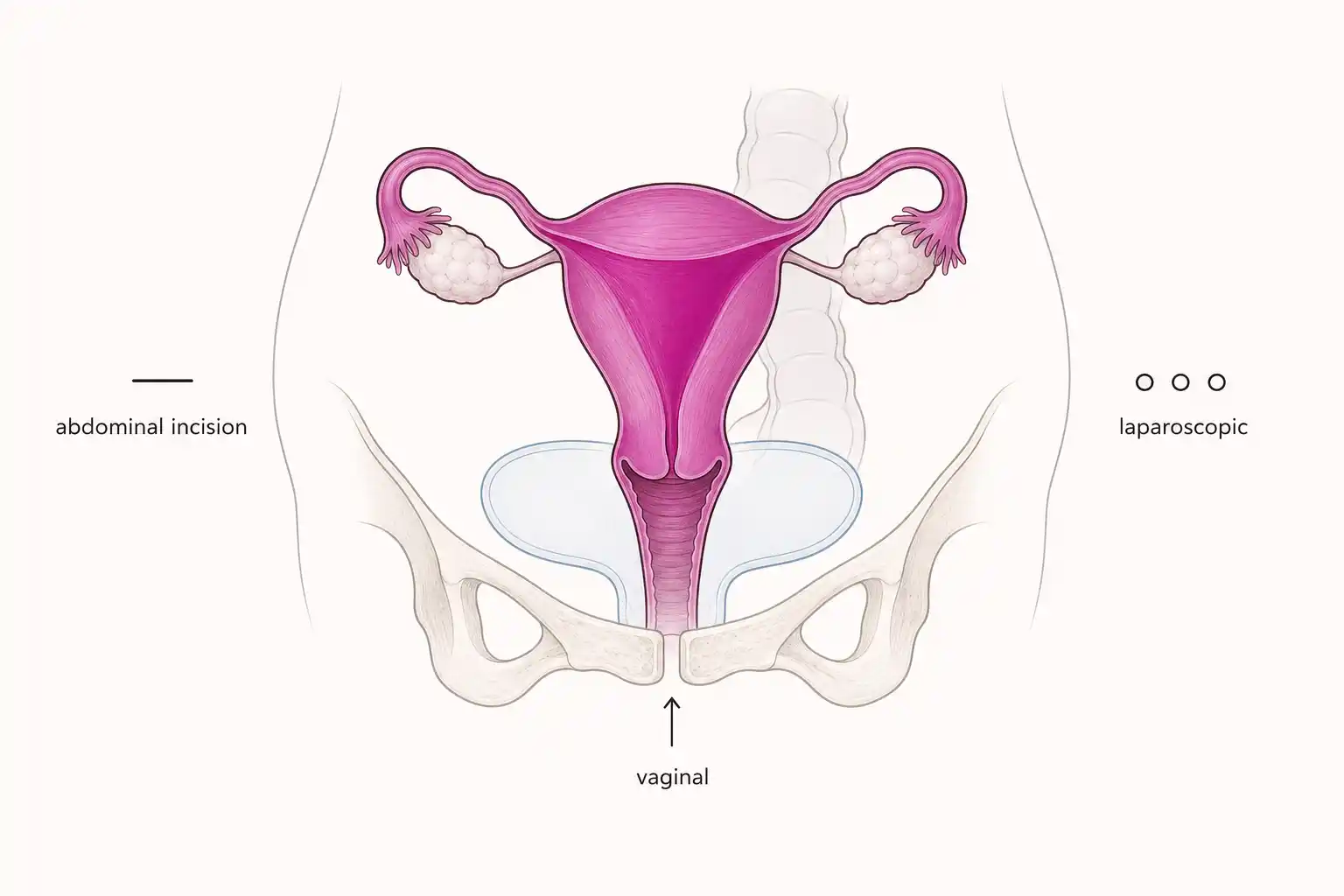
A hysterectomy is surgery to remove the uterus. It may be the right answer for women with heavy bleeding not responding to medicines, large or symptomatic fibroids, significant adenomyosis, marked uterine prolapse, or persistent abnormal endometrial bleeding when other options have been fully considered. Our position is straightforward: we recommend hysterectomy only when it is genuinely needed.
Hysterectomy is one of the most commonly performed gynaecology operations worldwide and one of the most common surgical procedures in Indian women. NFHS-5 (2019-21) found that around 3 percent of Indian women aged 30 to 49 have had a hysterectomy, with significant state-level variation. A peer-reviewed study in BMC Women's Health reported a national prevalence of 3.3 percent and flagged that many were performed for indications where conservative care could reasonably have been tried first (Kumari and Kundu, 2022).
Types of hysterectomy discussed at consultation
- Vaginal hysterectomy: the uterus is removed through the vagina, without an abdominal incision. This is usually the preferred route when the uterus is not too enlarged and there are no major adhesions from earlier surgery. Recovery tends to be quicker than open surgery, and NHS UK describes the same first preference where vaginal surgery is feasible.
- Abdominal (open) hysterectomy: through a horizontal or vertical incision on the lower abdomen. This is the right route for a substantially enlarged uterus, large or multiple fibroids, extensive adhesions from past surgery, or any pelvic finding that makes vaginal or laparoscopic surgery unsafe.
- Laparoscopic hysterectomy: a minimally invasive (keyhole) approach where the uterus is removed through small abdominal incisions with the help of a camera. It is suitable for many women in whom vaginal hysterectomy is not feasible but the case does not require open surgery. Recovery is usually quicker than open hysterectomy.
- Hysterectomy with removal of ovaries and tubes: an option only when there is a specific medical reason, such as suspicious ovarian findings or strong family history. Healthy ovaries are preserved by default in pre-menopausal women so hormone function continues normally until natural menopause, in line with ACOG guidance.
Dr. Pallavi Kulkarni discusses why hysterectomy has been advised, whether alternatives are available (such as Mirena, hysteroscopic procedures, myomectomy or medical management), what type of surgery is suitable for your case, and what recovery typically involves.
Common patient questions about hysterectomy
- Will my ovaries be removed? This is decided according to age and any other medical conditions. Ovaries are mostly removed in post-menopausal women; in pre-menopausal women the ovaries are usually preserved so that natural hormone function continues.
- Will I need open surgery or vaginal surgery? The route depends on uterus size, fibroid location, any previous pelvic surgeries and what the scan shows. A vaginal route is possible when the uterus is not too enlarged; otherwise an abdominal or laparoscopic approach is used.
- How many days will I be in hospital? Typically about 3 days for a vaginal hysterectomy and 3 to 4 days for an abdominal hysterectomy. Day-to-day plans depend on the specific case and the operating hospital.
- When can I return to routine activity? Light work can be resumed after about 2 days of uneventful recovery; routine work after about 1 week. Heavy lifting and strenuous activity are usually deferred for longer and discussed at the post-operative follow-up.
Related reads on conditions that may lead to a hysterectomy discussion: hormonal imbalance in women, irregular periods (cycle thresholds), PCOS / PMOS.
When Is Fibroid Surgery or Myomectomy Recommended?
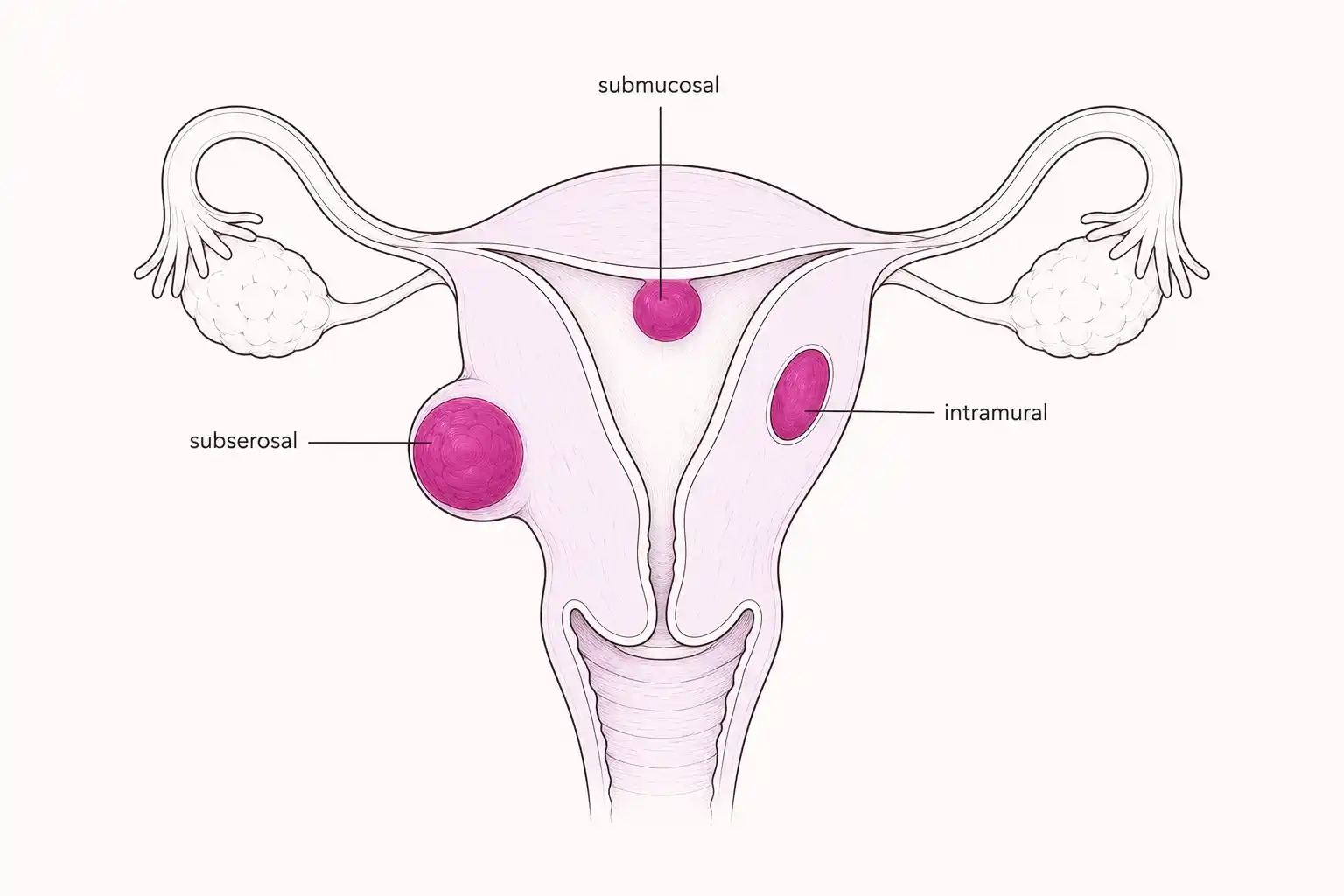
Fibroids are non-cancerous growths in or around the uterus. They are very common. By age 50, the American College of Obstetricians and Gynecologists (ACOG) estimates that 40 to 80 percent of women have had fibroids, though many never know it because there are no symptoms. When fibroids do cause trouble, the picture we see most often is heavy or prolonged periods, pelvic pain or pressure, difficulty conceiving, recurrent pregnancy loss, or iron-deficiency anaemia from the heavy bleeding. A 2025 study of north Indian women confirmed the same broad pattern, with vitamin D receptor variants linked to fibroid risk (Tiwari et al, Gene, 2025).
A myomectomy removes the fibroids while keeping the uterus in place. It is the right choice for women who still want the option of pregnancy, and a reasonable choice for women who want to avoid hysterectomy on principle. The fibroids can come back over time in roughly 20 to 30 percent of cases after myomectomy (NHS UK), and we discuss that honestly at consultation.
Treatment depends on the picture
Depending on fibroid size, number, location and symptoms, the discussion at consultation may include:
- Medicines: iron to correct anaemia from heavy bleeding, tranexamic acid or combined hormonal pills to reduce the flow, and GnRH analogues for short-term shrinkage before surgery
- Mirena - the levonorgestrel intrauterine system can substantially reduce heavy menstrual bleeding in selected women with smaller or sub-mucosal-sparing fibroids (see Mirena section below)
- Hysteroscopic myomectomy - for sub-mucosal fibroids accessible through the cervix
- Laparoscopic myomectomy: minimally invasive removal when the fibroid size and position allow (covered on a forthcoming dedicated page)
- Open (abdominal) myomectomy - for larger or multiple fibroids, or where laparoscopic access is not suitable
- Hysterectomy - only when fertility is not a concern and conservative options have not been enough, or when other indications apply
Internal links: hormonal imbalance in women, infertility care, pregnancy care (fibroid management in pregnancy).
Ovarian Cyst Surgery and Ovarian Torsion Management
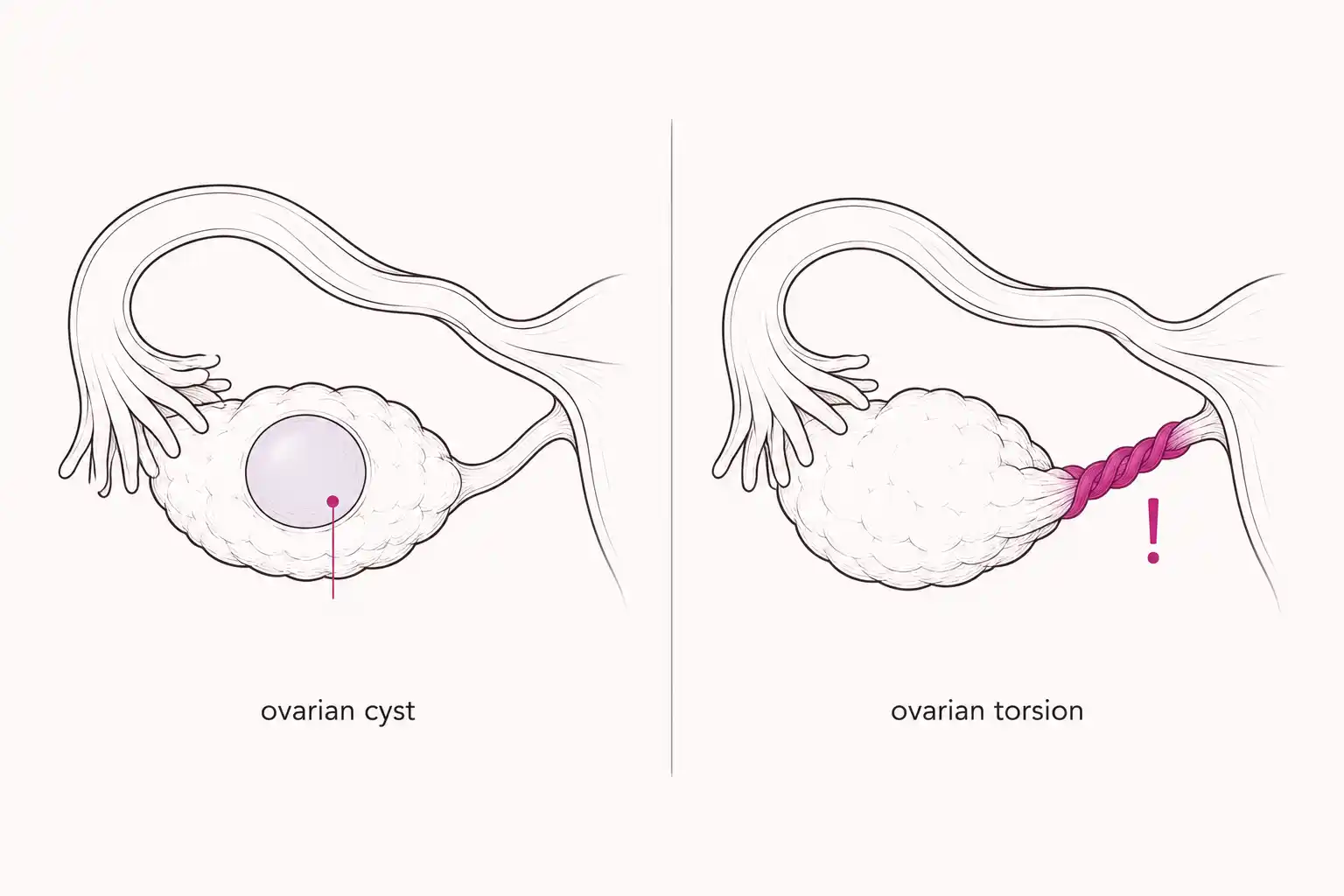
Most ovarian cysts are harmless and resolve on their own. ACOG notes that almost all women of reproductive age develop a small cyst at some point in their lives, and the great majority cause no symptoms at all. Functional cysts in particular usually settle over one or two menstrual cycles. The NHS describes the same watchful-waiting approach as the default, with surgery reserved for cysts that are large, persistent, painful, suspicious on scan, or causing complications.
When ovarian cyst surgery may be considered
- A cyst that is large on scan
- A cyst that persists over follow-up scans
- Painful or symptomatic cysts
- A cyst that looks suspicious on ultrasound or MRI
- A cyst causing complications such as bleeding, rupture, or torsion
Ovarian cystectomy means removal of the cyst while trying to preserve healthy ovarian tissue wherever possible. This is particularly important in younger women and those who may wish to conceive in future.
Ovarian Torsion Is an Emergency
Ovarian torsion happens when the ovary twists on its blood supply. It causes sudden, severe lower abdominal pain, often with nausea or vomiting. If you or someone in the family develops sudden severe pelvic pain, do not wait for a routine clinic appointment. Seek urgent medical care at the nearest hospital with a gynecology and emergency department.
Related reads: PCOS / PMOS (cysts vs polycystic ovaries are different things and are often confused), infertility care when cysts are in the context of trying to conceive.
D&C, Cervical Biopsy and Polyp Treatment
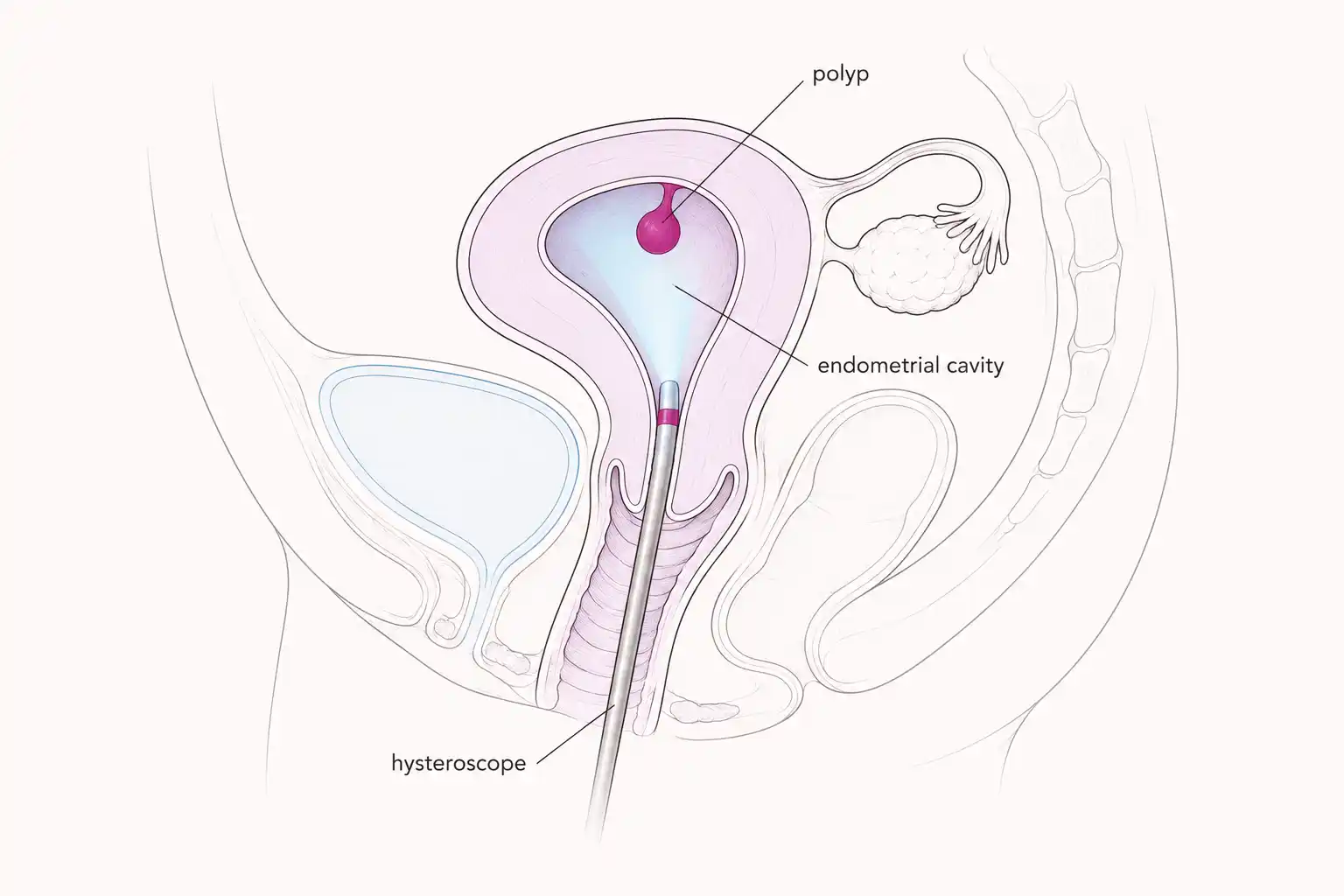
Some women need a minor gynecology procedure to investigate or treat abnormal bleeding, thickened endometrium, cervical changes or polyps. Most are short, day-care procedures performed under brief anaesthesia. Where a polyp, fibroid or focal lesion is suspected, a hysteroscopic look inside the uterus alongside the D&C lets the cavity be inspected directly while sampling is done.
Procedures discussed in this section
- Dilatation and curettage (D&C) - gentle dilatation of the cervix and sampling or evacuation of the endometrial lining
- Dilatation and curettage (D&C) with hysteroscopy - the same procedure combined with a hysteroscopic look inside the uterus, so the cavity can be inspected directly while the sampling is done. This is the preferred approach when a polyp, fibroid or focal lesion is suspected on scan.
- Endometrial polyp treatment - removal of a uterine-lining polyp, typically after identification on ultrasound or saline infusion sonography (SIS)
- Cervical polyp treatment - removal of a polyp on the cervix, usually a brief outpatient or day-care procedure
- Cervical biopsy - small tissue sample for laboratory examination, often after an abnormal Pap smear or colposcopy finding
- Endometrial biopsy - tissue sample from the uterine lining, often part of the workup for postmenopausal bleeding or thickened endometrium
Why these procedures may be advised
These procedures may be considered after symptoms or findings such as:
- Bleeding between periods
- Heavy or prolonged bleeding
- Postmenopausal bleeding - this always warrants prompt evaluation
- Abnormal Pap smear or HPV-positive screening
- Ultrasound findings of thickened endometrium or a polyp
- Retained tissue after miscarriage
Postmenopausal bleeding means any vaginal bleeding more than 12 months after your last natural period. It is never normal and always needs evaluation, even when it is light or stops on its own. Most of the time the cause turns out to be benign, vaginal atrophy, a polyp, or a hormonal effect. But ACOG notes that about 10 percent of postmenopausal bleeding turns out to be due to endometrial cancer, and a prompt evaluation is precisely what protects against missing it.
Bleeding after menopause? This should not wait for a routine appointment. Book an evaluation with Dr. Pallavi promptly.
Related reads: menopause care, hormonal imbalance.
Mirena Insertion for Selected Bleeding and Hormonal Conditions
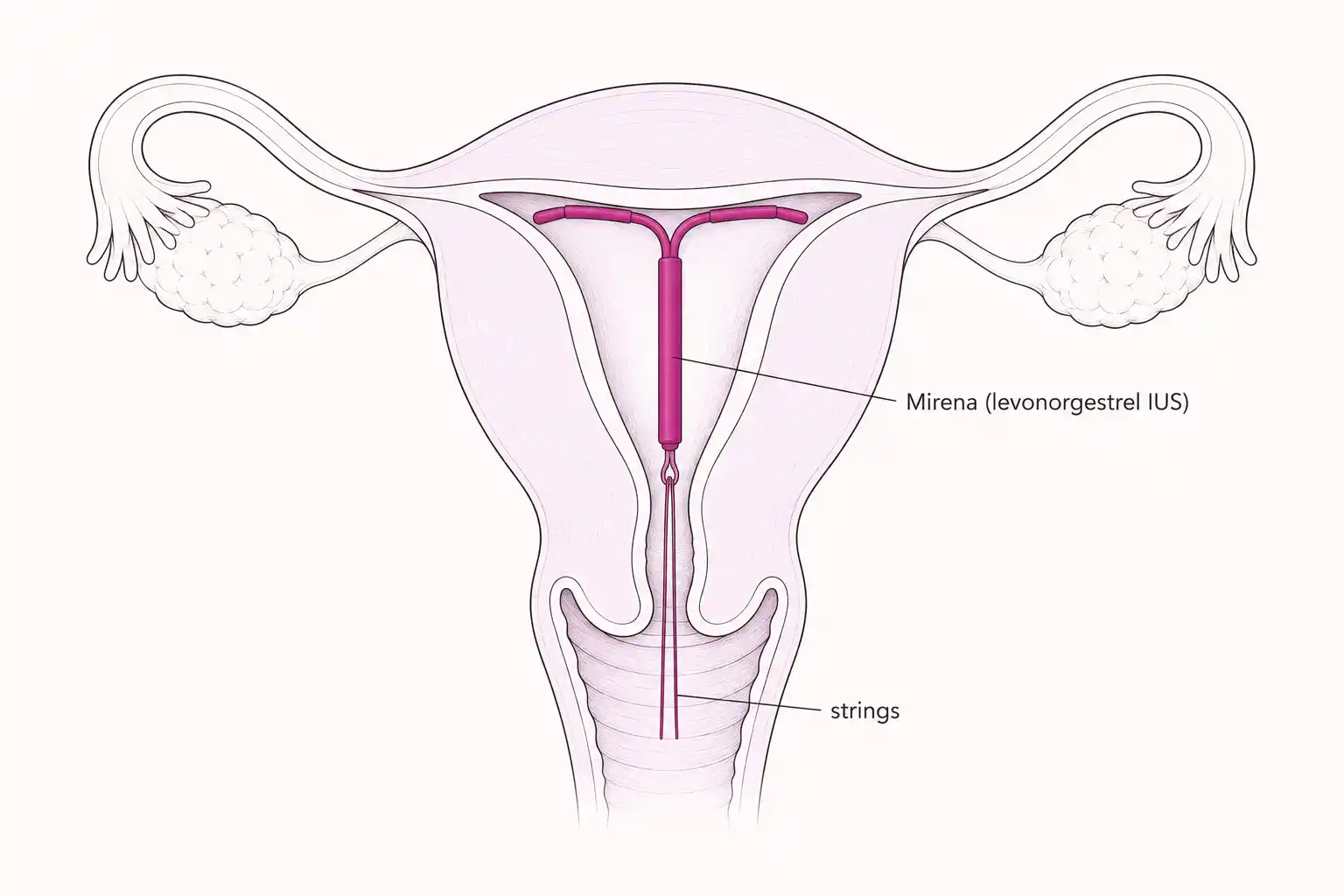
Mirena is a hormone-releasing (levonorgestrel) intrauterine system that releases a small daily dose of progestogen directly into the uterus. It is one of the most useful tools we have for heavy menstrual bleeding, adenomyosis, endometrial protection during hormone therapy in menopause, and long-acting contraception. Mirena is usually inserted in the operating theatre as a day-care procedure under brief anaesthesia, so the experience is comfortable and the insertion is precise. The ACOG patient guide on heavy and abnormal periods lists it as a first-line option for heavy menstrual bleeding.
Mirena is not the right answer for everyone. Whether it suits you depends on your age, your bleeding pattern, what the scan shows of your uterus, any infection risk, and your overall treatment goals. We talk this through at consultation rather than fitting it as a default.
From Dr. Pallavi’s own research
Dr. Pallavi Kulkarni has authored peer-reviewed research on Mirena, published in the Journal of Mid-life Health in 2015 under her maiden name P. C. Dhamangaonkar.
The study, “Levonorgestrel intrauterine system (Mirena): An emerging tool for conservative treatment of abnormal uterine bleeding”, followed 70 women aged 30 to 55 with abnormal uterine bleeding over a period of three years. Mirena reduced median menstrual blood loss by approximately 80 percent at four months and 95 percent at one year, with most women reaching amenorrhea (no bleeding) by two years. Mean haemoglobin rose 7.8 percent from baseline at four months. Hysterectomy could be avoided in most of the women in the study.
The paper concluded that Mirena provides a reversible, fertility-sparing alternative to hysterectomy for selected women with menorrhagia, while also serving as an effective contraceptive.
Reference: Dhamangaonkar PC, Anuradha K, Saxena A. Journal of Mid-life Health, 2015 Jan-Mar; 6(1): 26-30. PubMed (PMID 25861205) · Full text (PMC4389381) · DOI: 10.4103/0976-7800.153615
What this means for Mirena at consultation
For women advised hysterectomy mainly to control heavy bleeding, Mirena deserves a careful look first, especially when the uterus is of normal or near-normal size and other causes have been ruled out on scan. It is not always the answer, but in the right woman it can avoid major surgery entirely, as Dr. Pallavi's own clinical research demonstrated.
Considering Mirena before hysterectomy? Discuss whether it is the right fit for your case with Dr. Pallavi.
Book ConsultationUterine Prolapse and Pelvic Floor Surgery
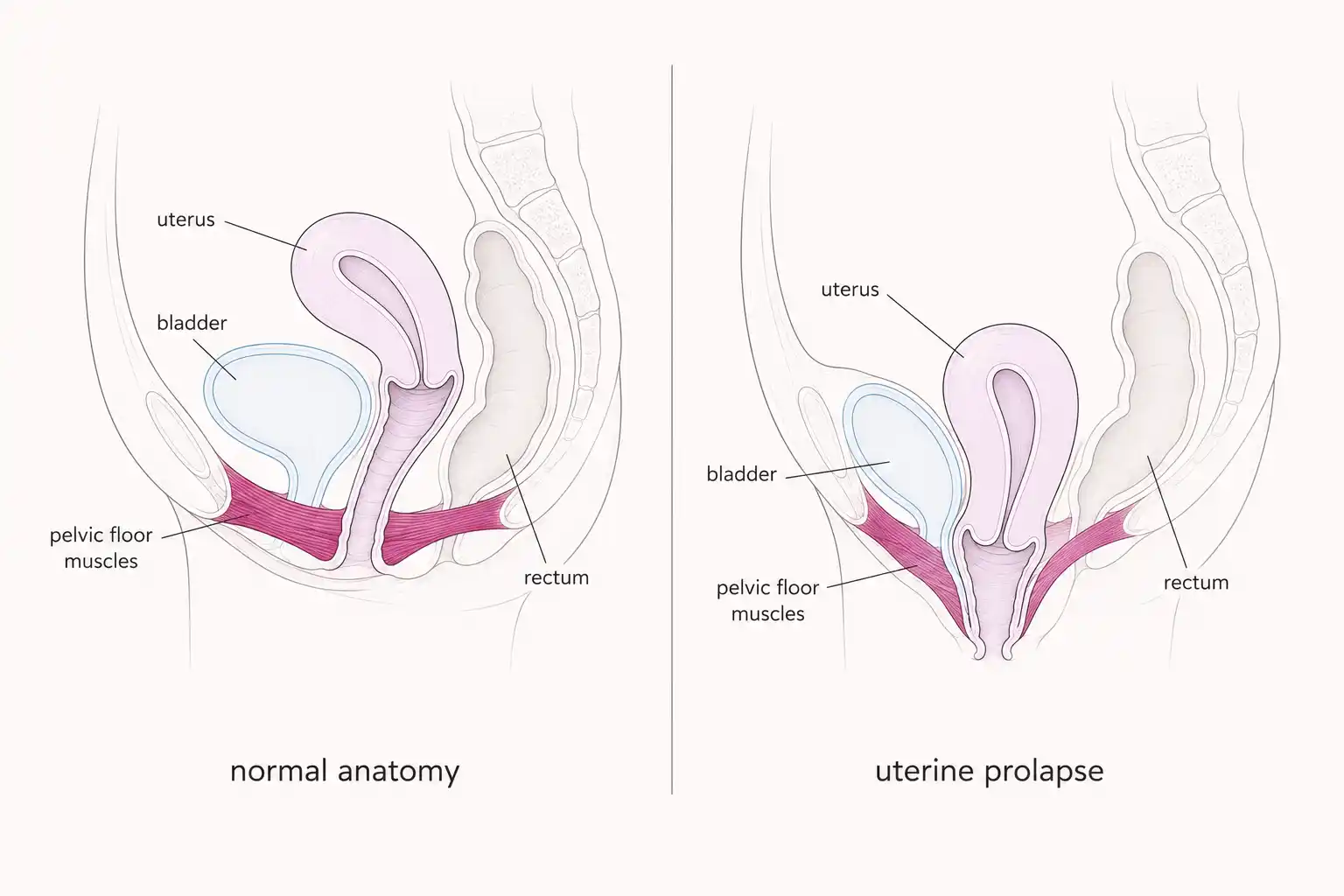
Uterine or vaginal prolapse can cause a feeling of heaviness or dragging, something coming down from the vagina, difficulty passing urine, constipation, discomfort while walking, or pain during intercourse. It is more common after childbirth, with ageing, and after menopause. The NHS UK pelvic organ prolapse guide and the NICE NG123 guideline on urinary incontinence and pelvic organ prolapse both recommend conservative options first for most women, with surgery reserved for cases where symptoms persist or are significant.
Treatment depends on the degree of prolapse and how much it affects daily life. Many women with milder prolapse benefit from conservative options first.
Conservative options often considered first
- Pelvic floor exercises (Kegels), often with physiotherapy guidance
- Lifestyle changes - weight management, treating chronic cough, avoiding heavy lifting where possible
- Vaginal pessary - a supportive device fitted vaginally, useful where surgery is delayed or not preferred
- Topical oestrogen in postmenopausal women, where appropriate
Surgical options when conservative care is not enough
Surgery may be considered when symptoms are significant and conservative options have not given enough relief. Procedures discussed at consultation may include:
- Vaginal hysterectomy for prolapse, when the uterus is the main contributor to the prolapse
- Vaginal wall repair (anterior or posterior colporrhaphy) for bladder or rectal prolapse
- Sacrospinous fixation - suspension of the vaginal vault to the sacrospinous ligament, often for vault prolapse after a previous hysterectomy
- Pelvic floor repair - combined as needed depending on the type and degree of prolapse
- Colpocleisis - a closure procedure for older women who are at high medical risk for major prolapse surgery and who do not wish to retain sexual function. It is offered after a careful discussion of what it does and does not preserve.
The exact combination of procedures depends on which compartments are affected (uterus, bladder, rectum, vault), the degree of descent, and your overall health and preferences.
Stress Urinary Incontinence and Urine Leakage Procedures
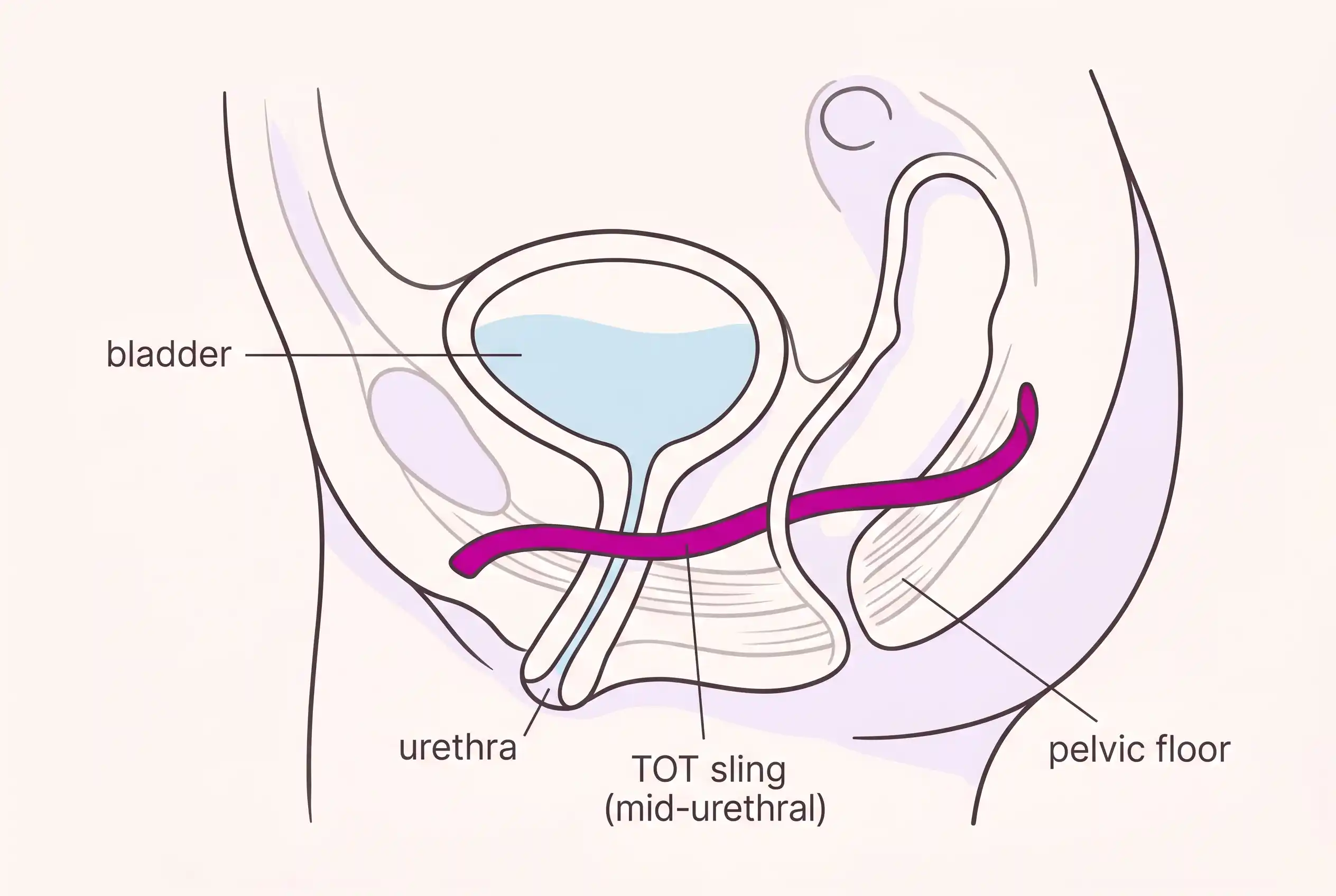
Stress urinary incontinence (SUI) means leakage of urine during coughing, sneezing, laughing, jumping, lifting, or exercise. It is more common after childbirth, with ageing, with weakening of the pelvic floor, and around menopause. It is also one of the most under-discussed women’s health concerns in India, and many women live with it for years before bringing it up. The NHS UK guide on urinary incontinence and the NICE NG123 guideline are the international references on assessment and treatment. An Indian community study confirmed that SUI is meaningfully linked to physical frailty and lower muscle mass in older women, which fits what we see at the clinic (Zeng et al, Int J Med Sci, 2024).
Treatment depends on severity
Many women improve with:
- Pelvic floor exercises (Kegels), often with physiotherapy supervision - usually the first step
- Lifestyle changes - weight management, reducing caffeine, treating chronic cough or constipation
- Bladder training when an urge component is also present
For women whose symptoms do not improve with these measures, a procedure may be considered:
- TOT (transobturator tape) - a minimally invasive sling procedure for stress urinary incontinence
- Other sling procedures - the route and material depend on the urogynecology evaluation
- Other stress urinary incontinence surgery when sling repair is not appropriate for the individual case
Not all urine leakage is the same. Stress incontinence (leaking with cough or exertion) and urge incontinence (sudden strong need with leakage) are different conditions with different treatments. A proper evaluation before deciding surgery makes sure the right option is chosen.
How We Decide Whether Surgery Is Really Needed
Before advising a procedure, Dr. Pallavi Kulkarni usually considers:
- Your symptoms and how much they affect daily life, work, sleep and relationships
- Your age and pregnancy plans - whether fertility needs to be preserved
- Examination findings
- Ultrasound or other imaging - pelvic ultrasound, with MRI added where indicated
- Pap smear, biopsy or blood test results where relevant
- Previous treatment tried - what has and has not worked
- Medical conditions such as diabetes, thyroid disease, hypertension, anaemia or bleeding disorders
- Whether a non-surgical option is reasonable - medicines, Mirena, hormonal treatment, follow-up scans, watchful waiting
- Which hospital setup is safest for the proposed procedure given your medical profile
The decision is explained in plain language so that you understand why a procedure is being advised, what alternatives may exist, and what to expect before, during and after.
Ready for that conversation? Bring your scans, reports and questions. We will work through your case together and explain the next step in plain language.
Book ConsultationOpen Surgery, Vaginal Surgery or Minimally Invasive Surgery: How Is the Route Chosen?
The route of surgery depends on the condition, uterus size, fibroid location, ovarian findings, previous surgeries, infection risk, medical fitness, fertility plans and hospital facilities. Some procedures are best done vaginally. Some need abdominal open surgery. Some are suitable for laparoscopy or hysteroscopy (minimally invasive). Where a minimally invasive option is genuinely suitable, it is discussed at consultation. A dedicated page on laparoscopic and hysteroscopic gynecology surgery in Kandivali East is in preparation.
Hospital Admission, Anaesthesia and Recovery
Many gynecology procedures are hospital-based and may need anaesthesia, pre-operative fitness checks and post-operative follow-up. Before surgery, you may be advised:
- Blood tests - complete blood count, blood sugar, kidney and liver function, coagulation profile, blood group and HIV / HBsAg / HCV screening
- Urine test
- ECG and physician fitness, depending on age and existing conditions
- Chest X-ray, where indicated
- Ultrasound or other imaging
- Pap smear or biopsy, where relevant
- Anaesthesia evaluation
- Medical conditions are optimised before surgery - any diabetes, hypertension, thyroid, anaemia or other concerns are stabilised first, in coordination with your physician
- A clear discussion of your medicines, allergies and existing conditions
Hospitals, hospital stay and recovery
Dr. Pallavi Kulkarni operates at Apollo Fertility, Borivali; Criticare Asia, Malad West; Surya Hospital, Santacruz; Phoenix Hospital, Borivali West; Seven Star Hospital, Kandivali East; and Apex Hospital, Kandivali East. The hospital chosen for a given procedure depends on the surgery being planned, your medical profile and your convenience. Pre-admission paperwork and the anaesthesia team are arranged from Aarogya Women’s Clinic.
Typical hospital stay by procedure:
- Vaginal hysterectomy: about 3 days
- Abdominal hysterectomy: about 3 to 4 days
- Laparoscopic hysterectomy: about 2 days
- Myomectomy: about 2 days
- Ovarian cystectomy: about 2 days
- TOT for stress urinary incontinence: about 2 days
- D&C, polyp removal, Mirena insertion, biopsy: day-care (admission and discharge on the same day)
Pre-operative instructions. Strict fasting is required for 6 hours before surgery (no food, no water). You should continue your regular long-term medicines as advised by us, but new or non-essential supplements are usually stopped before the procedure. We give you a written plan covering this at the pre-anaesthesia visit.
Recovery. Light work can usually be resumed after about 2 days of uneventful recovery, and routine work after about a week. Heavy lifting and strenuous activity are deferred for longer and reviewed at the post-operative follow-up. Minor procedures (D&C, polyp removal, biopsy, Mirena) typically need only short rest, while open surgery such as abdominal hysterectomy or myomectomy requires more time and follow-up.
Gynecology Procedures and Open Surgery Consultation near Kandivali, Malad, Borivali and Goregaon
Aarogya Women’s Clinic is located in Thakur Village, Kandivali East, Mumbai. The clinic is convenient for women travelling from Kandivali East, Kandivali West, Thakur Complex, Lokhandwala Township, Borivali, Malad, Goregaon, Dahisar and the nearby western suburbs.
Women can consult Dr. Pallavi Kulkarni for evaluation of fibroids, heavy bleeding, ovarian cysts, prolapse, urine leakage, polyps, biopsy advice, postmenopausal bleeding, second opinion before hysterectomy, and other gynecology-procedure-related concerns.
Gynecologist in Kandivali West
Families from Kandivali West reach the clinic in 10 to 15 minutes via SV Road or Mahavir Nagar.
Gynecologist in Borivali
Borivali East and West patients reach the clinic in 15 to 25 minutes via Western Express Highway or SV Road.
Gynecologist in Malad
Malad East and West patients reach the clinic in 15 to 25 minutes via WEH or Link Road.
Gynecologist in Goregaon
Goregaon East and West patients reach the clinic in 20 to 30 minutes via WEH (Akurli Road exit) or Aarey Road.
Meet Dr. Pallavi Kulkarni – Expert Gynecologist in Mumbai
Dr. Pallavi Kulkarni is a female (lady) gynecologist practising at Aarogya Women’s Clinic, Kandivali East. Her surgical training and clinical experience cover hysterectomy, myomectomy, ovarian cyst surgery, D&C, polyp treatment, Mirena insertion, and pelvic floor and stress-urinary-incontinence procedures.
She holds MBBS (KIMS Karad, MUHS), DNB in Obstetrics & Gynaecology (Central Railway Hospital Byculla, Natboard), Fellowship in IVF (AMOGS-MCOG), DGO (CPS Mumbai), DFP (FOGSI) and MRCOG (UK) (Royal College of Obstetricians and Gynaecologists).
Maharashtra Medical Council Registration: 2005/06/2917.
Published research
Dr. Pallavi’s peer-reviewed paper on the levonorgestrel intrauterine system (Mirena), published in the Journal of Mid-life Health in 2015 under her maiden name P. C. Dhamangaonkar, demonstrated that Mirena reduced median menstrual blood loss by around 80 percent at four months and 95 percent at one year in 70 women with abnormal uterine bleeding, with hysterectomy avoided in most. Read the paper: PubMed (PMID 25861205), full text.
“Most women advised a hysterectomy or other procedure benefit from one more careful conversation. Sometimes surgery is the right call. Sometimes it is not. The point of the consultation is to be sure.”

Book a Gynecology Procedure Consultation in Kandivali East
If you have been advised a hysterectomy or other gynecology procedure and would like a careful second look at whether it is genuinely needed - or if you have symptoms (heavy bleeding, fibroids, ovarian cyst, prolapse, urine leakage, polyp, abnormal biopsy) that need evaluation - we would be glad to see you.
Call: +91 91366 33062 or +91 93245 97166
Visit: Aarogya Women’s Clinic, Shop no. 48, EMP-53, Evershine Halley, Thakur Village, Kandivali East, Mumbai 400101
What Our Patients Say
Highly Recommended Gynecologist in Kandivali East for Pregnancy and Women's Health
Dr. Pallavi Kulkarni is a preferred Gynecologist in Kandivali East for women seeking compassionate support during consultations, pregnancy, and routine gynecological care. Patients consistently praise her kindness, professionalism, and clarity.
Do you have any questions?
Request An AppointmentFAQ
Which doctor should I consult for gynecology surgery?
A gynaecologist (OB-GYN) is the right specialist for evaluation of conditions such as fibroids, ovarian cysts, prolapse, urine leakage, polyps and abnormal bleeding. Dr. Pallavi Kulkarni evaluates these conditions at Aarogya Women's Clinic, Kandivali East, walks through the non-surgical options first, and recommends a procedure only when it is genuinely needed.
When is hysterectomy needed?
Hysterectomy is the right answer for women with heavy or prolonged bleeding that has not responded to medical treatment, large or symptomatic fibroids, severe adenomyosis, significant uterine prolapse, or persistent abnormal endometrial findings. It is not the default first step. NFHS-5 (2019-21) found that around 3 percent of Indian women aged 30 to 49 have had a hysterectomy, and peer-reviewed work suggests many were performed for indications where conservative care could reasonably have been tried first (Kumari and Kundu, BMC Women's Health, 2022). In our clinic, medicines, Mirena, hormonal treatment, follow-up scans or careful observation are considered before surgery for every woman where these are appropriate.
Is myomectomy better than hysterectomy?
It depends on the situation. Myomectomy keeps the uterus in place and is the right choice for women who still want the option of pregnancy or who want to avoid hysterectomy on principle. Hysterectomy may be recommended when fibroids are very large or multiple, when fertility is not a concern, or when bleeding has been long-standing and significantly affecting health. Fibroids can return after myomectomy in roughly 20 to 30 percent of women over time (NHS UK), and we explain this honestly. The right choice depends on fibroid size, number, location, symptoms, age and pregnancy plans, and is discussed in detail at consultation.
Can ovarian cysts be treated without surgery?
Yes, many ovarian cysts are harmless and can be observed with follow-up ultrasound scans to see whether they settle on their own. Functional cysts often resolve over one to two menstrual cycles. Surgery may be considered if a cyst is large, persistent, painful, suspicious on scan or causing complications. Sudden severe pelvic pain may suggest ovarian torsion, which is a surgical emergency and needs urgent hospital evaluation.
What is D&C and why is it done?
Dilatation and curettage (D&C) is a minor gynecology procedure where the cervix is gently dilated and the endometrial lining is sampled or evacuated. It may be advised in the workup of abnormal uterine bleeding, postmenopausal bleeding, thickened endometrium on ultrasound, retained tissue after miscarriage or for endometrial biopsy. It is usually a short, day-care procedure.
Is Mirena an alternative to hysterectomy?
Yes, for the right woman. Mirena is a hormone-releasing intrauterine system that can significantly reduce heavy menstrual bleeding and is one of the most useful conservative alternatives to hysterectomy. Dr. Pallavi Kulkarni's own research published in the Journal of Mid-life Health (2015), under her maiden name P. C. Dhamangaonkar, studied Mirena in 70 women with abnormal uterine bleeding. The study found around 80 percent reduction in menstrual blood loss at four months and amenorrhea (no bleeding) by two years in most patients, with hysterectomy avoided in most women in the study. Whether Mirena is right for you depends on your age, your bleeding pattern, what the scan shows of your uterus, and your treatment goals, and is discussed at consultation.
What is TOT surgery for urine leakage?
TOT (transobturator tape) is a minimally invasive sling procedure for stress urinary incontinence, which is leakage of urine with coughing, sneezing, laughing or exertion. It is usually offered when pelvic floor exercises and lifestyle measures have been tried and have not given enough relief, and after a proper urogynaecology evaluation has confirmed the type of incontinence. Not all urine leakage is stress incontinence: urge incontinence is a different pattern (sudden strong need to pass urine, often with leakage on the way) and is usually treated with medication and bladder training rather than surgery.
What is sacrospinous fixation?
Sacrospinous fixation is a vaginal surgical procedure to support the vaginal vault by attaching it to the sacrospinous ligament. It may be advised for vaginal vault prolapse, often following a hysterectomy. The decision depends on the type and degree of prolapse, symptoms and patient profile.
Is open surgery always necessary?
No. The route of surgery is chosen based on the condition, uterus size, fibroid location, ovarian findings, previous surgeries, infection risk, medical fitness, fertility plans and hospital facilities. Some procedures are best done vaginally, some need an abdominal open approach, and some are suitable for laparoscopic or hysteroscopic surgery. A minimally invasive option is discussed wherever it is suitable.
How do I prepare for gynecology surgery?
Before a planned procedure, you may be advised blood tests, urine test, ECG or a physician fitness check depending on age and existing conditions, an ultrasound or other imaging, a Pap smear or biopsy where relevant, anaesthesia evaluation, and a clear conversation about your medicines, allergies and existing conditions. The exact list depends on the procedure and is discussed in detail at consultation.
Can I get a second opinion before hysterectomy?
Yes, and it is reasonable to do so. Hysterectomy is a significant decision and it is good practice to be sure that conservative options have been considered. Dr. Pallavi Kulkarni is happy to offer a second opinion, review previous scans and reports, and discuss whether non-surgical options such as medicines, Mirena or follow-up are reasonable in your case.
Is Aarogya Women's Clinic convenient from Malad, Borivali and Goregaon?
Yes. Aarogya Women's Clinic is in Thakur Village, Kandivali East, and is convenient for women travelling from Kandivali West, Malad East and West, Borivali East and West, Goregaon East and West, Dahisar and nearby western suburbs. Most parts of the western suburbs reach the clinic in 10 to 30 minutes by road, via the Western Express Highway or SV Road.