
Painless Delivery in Mumbai: Tips, Cost, Safety and Everything You Need to Know
By Dr. Pallavi Kulkarni, MBBS, DGO, DNB (OB-GYN), DFP, MRCOG (UK), Fellowship in IVF ·
Quick answer: Painless delivery is a normal vaginal delivery made significantly less painful with the help of epidural anaesthesia, what many people in India call the “painless delivery injection.” The mother stays fully awake, can participate actively in childbirth, and the technique is widely considered safe for both mother and baby when given by a trained anaesthetist in an equipped hospital. In Mumbai it is offered in most private maternity hospitals.
Watch a cat have kittens sometime. She picks a quiet corner, breathes a few times, and a few hours later there are four wet, blinking newborns curled up next to her. By the next morning she is eating from her bowl like nothing happened.
Now picture a human labour ward. Twelve hours in. A woman, her partner, her mother, a midwife, two doctors, monitors, a pain scale on the wall, and somewhere in all this, an actual baby trying to be born.
What is going on? Why does it look so calm for the cat and so much like a room full of people, decisions, and emotions for us?
The honest answer is that evolution made a strange trade-off, and women have been dealing with the consequences ever since. The good news is that you have options today that your great-grandmother never had. This article walks through both: a short explanation of why human birth is unusually difficult, and then a practical, doctor’s-eye view of every painless delivery option available to you in Mumbai today.
“Almost every pregnant woman in my Kandivali OPD asks the same question by the third trimester: will I be able to bear the pain? My answer is always the same. You should not have to bear more pain than you choose to. Painless delivery, used well, is one of the kindest tools modern obstetrics has given us.”
- Dr. Pallavi Kulkarni, MBBS, DGO, DNB (OB-GYN), DFP, MRCOG (UK), Fellowship in IVF
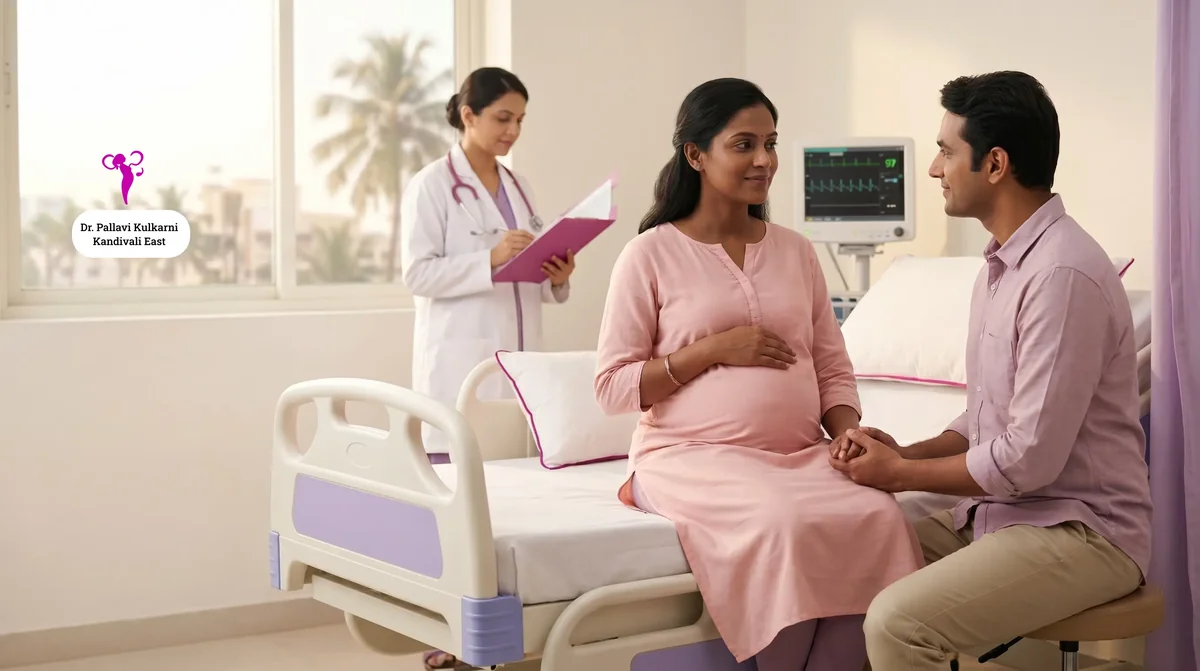
Why does childbirth hurt so much for humans?
Human childbirth hurts significantly more than birth in other mammals because of the obstetrical dilemma: a tight fit between the baby’s large head and a pelvis narrowed for upright walking. Here is how that came to be.
Around four to six million years ago, our ancestors started walking upright. The pelvis adapted for that, becoming narrower and more bowl-shaped, because a wide pelvis is less efficient for walking long distances.
Then human brains began to grow, and brains kept growing for millions of years. Babies’ heads grew along with them.
So we ended up with a tight situation. A pelvis narrowed for walking, and a baby’s head shaped by a big brain. The fit between baby and birth canal is remarkably tight in humans, much tighter than in our closest primate relatives. Scientists call this the obstetrical dilemma, and it explains several uniquely human features of birth:
- Human babies are born unusually early in development. A newborn chimpanzee can grip its mother’s fur within minutes of birth. A human newborn cannot hold its head up for three months. We deliver them early because if we waited any longer, the head would not fit.
- Labour is long. The baby must actually rotate inside the pelvis as it descends, twisting through a passage that does not widen. In most other mammals, the baby comes out in a more direct path.
- Birth in humans usually needs help. We are one of the very few mammals where the mother routinely needs another person to assist with safe delivery.
The full scientific story is more complex than just “we started walking.” Recent research suggests human birth timing is also shaped by how much energy a mother can supply to a growing baby, not only by pelvic size. But the central point holds: human childbirth is unusually difficult compared with most mammals, and that is not a personal failing. It is biology.
So if you are pregnant and reading this with some anxiety about labour pain, please know two things. First, you are not weak. Birth is genuinely hard for our species. Second, unlike our ancestors, you have a real toolkit of options today. Let us walk through it.
What is painless delivery?
When Indian hospitals advertise “painless delivery,” they almost always mean a normal vaginal delivery in which the mother receives epidural anaesthesia to manage labour pain.
In simple words: you are awake, you push your baby out yourself, but the sharp pain of contractions is dramatically reduced. The baby comes out vaginally, exactly as in any other normal delivery. The word “painless” is slightly oversold; “much less painful” is more accurate. But for most women who choose it, the difference is significant enough to be life-changing.
You may also hear it called:
- Epidural delivery
- Painless normal delivery
- Painless labour
- Painless delivery injection (the most common Indian search term)
- Epidural analgesia in labour (the formal medical term)
These all describe essentially the same thing.
Painless delivery vs normal delivery: what is the actual difference?
This is one of the most common confusions, so let us clear it up.
Table 1: Painless delivery vs normal delivery, side by side
| Aspect | Normal delivery | Painless delivery |
|---|---|---|
| Mode of delivery | Vaginal | Vaginal (same) |
| Mother awake and pushing | Yes | Yes |
| Labour pain experienced | Full intensity | Significantly reduced |
| Pain relief used | Usually none, or basic | Epidural anaesthesia |
| Anaesthetist involvement | Not required | Required |
| Effect on baby | None | None expected when correctly given |
| Recovery after delivery | Usual | Usual, with a brief period of leg heaviness |
Painless delivery is not a different type of delivery. It is a normal delivery plus pain relief. You still go through the stages of labour. You still push the baby out. The only difference is that you do most of it without sharp pain.
It is also not a C-section. A C-section (caesarean) is surgical delivery through an incision in the abdomen, done for specific medical reasons. Painless delivery uses spinal-area anaesthesia to reduce labour pain during a vaginal birth. The two are entirely different procedures, even though both involve regional anaesthesia.
Medical options for pain relief in labour
These are the methods that involve medication, given by an anaesthetist or doctor.
Epidural (the “painless delivery injection”)
This is what people in India usually mean when they say painless delivery. An anaesthetist places a very thin flexible tube (called a catheter) into a space in your lower back called the epidural space. Through this tube, local anaesthetic medication is given continuously throughout your labour. The medication numbs the nerves that carry pain signals from the uterus and birth canal.
- How quickly does it work? Usually within 15 to 20 minutes of placement.
- Does the injection itself hurt? The local anaesthetic given to numb your skin first stings briefly, similar to a blood test. The catheter placement after that is mostly pressure, not pain.
- Will I be able to push? Yes. Modern low-dose techniques are designed so you retain enough sensation and muscle control to push effectively in the second stage of labour. This is one of the most common worries and it is not borne out by current practice.
- Will I be able to move or walk? This varies. Some hospitals use “mobile” or “walking” epidurals with lower doses that allow some movement. Others ask you to remain in bed for safety and monitoring. Ask your gynaecologist what is offered at your delivery hospital.
- Is it safe for the baby? The medication acts locally in your spine and very little crosses into your bloodstream, so even less reaches the baby. Major obstetric bodies including the American College of Obstetricians and Gynecologists (ACOG) state that pain-relief medicines used during labour have not been shown to cause long-term effects on the baby or later development.
Combined spinal-epidural (CSE)
A small dose of spinal medication for immediate relief, plus an epidural catheter for continuous top-ups. You get fast pain relief and ongoing control. Many anaesthetists in larger Mumbai hospitals prefer this approach for labour.
Spinal anaesthesia
A single injection of anaesthetic directly into the spinal fluid. It works faster than an epidural (within minutes) but is shorter-acting and produces a denser numbness. Spinal is mostly used for planned C-sections, not for vaginal labour pain.
Nitrous oxide (laughing gas, Entonox)
A mixture of nitrous oxide and oxygen that you breathe through a mask during contractions. You hold the mask yourself, breathe deeply at the start of a contraction, and the gas takes the edge off the peak. It clears from your system within minutes. It does not eliminate pain, but for many women it makes contractions more manageable. Common in the UK and Australia, less common in India, though a few Mumbai private hospitals now offer it.
IV opioids (Pethidine, Fentanyl)
Pain medication given through a drip. Once a standard option in Indian hospitals, IV opioids are now used less often because epidurals are more effective and have fewer side effects on the baby. They can still be useful in early labour or when an epidural is not possible.
Trying to decide between hospitals that offer 24-hour painless delivery? Speak with Dr. Pallavi Kulkarni at Aarogya Women’s Clinic, Kandivali East, to plan your delivery with the right team, the right hospital, and an anaesthetist available when you need one.
Non-medical options that also work
Several non-medical methods genuinely reduce labour pain and have evidence behind them. They work alongside an epidural rather than only as an alternative to one, and they help with the parts of labour no drug can really fix: anxiety, fatigue, and fear of the unknown.
Continuous labour support
This has the strongest evidence of any non-medical method. Having someone with you throughout labour, whether a partner, a doula, your mother, or a supportive midwife, reduces pain perception, shortens labour, reduces the chance of intervention, and improves your overall birth experience.
A 2017 Cochrane review of 26 trials with over 15,000 women found that continuous labour support was linked with increased spontaneous vaginal birth, shorter labour, reduced use of pain medication, fewer caesarean births, and fewer reports of a negative childbirth experience (Bohren and colleagues, Cochrane 2017). Few interventions in obstetrics have evidence this consistent.
Arrange this support in advance. Do not assume hospital staff will fill the role; they are usually too busy.
Lamaze and structured breathing
The Lamaze technique uses patterned breathing to occupy the mind during contractions and ensure good oxygen flow to you and the baby. It does not eliminate pain, but it gives you something to do with the pain, which sounds small but matters a lot when contractions are intense. Most antenatal classes in Mumbai teach Lamaze breathing.
Hypnobirthing
A method combining deep relaxation, visualisation, and self-hypnosis. The premise is that fear amplifies pain (which is medically true; fear releases stress hormones that intensify pain perception). Practising deep relaxation through pregnancy can help you arrive in labour with a calmer nervous system. Several certified instructors offer hypnobirthing courses in Mumbai, both online and in person.
Water immersion and water birth
Sitting or lying in a warm water tub during labour reduces pain perception and is genuinely relaxing. Some women labour in water, some deliver in water. Water immersion is now offered at a small number of Mumbai hospitals and birthing centres. Worth asking during your hospital tour.
TENS (Transcutaneous Electrical Nerve Stimulation)
Small electrode pads placed on your lower back deliver a gentle, tingling electrical current that stimulates the body’s own pain-blocking pathways. TENS works best in early labour and is something you control yourself. Inexpensive, drug-free, and has no known effects on the baby. Available at some Mumbai hospitals and can also be rented.
Birthing positions
Lying flat on your back is one of the worst positions for labour pain and progress, and yet it is often the default in many hospitals. Upright positions (standing, walking, leaning, squatting, on hands and knees) use gravity, open the pelvis wider, and reduce pain. If your hospital allows it (and most modern ones do), stay upright and mobile for as long as you can during the first stage of labour.
Massage, aromatherapy, music
Lower back massage during contractions, calming music, dim lighting, familiar scents from home. All of these reduce pain perception by reducing stress. The science here is not as strong as for epidurals, but the cost is essentially zero and the side effects are zero too.
Antenatal yoga and physical preparation
Women who exercise during pregnancy and practise prenatal yoga or pelvic floor preparation tend to report less pain and shorter labours. We cover this in detail in our guide to yoga for women’s gynaecological health. The short version: a body that has been gently strengthened and stretched throughout pregnancy handles labour better than one that has not.
Pain relief options at a glance
Table 2: All labour pain-relief options, summarised
| Method | What it does | When in labour | Effectiveness |
|---|---|---|---|
| Epidural | Numbs nerves from uterus and birth canal | Active labour onwards | Very high |
| Spinal | Single injection block | Mostly for C-section | Very high |
| Combined spinal-epidural | Fast onset plus continuous relief | Active labour onwards | Very high |
| Nitrous oxide | Takes the edge off contractions | Any stage | Moderate |
| IV opioids | Reduces pain awareness | Early labour mainly | Moderate, decreasing use |
| Continuous labour support | Reduces pain, anxiety, intervention | Throughout | High (strong evidence) |
| Lamaze breathing | Coping technique | Throughout | Moderate |
| Hypnobirthing | Reduces fear and anxiety | Throughout (needs prep) | Moderate |
| Water immersion | Calming, reduces pain | Mainly first stage | Moderate to high |
| TENS | Activates body’s pain control | Early labour | Mild to moderate |
| Upright positions | Reduces pain, helps progress | First stage | Moderate |
| Massage and music | Reduces pain perception | Throughout | Mild but useful |
Most good birth experiences combine two or three of these. There is no medal for doing it the hardest way possible.
Tips for a smoother (painless) normal delivery
The decisions you make before labour shape how labour goes. Stay active through pregnancy, take an antenatal class, pick your hospital and doctor early, practise breathing, eat and sleep well, write a flexible birth plan, and decide in advance whether you want an epidural. Here is what I tell patients during third-trimester check-ups at Aarogya Women’s Clinic.
- Stay active through pregnancy. Regular walking, prenatal yoga, swimming, or simply not sitting all day improves stamina, posture, and pelvic flexibility. Women who exercise during pregnancy tend to have shorter labours and need less intervention.
- Take an antenatal class. Most Mumbai hospitals offer them. Antenatal classes teach you what to expect at each stage of labour, breathing and relaxation techniques, positions to try, and how your partner can help. Knowledge reduces fear, and fear amplifies pain.
- Choose your hospital and doctor early. Visit the labour room in advance if you can. Ask whether painless delivery (epidural) is available 24 hours, who the anaesthetists are, what positions you can use, and whether your support person can stay with you. The hospital you choose shapes the birth more than most decisions.
- Practise breathing exercises daily in the third trimester. Slow, deep breathing for 10 minutes a day. By the time labour starts, the breathing pattern should be automatic.
- Eat well, sleep well, and stay hydrated. Labour is a long stretch of physical work. Women who arrive in labour exhausted and dehydrated have a much harder time. Treat the last weeks of pregnancy like preparation for an endurance event.
- Have a clear birth plan, but stay flexible. A birth plan is a conversation with your doctor about your preferences. It is not a contract. Birth is unpredictable. The best birth plans say what you want ideally, and what you accept if labour does not go as planned.
- Arrive at the hospital at the right time. Going in too early often leads to unnecessary interventions because you are there but not progressing. Going in too late can be stressful. Your doctor will guide you. As a rough rule, contractions five minutes apart, each lasting at least a minute, for at least an hour, is typically the time to leave for the hospital with a first baby.
- Ask for an epidural the moment you feel you need it. Many women suffer through hours of unnecessary pain because they were told “it is too early” or worry it will slow labour. If you want it, ask. Earlier is generally better than later.
- Have one calm support person with you. Choose the family member who will keep their nerves, not the one who panics. A calm partner, sister, friend, or doula is worth more than a roomful of anxious relatives.
- Trust your medical team but ask questions. A good doctor welcomes your questions. If yours does not, you may want to reconsider your choice of doctor.
“The women in my clinic who have the easiest deliveries tend to be the ones who walked 30 minutes daily through pregnancy, did breathing practice, picked their hospital carefully, and decided early whether they wanted an epidural. None of these are magical. They are simply preparation.”
- Dr. Pallavi Kulkarni, MBBS, DGO, DNB (OB-GYN), DFP, MRCOG (UK), Fellowship in IVF
Is painless delivery safe?
This is the most-searched safety question in India related to childbirth, so let us answer it directly.
For most women, yes. Painless delivery is widely considered safe. Epidural anaesthesia has been used in obstetrics for decades, in tens of millions of births worldwide. Major medical bodies including ACOG and the World Health Organization recommendations on intrapartum care for a positive childbirth experience recognise it as an effective and safe option for labour pain relief in appropriate hospital settings.
The key conditions for safety are:
- It is given by a qualified anaesthetist
- It is given in a hospital equipped to monitor mother and baby and to handle any complication
- The mother has no medical reason that makes the procedure unsuitable for her specific case
- It is given at the right stage of labour (not too early or too late)
When these conditions are met, painless delivery is one of the safest forms of pain relief in modern medicine.
Is painless delivery safe for the baby?
Decades of evidence have not shown harmful long-term effects on babies born to mothers who received epidural analgesia. ACOG explicitly states that pain-relief medicines used during labour have not been shown to cause long-term effects on the baby or later development. The medication acts locally in the mother’s spine, and very little of it reaches the baby through the bloodstream.
Does painless delivery increase the chance of C-section?
Current evidence does not show that epidurals increase the rate of C-section. They may slightly lengthen the pushing stage of labour by 20 to 30 minutes on average, but the decision to perform a C-section depends on whether the baby is in distress, whether labour is progressing, the baby’s position, and several other clinical factors. Whether the mother has had an epidural is generally not one of them.
Painless delivery side effects
The honest list. Most are minor and temporary.
Common, usually mild
- A drop in blood pressure (monitored continuously and managed with fluids or medication if needed)
- Itching, particularly on the face or chest
- Mild shivering
- Heaviness in the legs during and shortly after the procedure
- Mild backache at the injection site, usually resolving in a few days
Less common
- A headache afterwards, sometimes called a post-dural-puncture headache. It is treatable.
- A patchy or incomplete block, where some areas remain painful. The anaesthetist can usually adjust this.
- Difficulty passing urine for the first day, sometimes needing a temporary catheter
Rare
- Infection or bleeding at the injection site
- Allergic reaction to the medication
- Nerve injury (very rare, almost always temporary when it does occur)
Your anaesthetist will discuss the specific risks before placing the catheter and will ask for your consent. This is normal and standard care. The NHS UK epidural patient information covers the same risk profile in detail if you want a second written reference.
Who may not be eligible for painless delivery?
Painless delivery is not suitable for every woman. Your anaesthetist will review your medical history and decide. Situations where an epidural may not be advised, or may need to be modified, include:
- Very low platelet count or other clotting disorders
- Certain bleeding disorders or medications that thin the blood
- Infection near the injection site on the lower back
- Severe spine conditions or previous major back surgery (case by case)
- Allergy to local anaesthetic medications
- Severe low blood pressure that cannot be safely managed
- Labour that is already too advanced (typically beyond 8 to 9 centimetres of cervical dilation)
If you have any of these, you can still discuss alternative pain relief options with your team. Painless delivery is one option among several, not the only one.
If you have a medical history you are unsure about (low platelets, a previous spine procedure, a clotting concern), bring it up at your antenatal visit. Dr. Pallavi Kulkarni will review your case with the anaesthesia team before labour so there are no surprises on the day.
When should I ask for an epidural?
The short answer: when you feel you need it.
For most women, this is once labour is well-established, contractions are strong and regular, and your cervix is dilating actively (typically once you are around 3 to 4 centimetres dilated). Some hospitals will offer it earlier in labour; some prefer to wait until labour is clearly established to avoid slowing things down.
There is also an upper limit. If labour is very advanced and the baby is close to delivery, there may not be time to place the catheter and wait for the medication to work. The typical cut-off is around 8 to 9 centimetres of dilation, but this varies between hospitals and anaesthetists.
The practical rule: if you think you want a painless delivery, tell your gynaecologist during your antenatal visits, not during labour. That way the team is ready, the anaesthetist is available, and the consent and preparation can happen smoothly. During labour itself, ask the moment you feel you need pain relief. Do not wait for things to become unbearable.
Painless delivery cost in Mumbai and India
In Mumbai private hospitals in 2026, adding an epidural typically adds approximately ₹15,000 to ₹50,000 or more to the delivery package. Public hospitals usually offer it at a significantly lower cost (or free of charge) when an anaesthetist is on duty. Premium private and chain maternity hospitals can run higher. Costs vary by hospital, room category, anaesthetist fees, and whether the situation is planned or emergency. The broad ranges:
- Private hospitals: the addition of an epidural typically adds approximately ₹15,000 to ₹50,000 or more to the delivery package
- Public hospitals: often available at significantly lower cost or free of charge, when an anaesthetist is on duty
- Premium private hospitals and chain maternity hospitals: can be higher
These figures are estimates only. Please confirm exact costs with your chosen hospital well before your delivery date, as packages and inclusions vary considerably.
When asking about cost, also ask:
- Is the anaesthetist’s fee included or charged separately?
- Is the cost the same at night or on weekends?
- What is included if labour becomes a C-section midway?
- Are there additional charges for top-up doses or extended use?
A package quote without these details can be misleading.
Painless delivery near Kandivali, Borivali, Malad and Goregaon
If you live in the western suburbs of Mumbai, you have several maternity hospital options for painless delivery. Most large private hospitals across Kandivali East, Kandivali West, Borivali East, Borivali West, Malad East, Malad West, Goregaon East, Goregaon West, Jogeshwari, and the surrounding areas offer epidural analgesia, though 24-hour availability of an anaesthetist varies.
When choosing a hospital, please ask:
- Is painless delivery available 24 hours a day, every day, including emergencies and weekends?
- Are anaesthetists in-house or on-call?
- How quickly can an epidural be set up once requested?
- Can my partner stay with me through labour?
- What is the typical pricing and what is included?
At Aarogya Women’s Clinic in Kandivali East, Dr. Pallavi Kulkarni works with several leading maternity hospitals in the western suburbs and can discuss your specific delivery preferences during your antenatal visits. Women from across the area, including Borivali, Malad, Goregaon, and Kandivali West, consult Dr. Pallavi for structured pregnancy care and high-risk pregnancy management.
Myths about painless delivery (and the truth)
In my clinic in Mumbai I hear these myths almost every week. Let us clear them up.
Myth: Painless delivery is bad for the baby.
Not true. Decades of research have not shown harmful long-term effects on babies from epidural analgesia. The medication acts locally on the mother’s spine.
Myth: If I get an epidural I will need a C-section.
Current evidence does not show that epidurals increase the C-section rate. The decision to do a C-section depends on the baby’s wellbeing, labour progress, and several clinical factors.
Myth: Painless delivery means I will not be able to push.
Modern low-dose techniques are designed so you keep enough sensation to push effectively. You will not feel the sharp pain, but you will feel pressure as the baby descends and you will know when to push.
Myth: Natural birth is better than painless birth.
This is a personal values question, not a medical fact. There is no evidence that experiencing more pain in labour produces a healthier baby or a better mother-baby bond. Pain relief is your choice, not a measure of your worth as a mother.
Myth: Painless delivery slows down labour.
Slightly, in the pushing stage, by perhaps 20 to 30 minutes on average. The first stage of labour (cervix opening) is not consistently affected. The difference is medically minor.
Myth: Epidural causes permanent back pain.
This is one of the most common worries Indian women bring to my clinic, and the evidence does not support it. Multiple large studies have failed to find a link between epidural in labour and long-term back pain. A mild backache at the injection site is common for a few days after delivery and resolves on its own. The widespread belief that epidural causes lasting back pain comes from the fact that many women develop back pain during pregnancy and after delivery anyway, regardless of how they delivered. If your back pain is persistent or severe weeks after delivery, see your doctor; it is not the epidural’s fault.
Myth: You can only have painless delivery if you decide before labour.
You can request an epidural during labour itself, as long as you are not too close to delivery. The earlier you decide, the more options you have.
Myth: Painless delivery is the same as twilight sleep.
No. Twilight sleep was an older technique using sedatives that left women conscious but with no memory of the birth. It was discontinued for safety reasons decades ago. Modern painless delivery keeps you fully awake, aware, and in control.
Myth: Painless delivery means C-section.
No. Painless delivery refers to a normal vaginal delivery with epidural analgesia. A C-section is a separate surgical delivery, though it also uses spinal-area anaesthesia of a different type.
What to discuss with your doctor before labour
Around 28 to 32 weeks of pregnancy, ideally, you and your gynaecologist should have a clear conversation about your birth preferences. Bring your partner if possible. Topics to cover:
- Which pain relief options does your delivery hospital offer 24 hours?
- What is the typical cost, and what is included?
- Are you allowed to move and walk during labour?
- Can you have a continuous support person?
- What is your doctor’s general approach to interventions?
- What happens if your preferences need to change during labour?
A good birth plan is flexible. You may plan for an epidural and not need it. You may plan to avoid one and find you want it. Both are fine.
A note from Dr. Pallavi
I see women every week in my clinic who feel guilty about wanting pain relief in labour. Their mother delivered without it, their grandmother delivered without it, so they feel they should too. I want to say this clearly. Your grandmother also did not have ultrasound, did not have antibiotics, and lost more babies and mothers than we like to remember. We do not romanticise those losses. We should not romanticise the pain either.
Choosing pain relief is not weakness. Choosing not to use it is not strength. Both are valid choices made by women who know their own bodies and preferences. What matters most is that you are informed, you are safe, you are supported, and that you and your baby come through the other side healthy.
Birth is one of the most physically and emotionally intense experiences a human can have. Walking into it knowing your options, with a doctor you trust and a plan that can flex if needed, is the best preparation any woman can do.
If you are pregnant in Mumbai and would like to discuss your birth options, including painless delivery, you are welcome to book an appointment at Aarogya Women’s Clinic in Kandivali East. We see women across the western suburbs including Borivali, Malad, Goregaon, and Jogeshwari, and we work with several leading maternity hospitals in the area.
Whatever you choose, choose it because it is right for you. Not because of evolution, not because of marketing, and not because of what someone’s aunty said.
Book a consultation with Dr. Pallavi Kulkarni, MBBS, DGO, DNB (OB-GYN), DFP, MRCOG (UK), Fellowship in IVF, at Aarogya Women’s Clinic, Kandivali East. Call +91 91366 33062 or WhatsApp us to plan your pregnancy care and painless delivery.
References and further reading
The information in this article draws on guidance from the following bodies and publications. For specific medical advice for your situation, please consult your gynaecologist.
- American College of Obstetricians and Gynecologists (ACOG): Medications for pain relief during labor and delivery
- National Health Service (NHS), UK: Epidural anaesthesia
- World Health Organization: Recommendations on intrapartum care for a positive childbirth experience (2018)
- Cochrane Database of Systematic Reviews: Bohren MA and colleagues, Continuous support for women during childbirth (2017)
- Obstetric Anaesthetists' Association (Labour Pains): Pain relief and anaesthesia choices during labour, patient information
- Federation of Obstetric and Gynaecological Societies of India (FOGSI): Indian-context guidance on labour analgesia
For the evolutionary discussion, foundational and recent sources include Sherwood Washburn’s original 1960 paper on the obstetrical dilemma, and subsequent reviews by Holly Dunsworth and colleagues (2012 onwards) proposing the metabolic hypothesis as a complementary explanation for human birth timing.
Related reads on our blog
- → Pregnancy care in Kandivali East: preconception, antenatal, and delivery
- → High-risk pregnancy care in Kandivali East
- → Female pregnancy doctor in Mumbai: what to know before you choose
- → Pregnancy after 35: planning, risks, and care
- → Pregnancy at 40: what went through my mind deciding to have my second baby
- → Yoga for women’s health: a Mumbai gynaecologist’s guide
Medically reviewed by Dr. Pallavi Kulkarni, MBBS, DGO, DNB (OB-GYN), DFP, MRCOG (UK), Fellowship in IVF, June 2026. This article is for educational purposes and does not replace personal medical advice. For diagnosis and treatment, please consult a qualified gynaecologist.
Frequently Asked Questions
In English
Is painless delivery safe for the baby?
Yes. ACOG and other major obstetric bodies state that pain-relief medicines used during labour have not been shown to cause long-term effects on the baby or later development. The epidural medication acts locally in the mother’s spine and very little reaches the baby through the bloodstream.
How much does painless delivery cost in Mumbai?
In private hospitals in Mumbai, adding an epidural typically adds approximately ₹15,000 to ₹50,000 or more to the delivery package, depending on the hospital, room category, anaesthetist fees, and whether the situation is planned or emergency. Public hospitals often provide it at significantly lower cost when an anaesthetist is available. Please confirm exact costs with your chosen hospital well before your delivery date.
Will I be able to push during painless delivery?
Yes. Modern low-dose epidural techniques are designed so you keep enough sensation and muscle control to push effectively in the second stage of labour. You will not feel the sharp pain of contractions, but you will feel pressure as the baby descends and you will know when to push.
Does painless delivery increase the chance of C-section?
Current evidence does not show that epidurals increase the rate of C-section. Epidurals may slightly lengthen the pushing stage of labour by 20 to 30 minutes on average. The decision to perform a C-section depends on whether the baby is in distress, whether labour is progressing, the baby’s position, and several other clinical factors.
When should I ask for the epidural during labour?
Ask the moment you feel you need pain relief. For most women, labour is well-established by around 3 to 4 centimetres of cervical dilation, which is when many hospitals will offer the epidural. There is an upper limit too: if labour is already very advanced (typically beyond 8 to 9 centimetres), there may not be time to place the catheter. Do not wait for the pain to become unbearable.
What are the side effects of painless delivery?
Most side effects are minor and temporary: a drop in blood pressure (monitored and managed), itching, mild shivering, leg heaviness, and rarely a headache afterwards. Less commonly, a patchy block, difficulty passing urine for a day, or a small risk of infection or nerve issues. Your anaesthetist will discuss the specific risks with you before the procedure and ask for your consent.
Does epidural cause permanent back pain?
No. Multiple large studies have failed to show a link between epidural in labour and long-term back pain. A mild backache at the injection site is common for a few days after delivery and resolves on its own. The widespread belief that epidural causes lasting back pain comes from the fact that many women develop back pain during and after pregnancy itself, regardless of how they delivered. If your back pain is persistent or severe weeks after delivery, see your doctor; it is not the epidural’s fault.
Can I decide to have painless delivery during labour itself?
Yes, provided you are not too close to delivery. The typical upper limit is around 8 to 9 centimetres of cervical dilation. Tell the team the moment you feel you need pain relief and they can arrange it if there is enough time.
Is painless delivery the same as a C-section?
No. Painless delivery is a normal vaginal delivery with epidural anaesthesia for pain relief. You stay awake, push your baby out yourself, and the baby comes out vaginally. A C-section is surgical delivery through an incision in the abdomen, done for specific medical reasons. The two are entirely different procedures, even though both involve regional anaesthesia.
Why is human childbirth so painful compared with other mammals?
When humans evolved to walk upright, the pelvis narrowed for efficient walking. At the same time, human brains and therefore babies’ heads grew larger. This combination created a tight fit between the baby and the pelvis, which scientists call the obstetrical dilemma, and is one reason human birth is uniquely long and difficult compared with most mammals.
Hindi mein (Hinglish)
Painless delivery kya hoti hai?
Painless delivery normal delivery hi hoti hai, lekin labour pain ko kam karne ke liye epidural anaesthesia di jaati hai. Aap awake rehti hain, baby ko push karke deliver karti hain, bas labour ka tez dard significantly kam ho jaata hai. Bharat ke zyadatar private hospitals mein yeh option available hai.
Epidural injection kya hoti hai?
Epidural injection mein ek bohot patli flexible tube (catheter) aapki lower back mein epidural space mein lagayi jaati hai. Iss tube ke through anaesthetic medicine continuously diya jaata hai, jo uterus aur birth canal se aane wale dard ke signals ko block karta hai. Yeh 15 se 20 minute mein kaam karna shuru kar deti hai. Aap puri tarah awake rehti hain aur baby ko khud push karti hain, sirf labour ka tez chubhne wala dard significantly kam ho jaata hai.
Painless delivery mein kitna dard hota hai?
Painless delivery mein labour ka tez dard bohot kam ho jaata hai, ya almost zero feel hota hai. Contractions ka pressure aapko feel hoga (muscle activity to chalti rehti hai), lekin woh chubhne wala dard nahi hota. Har woman ka experience thoda alag hota hai, lekin zyadatar women bolti hain ki ab woh aaram se baat kar sakti hain, thodi rest le sakti hain, aur push karne ke time tak energy bachi rehti hai.
Painless delivery ke fayde aur nuksan kya hain?
Fayde: labour pain bohot kam ho jaata hai, aap relax kar paati hain aur second stage ke push ke liye energy bachi rehti hai, anxiety kam hoti hai, aur blood pressure stable rehta hai. Nuksan: ek qualified anaesthetist 24 ghante available hona zaruri hai (har hospital nahi de paata), legs mein thodi heaviness feel hoti hai, pushing stage 20 se 30 minute lambi ho sakti hai, aur kabhi-kabhi mild side effects ho sakte hain jaise itching, BP drop, ya halki backache. Baby par koi long-term effect research mein nahi mila hai.
Normal delivery aur painless delivery mein kya farak hai?
Dono mein baby vagina se hi paida hota hai, aur dono mein aap awake hokar khud push karti hain. Sirf farak yeh hai ki painless delivery mein epidural anaesthesia se labour ka tez dard kam kar diya jaata hai, jabki normal delivery mein woh dard pura feel hota hai. Painless delivery ka matlab C-section bilkul nahi hai. C-section ek surgical delivery hai jo abdomen ke ek incision se hoti hai aur sirf specific medical reasons ke liye ki jaati hai.
What Our Patients Say
Experienced Gynecologist in Kandivali East with a Patient-Centered Approach
Dr. Pallavi Kulkarni is a highly regarded Gynecologist in Kandivali East, praised for her calm, compassionate, and patient-centered care. Her supportive approach helps women feel heard, respected, and confident about their treatment decisions.