
Why Am I Not Getting Pregnant? A Mumbai Fertility Doctor Answers the Questions You’ve Been Googling at 2 AM
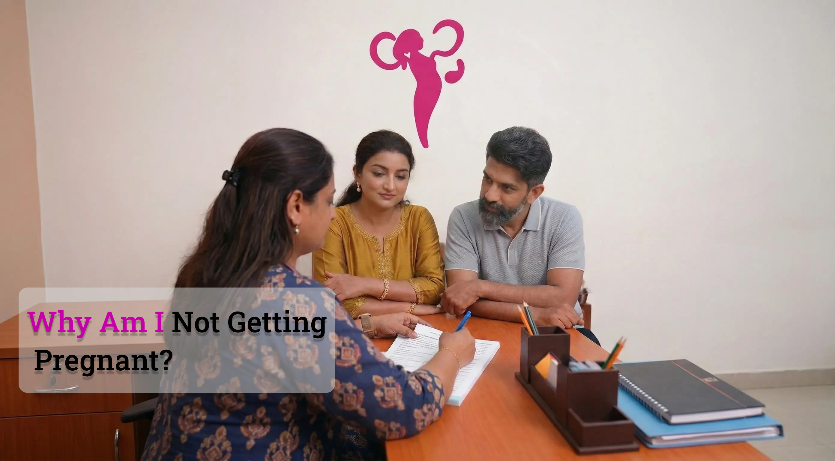
You have probably typed some version of “why am I not getting pregnant” into Google more times than you want to admit. Maybe it started as curiosity after a few months of trying. Maybe it is now the thing keeping you up at midnight, reading strangers’ stories on Reddit, wondering if yours will end the same way.
I get it. Every week, women walk into our clinic carrying the same quiet worry. Some have been trying three months, some three years. Some have a child already and cannot understand why the second is taking so long. Some just came off birth control and assumed it would happen next cycle. The question underneath is almost always: what is wrong with me?
Usually, nothing as scary as what you are imagining. But there is often something, and the sooner you understand it, the faster you can do something about it.
How long is actually too long?
This is the thing most people get wrong, so let me clear it up.
Under 35, with regular unprotected sex two to three times a week: twelve months before the medical definition of infertility kicks in. Over 35: six months. Over 40: do not wait. See someone after two or three months. These timelines come from the WHO and are echoed by ICMR and FOGSI guidelines used across India.
But look, these are just averages. If you already know you have PCOS, irregular periods, endometriosis, a history of pelvic infection, fibroids, or if your husband has any history that worries you, you do not have to wait a full year to get checked. Going earlier does not mean jumping straight to IVF. It usually just means a few simple tests that can save you months of stress.
According to the Indian Society of Assisted Reproduction, around 27.5 million couples in India are actively trying to conceive at any given time, and one in six faces difficulty. You are not the only person dealing with this, even if it feels that way at 2 AM.
| Your Age | Chance per Cycle | When to See a Doctor |
|---|---|---|
| Under 30 | ~25% | After 12 months of trying |
| 30–35 | ~20% | After 12 months of trying |
| 35–38 | ~15% | After 6 months of trying |
| 38–40 | ~10% | After 3–6 months of trying |
| Over 40 | ~5% | After 2–3 months of trying |
Sources: ACOG (conception rates), WHO/FOGSI (evaluation timelines)
“Infertility is a disease of the male or female reproductive system defined by the failure to achieve a pregnancy after 12 months or more of regular unprotected sexual intercourse.”
— World Health Organization (WHO), official clinical definition
If any of that sounds like you and you have been putting off getting checked, even a single visit usually answers the question that has been keeping you up at night.
So why is this happening?
When a woman tells me “everything seems normal but nothing is happening,” my first reply is usually, “let us actually check if everything is normal, because you would be surprised.” Most couples have never had a proper fertility workup. They are relying on the fact that periods come every month and nothing feels wrong. Fertility is much quieter than that.
Here is what we see most often.
You might not be ovulating the way you think
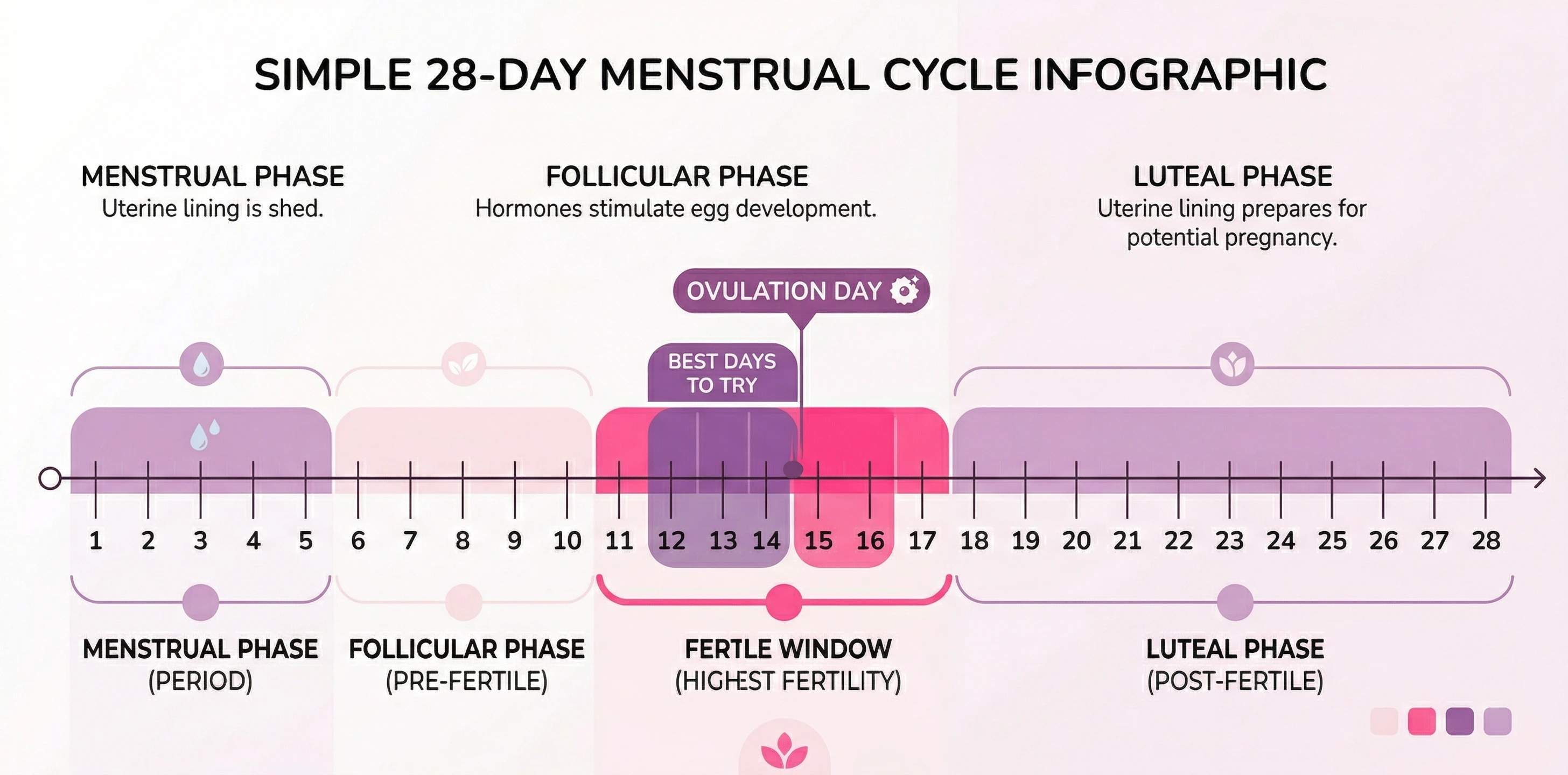
Regular periods do not always mean regular ovulation. This surprises almost everyone. You can bleed every month and still not release an egg every cycle. PCOS is the classic example. Your period may come, but the ovary is not always cooperating.
On the other side, some women are ovulating fine but timing things wrong. According to the American Society for Reproductive Medicine (ASRM), the fertile window is about five to six days per cycle, and the two days before ovulation are the ones that matter most. Off by a day or two, and the month is basically lost. Ovulation strips help, but they are not foolproof.
The sperm side
According to WHO data, in almost half of all infertility cases, the male factor is involved. I need to say that again because it never seems to land the first time. Half. And yet almost every time, the woman is the one who gets tested first. Poked, scanned, blamed by relatives. Meanwhile, the husband has never given a semen sample.
A basic semen analysis is cheap, quick, and painless. Low count, poor motility, abnormal shape, or even a completely blocked duct. All common, many treatable. But you have to check.
“I tell every couple who walks in: the semen analysis is test number one, not a last resort. It takes fifteen minutes, it costs very little, and in about 40% of cases it tells us something we would have spent months looking for in the wrong place.”
— Dr. Pallavi Kulkarni
Blocked or damaged tubes
Your ovary can release a perfect egg, your husband can have great sperm, but if the tubes are blocked, they are never meeting. Past infections (sometimes silent ones you never knew you had), endometriosis, previous surgeries, or a ruptured appendix years ago can all quietly damage the tubes. An HSG test, basically an x-ray with dye, usually tells us if this is the problem.
Age and eggs
In India, nobody likes talking about this. It feels rude, like an accusation. But biology does not care about politeness. As per data published by the American College of Obstetricians and Gynecologists (ACOG), a woman in her early twenties has roughly a 25 percent chance of conceiving each month. By 35, that drops to about 15 percent. By 40, it is closer to 5 percent per cycle. It does not mean pregnancy is impossible, but it means you have less time to waste on “wait and see.” Women approaching perimenopause feel this urgency most acutely.
Women asking “why am I not getting pregnant at 38” get a more urgent response from me than someone asking the same question at 28. The answer may be the same medically, but the clock is different.
PCOS, thyroid, hormones
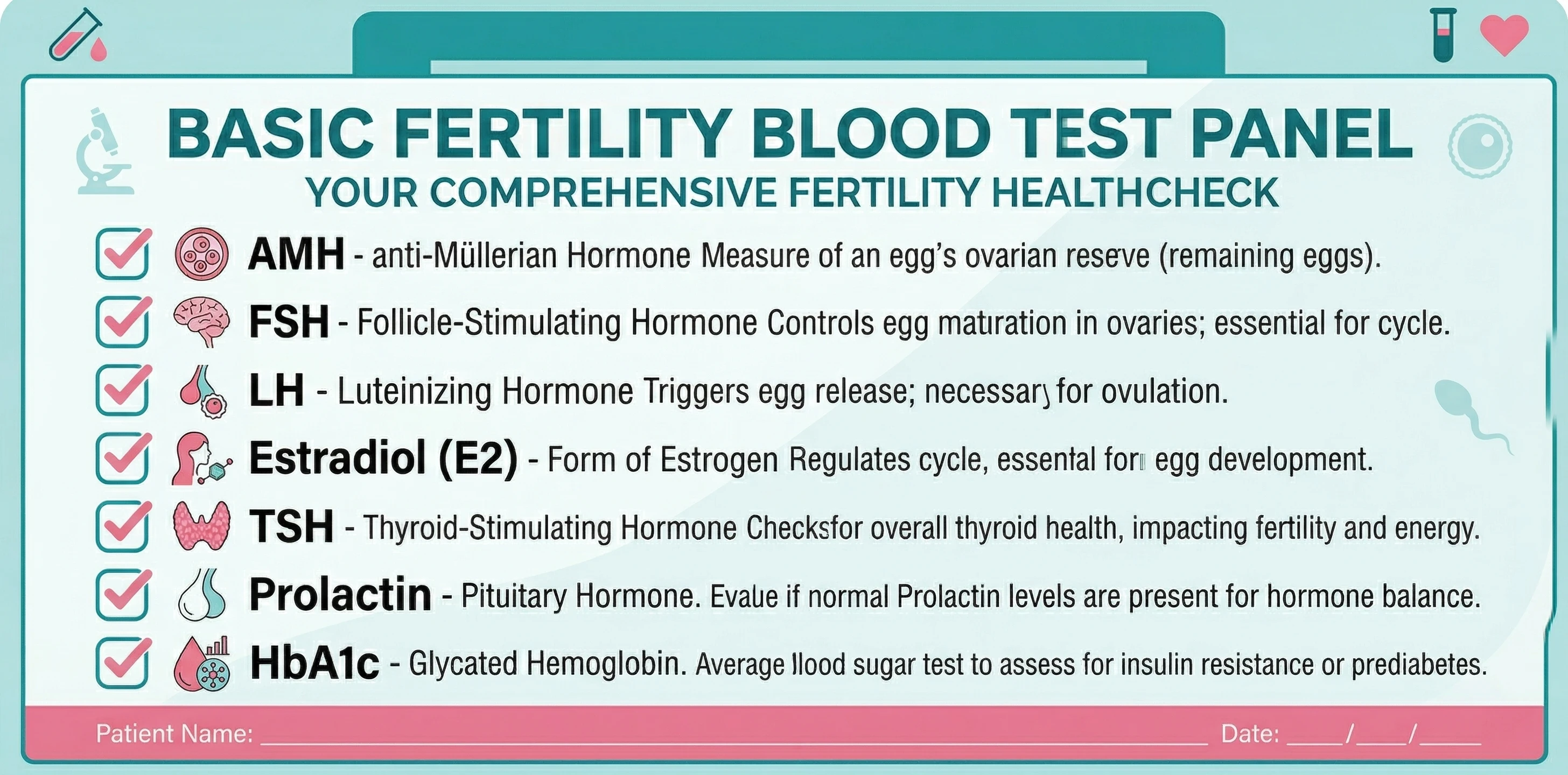
PCOS affects up to 20 percent of Indian women of reproductive age according to ICMR studies, and many walk around with it for years without knowing. Irregular periods, acne, stubborn weight, extra hair, unusual discharge, all brushed off as “just how I am.” An underactive or overactive thyroid can block pregnancy too, as can high prolactin levels. A simple blood test panel catches most of these.
Endometriosis and fibroids
If your periods have always been the kind where you cannot get out of bed, there is a real chance endometriosis is involved. And endometriosis is closely linked with infertility. Fibroids, especially the ones pressing on the uterine cavity, can also stop an embryo from implanting.
Mumbai itself
I have to say it. This city is exhausting. The commute eats three hours of your day. Sleep is short. Work is relentless. Food is eaten out of boxes, at desks, at odd hours. Pollution is real. All of this affects hormones, egg quality, and sperm quality, and none of it shows up neatly on a test result.
Stress alone will not make you infertile. But chronic exhaustion combined with poor sleep, weight gain, skipped meals, and two cups of strong coffee standing in for breakfast, that combination can absolutely tip the scales. This is the unglamorous part of fertility advice, and honestly the part that makes the biggest difference for the most couples.
“But I am ovulating, so why is nothing happening?”
Because ovulating is step one of about seven steps that all need to go right. The egg has to travel down the tube. Sperm have to reach it in time. The fertilised embryo has to travel back and implant in a uterus prepared to receive it. Your hormones have to support it. Your immune system has to not reject it.
A positive ovulation test is good news, but it is not a guarantee. If you are tracking everything, timing sex correctly, taking folic acid, and still nothing after several cycles, do not assume you are failing. It just means one of those other steps needs looking at.
Ovulating but still not pregnant? A proper fertility workup can identify which step needs attention. Most answers come within a month of testing.
Special situations
Trying for your second child: “I got pregnant so easily the first time. Why now?” More common than people think. Your body is not the same body it was five years ago. Age, weight, a C-section scar, hormones still off from breastfeeding, all possible. It is not punishment. It is medicine.
After stopping birth control: Most women ovulate again within one to three months. If six months pass with no luck, get checked. It is almost never the birth control causing permanent damage. Usually something was quietly there already.
After a miscarriage: Physically, most women can conceive again within one to three cycles. Emotionally, longer. If six months pass with no pregnancy, get evaluated. Two or more miscarriages deserve a full workup.
PCOS: Manageable. Weight management, the right medication (metformin, letrozole, clomid), and ovulation tracking get most women with PCOS pregnant. If those are not working, it is a conversation about next steps, not a dead end.
One tube: You can still get pregnant. May take a bit longer. Many of my patients have done it.
Breastfeeding: Suppresses fertility, especially in the first six months of exclusive nursing. If your baby is older than six months and you are trying, look at your cycle pattern.
Fibroids, post-surgery, post-laparoscopy, post-D&C: Each of these really needs a personal look at your reports. Short version: fibroids sometimes matter depending on where they sit. Surgery recovery is usually about three months before trying again seriously.
When to see a fertility doctor
- Under 35, trying for a year
- 35+, trying for six months
- Over 40, trying for more than two or three months
- Irregular, absent, or very painful periods
- Known PCOS, endometriosis, fibroids, or thyroid issues
- History of pelvic infection, surgery, or ectopic pregnancy
- Two or more miscarriages
- Husband has a known issue or has never been tested
- You just want to know what is going on
“Women older than 35 years should receive an expedited evaluation and undergo treatment after 6 months of failed attempts to become pregnant or earlier, if clinically indicated. In women older than 40 years, more immediate evaluation and treatment are warranted.”
— ACOG Committee Opinion No. 781, Infertility Workup for the Women’s Health Specialist
You do not need a “reason” beyond wanting clarity. That is reason enough. If you are unsure whether your situation calls for a specialist, this guide on when to consult a gynaecologist may help.
If you ticked even one of those boxes, the next step is a 30-minute consultation where we review your history and figure out which tests actually make sense for you. No pressure, no assumptions.
Choosing a fertility doctor in Mumbai
Women searching for “best fertility doctor near me” usually do not want the most famous name on a billboard. They want someone who listens, explains things in plain language, does not rush them into expensive procedures, and treats them like a person.
What I would look for is a gynaecologist with substantial experience in helping couples conceive. The right doctor should clearly explain the options and the costs, including the option of waiting and doing nothing yet. And if the first visit turns into a push towards IVF before basic tests for both partners are done, that is a red flag.
The doctor should ask about your husband. If they do not, that is odd.
And pick somewhere you can actually get to. Mumbai traffic is real. Fertility treatment can mean frequent visits, sometimes early morning scans. A clinic you can reach without losing your mind in an auto matters.
Ayurveda and fertility
Many women ask about ayurvedic approaches alongside or instead of modern medicine. Fair enough. Lifestyle changes from Ayurveda, good sleep, warm food, reducing stress, genuinely help many couples.
What I ask is this: do not use it as a reason to delay finding out why you are not getting pregnant. Do your tests. Understand your situation. Then combine whatever approaches make sense for you. Time is the one thing we cannot get back.
What your first fertility visit looks like
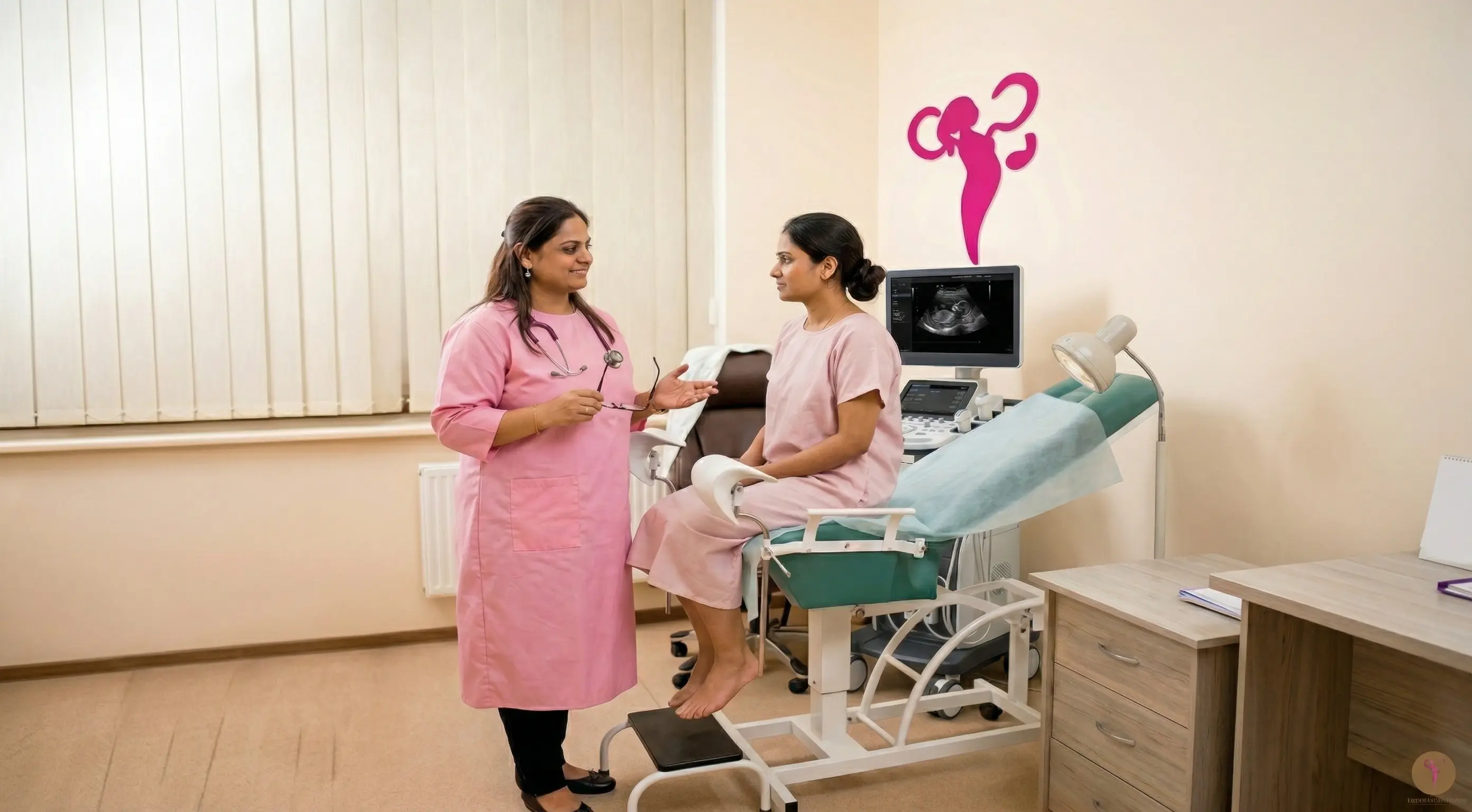
We sit and talk. Longer than most medical consultations you have had. Your history, your periods, your lifestyle, your husband’s history, how long you have been trying, what you have already tried. No judgment.
Then usually a pelvic ultrasound. Painless. We look at ovaries, check for cysts or fibroids, count follicles if the timing is right.
Then a plan for basic tests. Hormones on specific days of your cycle. Thyroid, prolactin, AMH (tells us about egg reserve). A semen analysis for your husband. Sometimes an HSG.
That is it. Nobody is putting you on IVF in week one. Most couples find out what is going on within a month, and many are pregnant within a few cycles of simple help after that.
“About 80% of the couples I see do not end up needing IVF. They need an answer, a simple correction, and a bit of patience. The problem is that most people wait too long before even asking the question.”
— Dr. Pallavi Kulkarni
A first visit typically takes 30 to 45 minutes. You do not need a referral.
Ready to find out what is going on? Consult Dr. Pallavi Kulkarni at her Aarogya Clinic in Thakur Village, Kandivali East. Call us at +91 91366 33062, WhatsApp us, or just walk in. Bring any previous reports you have, even old ones help.
Women from Kandivali East including Thakur Village, Kandivali West, Malad East, Malad West, Borivali East, Borivali West, Goregaon East and Goregaon West frequently visit for fertility evaluation and gynecological care.
Do you have any questions?
Request An AppointmentQuestions I get asked
How many months is normal before worrying about not getting pregnant?
Under 35, twelve months of trying. Over 35, six months. Over 40, two or three months. These are general guidelines. If you have known conditions like PCOS or irregular periods, see a doctor sooner.
Can I be ovulating and still not get pregnant?
Yes. Ovulation is only one step. Sperm quality, tube patency, uterine lining, hormonal support, and timing all need to work together.
I have regular periods but am not getting pregnant. Why?
Regular periods do not guarantee regular ovulation. Sperm issues, tube problems, egg quality, endometriosis, or simple timing errors can all exist alongside regular cycles.
Can stress cause infertility or delay pregnancy?
Stress can delay ovulation, but it is almost never the whole story. Chronic exhaustion, poor sleep, and skipped meals combined can tip the scales.
Does age affect fertility even if I feel healthy?
Yes. Egg quality declines with age regardless of fitness level. A woman in her early twenties has roughly a 25% chance per cycle; by 40, it is closer to 5%.
I have PCOS. Can I get pregnant naturally?
Many women with PCOS do. Weight management, lifestyle changes, and simple oral medication are the usual first step. Most do not need IVF.
Should my husband get a fertility test too?
Always. A semen analysis should be one of the first tests, not the last. Male factor is involved in about 40-50% of infertility cases.
Is IVF the only option for infertility?
No. There are gentler steps: ovulation induction tablets, timed cycles, IUI. Most couples never need IVF. About 80% of couples seen at our clinic do not end up needing it.
How do I find a good fertility doctor in Mumbai?
Look for a doctor with strong experience in helping couples conceive. An experienced OB-GYN who has managed fertility-related concerns for many years is a good fit, especially if they explain options and costs honestly, recommend evaluation for both partners, and are accessible for the frequent visits fertility care may require.
What Our Patients Say
Experienced Gynecologist in Kandivali East with a Patient-Centered Approach
Dr. Pallavi Kulkarni is a highly regarded Gynecologist in Kandivali East, praised for her calm, compassionate, and patient-centered care. Her supportive approach helps women feel heard, respected, and confident about their treatment decisions.