
Fungal Infection in Women: Symptoms and Treatment
If you’ve been dealing with itching down there, burning, or a thick white discharge — you already know how miserable it is. Vaginal fungal infections are extremely common among Indian women. Roughly 3 in 4 women get at least one in their lifetime, and many get them repeatedly, especially during the monsoon or in humid weather.
Most women search for “white discharge problem,” “private part itching,” or “yeast infection home remedy” before they consider seeing a doctor. Some go straight to the medical shop and ask for a tablet. Some try home remedies — dahi, neem water, turmeric paste. And many just wait it out, hoping it’ll settle on its own.
It usually doesn’t. But with a proper diagnosis, it clears up fast.

What’s actually going on
A vaginal fungal infection is an overgrowth of Candida — yeast that normally lives in the body in small amounts without causing trouble. When the vaginal environment shifts, the yeast multiplies and you get itching, irritation, and white discharge.
According to the CDC, roughly 75% of women will experience at least one vaginal yeast infection in their lifetime, and about 40–45% will have two or more episodes.
Symptoms
- Itching around the vagina or vulva
- Burning or irritation in the private area
- Redness or swelling near the vaginal opening
- Thick white discharge — women often describe it as looking like curd or paneer
- Burning when you pass urine
- Pain during intercourse
- Irritation that gets worse before or after periods
Not everyone gets all of these. Some women mainly itch; others mostly notice the discharge.
What triggers it
This is not a hygiene problem. Women who wash twice a day get it. Women who are meticulous about cleanliness get it. It happens when the vaginal balance shifts in favour of yeast.
The most common triggers in Indian women:
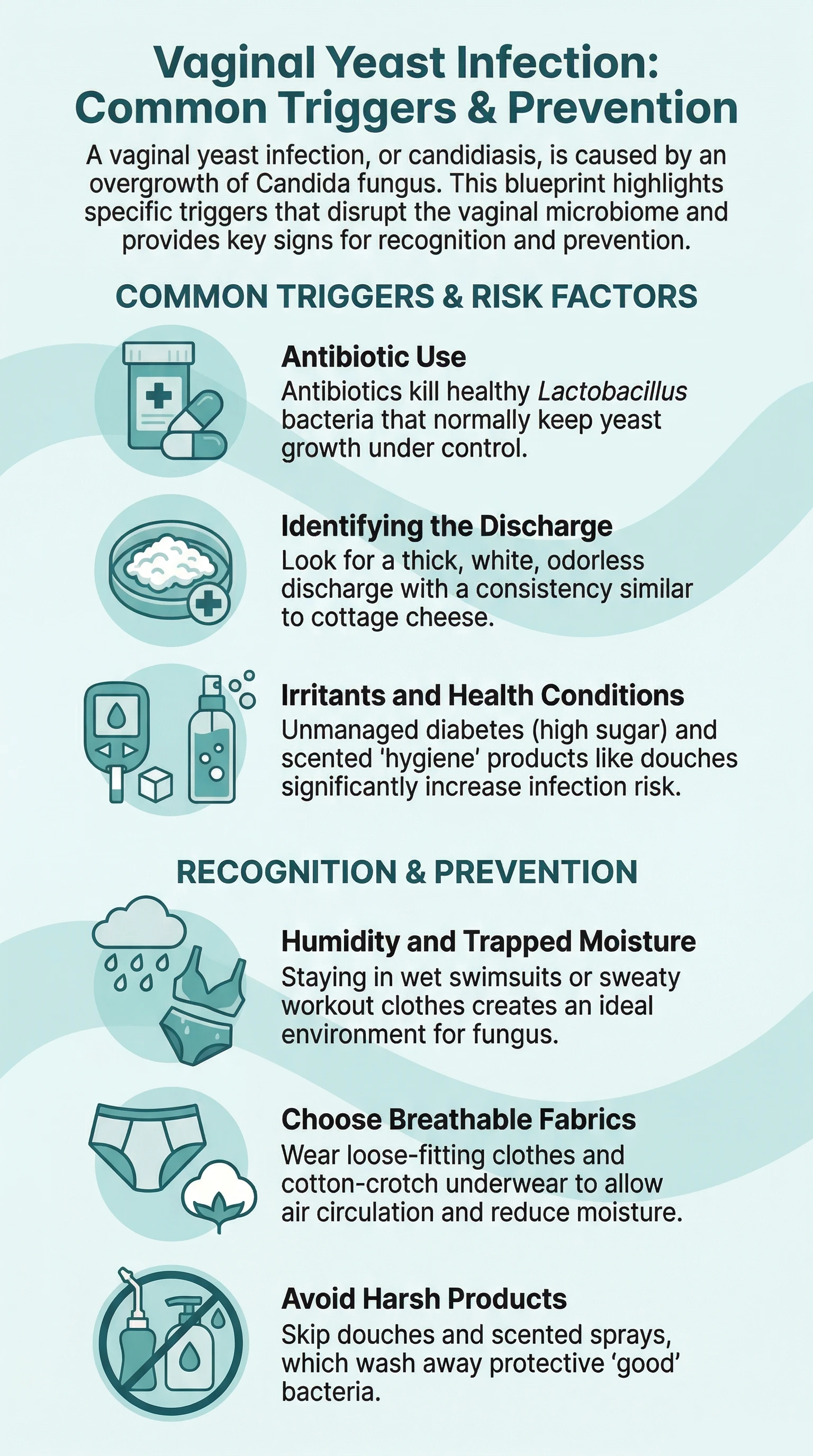
- Antibiotics — the biggest one. Many women in India take antibiotics for colds, fevers, and minor infections without a prescription. Every course of antibiotics kills protective vaginal bacteria too.
- Humidity and sweating — Mumbai heat, monsoon dampness, long commutes in crowded trains and buses. The genital area stays moist for hours.
- Tight synthetic clothing — leggings, skinny jeans, synthetic salwar linings, nylon underwear. These trap heat and moisture.
- Diabetes — India has among the highest diabetes rates in the world, and many women don’t know their sugar is high until they keep getting infections.
- Pregnancy and hormonal changes
- Intimate wash products — V Wash, Lactacyd, and similar products can disrupt the vaginal pH if overused
- Self-medication — taking the same Fluconazole tablet from the chemist every time without knowing if it’s actually a fungal infection
Here’s what trips people up: not all vaginal itching is fungal. Bacterial vaginosis, allergic reactions to sanitary pads, dermatitis from hair removal products, and STIs can look almost identical. If you keep treating yourself for yeast and it keeps coming back, you might be treating the wrong thing entirely.
Itching that won’t go away? Self-treatment not working? A proper diagnosis can tell you exactly what’s going on.
The Mumbai problem
Living in a city like Mumbai makes fungal infections worse. The humidity is relentless — especially from June to October. Long working hours mean sitting in the same clothes through sweat and commutes. Many women change their pad or liner during the day but can’t change underwear. Synthetic office wear doesn’t breathe. AC-to-heat-to-AC temperature swings make things worse.
None of this is your fault. But it helps to understand why this area is particularly prone to infections if you live in a humid climate.
“Living in Mumbai’s humidity means your body is already working harder to stay balanced. When you add antibiotics, synthetic clothing, or skipped meals to that, a fungal infection is almost inevitable. The good news is that once we identify what’s triggering it, we can usually break the cycle.”
— Dr. Pallavi Kulkarni
When to see a doctor
A lot of women avoid the gynaecologist for itching or discharge. Some feel embarrassed. Some think it’s too minor to bother with. Some have been told by family members to just wash properly or drink more water.
See a doctor if:
- This is the first time you’re getting these symptoms
- The itching is severe or the skin around the vulva is cracked or raw
- It keeps happening — more than twice a year
- You’re pregnant
- The Fluconazole or Candid cream you bought from the medical shop isn’t working
- There’s a foul smell, bleeding, or sores
- You’re not sure whether it’s fungal or something else
The pattern to watch: if you’ve treated yourself three or four times this year and the problem keeps returning, something else is going on.
“The biggest problem I see isn’t the infection itself — it’s women treating themselves repeatedly with the same tablet from the chemist without ever confirming what they actually have. Half the time, it turns out it wasn’t yeast at all.”
— Dr. Pallavi Kulkarni
When it keeps coming back
Recurrent vaginal candidiasis — four or more episodes a year — is a different problem from a one-off infection. According to research published in The Lancet Infectious Diseases, recurrent vulvovaginal candidiasis affects approximately 138 million women worldwide.
Why it recurs in many Indian women:
- Undiagnosed or poorly controlled diabetes (get your HbA1c checked if infections keep returning — many women discover their sugar is borderline or high only at this stage)
- Repeated self-medication from the chemist without a diagnosis
- Incomplete treatment — stopping the medicine when symptoms improve rather than finishing the course
- Frequent antibiotic use for unrelated illnesses
- Mumbai/coastal humidity and long hours in non-breathable clothing
- Underlying conditions like bacterial vaginosis being misidentified as fungal
- Resistant Candida strains — becoming more common in India
One tablet from the chemist won’t fix a recurring infection. The question becomes: what’s actually driving this? Until that’s answered, the cycle continues.
Recurring infections? Don’t keep self-treating. Find out what’s actually causing it.
The partner question
Women ask this a lot, and many have been told by family or friends that their husband “gave it to them.”
Yeast infections are not classified as sexually transmitted. But sexual activity can sometimes contribute to irritation or recurrence. If it keeps coming back, or if your partner also has redness or itching, get it checked properly. Don’t let anyone — including the internet — convince you to blame your partner without a medical assessment.
Home remedies — do they work?
Many women try curd (dahi) application, neem water, coconut oil, turmeric, or garlic before seeing a doctor. Some of these have mild antifungal properties in lab studies, but none of them reliably treat an active vaginal infection.
The risk with home remedies isn’t that they’re dangerous (though inserting garlic can cause irritation). The risk is delay. While you’re experimenting, the infection may worsen or you may be treating something that was never fungal in the first place.
If you want to use coconut oil or curd for mild external soothing while you wait for your appointment — fine. But don’t rely on it as treatment.
How serious is it?
For most women, not very — when treated properly. It gets complicated when:
- It recurs frequently
- Symptoms are severe
- The diagnosis was wrong (it wasn’t yeast to begin with)
- You’re pregnant or diabetic
- There’s significant skin breakdown or secondary infection
The real risk in India is the self-treatment cycle. The ease of buying antifungals over the counter without a prescription means many women treat themselves repeatedly for months or years without ever confirming the diagnosis.
Treatment
Treatment depends on the situation: first episode vs. recurring, severity, pregnancy, and whether the infection is definitely fungal.
This might include antifungal creams or pessaries (like Candid-V or Clotrimazole), oral tablets (Fluconazole), soothing measures for irritation, screening for diabetes, or further testing if the symptoms don’t clearly point to yeast.
What Dr. Kulkarni does differently from the chemist: she figures out what you actually have before prescribing. If it’s straightforward, treatment is quick. If it keeps recurring, she looks for the reason — diabetes, wrong earlier diagnosis, resistant strain, an underlying condition.
Reducing your chances
Practical tips for Indian weather and lifestyle:
- Change out of sweaty clothes as soon as you can — especially after commuting or exercise
- Cotton underwear. Not synthetic. Check the label.
- If you wear leggings or skinny jeans daily, switch to cotton salwars or looser pants when you can
- Change sanitary pads every 4–6 hours; don’t wait for them to feel full
- Skip V Wash and similar products if you keep getting infections. Plain water is enough for external washing.
- If you’re diabetic, keep your sugar controlled. Get your HbA1c checked regularly.
- Don’t take antibiotics without a prescription. Ask your doctor if you really need them for that cold.
- When symptoms return, see a doctor instead of going back to the chemist for the same tablet
Dealing with vaginal itching, white discharge, or a recurring yeast infection? Dr. Pallavi Kulkarni at Aarogya Women’s Clinic, Kandivali East can diagnose the actual cause and get you the right treatment.
Women from Kandivali East including Thakur Village, Kandivali West, Malad East, Malad West, Borivali East, Borivali West, Goregaon East and Goregaon West frequently visit for expert gynecological care.
Related: Gynecological Infections · White Discharge Treatment
Do you have any questions?
Request An AppointmentFAQ
What causes vaginal fungal infection?
Overgrowth of Candida yeast, usually triggered by antibiotics, humidity, diabetes, pregnancy, or something disrupting the vaginal environment.
What are the first signs?
Itching, burning, redness, thick white discharge that looks like curd. Some women also get burning while urinating or pain during sex.
How is it treated?
Antifungal cream, pessary, or tablet — depends on whether it’s a first episode, recurring, or during pregnancy. A gynaecologist can sort out the right approach rather than guessing at the chemist.
Can my husband give it to me?
It’s not an STI. But sex can sometimes contribute to recurrence. If it keeps happening, get properly evaluated rather than making assumptions.
Why does mine keep coming back?
Could be uncontrolled sugar, frequent antibiotics, wrong diagnosis, incomplete treatment, or Mumbai’s humidity. Recurring infections need a closer look.
Do home remedies like dahi or neem work?
They have mild properties but don’t reliably treat an active infection. Use them for mild external soothing at most, not as a substitute for treatment.
How do I prevent it?
Cotton underwear, change out of damp clothes, skip scented intimate products, control blood sugar if diabetic, and see a doctor when it returns instead of self-treating.
What Our Patients Say
Compassionate Gynecologist in Kandivali East Women Trust
Known as a trusted Gynecologist in Kandivali East, Dr. Pallavi Kulkarni provides thoughtful, personalised care for women at every stage of life. Patients appreciate her patience, expertise, and the comfort they feel during each visit.